7 Simple Exercises to Improve Balance At Any Age

As a natural part of aging, our balance can be hindered by joint degeneration and muscle loss. Weaker core muscles and changes in eyesight can cause older adults to lose their balance more often.

In fact, the CDC reports that at least 300,000 older people are hospitalized each year for hip fractures, and more than 95% of them are caused by falling.

Balance is such an important part of healthy aging! So, we’ve rounded up seven simple, low-impact exercises to help improve core strength and balance, followed by a few tips to help keep you steady on your feet.

1. Heel-Toe Raises 
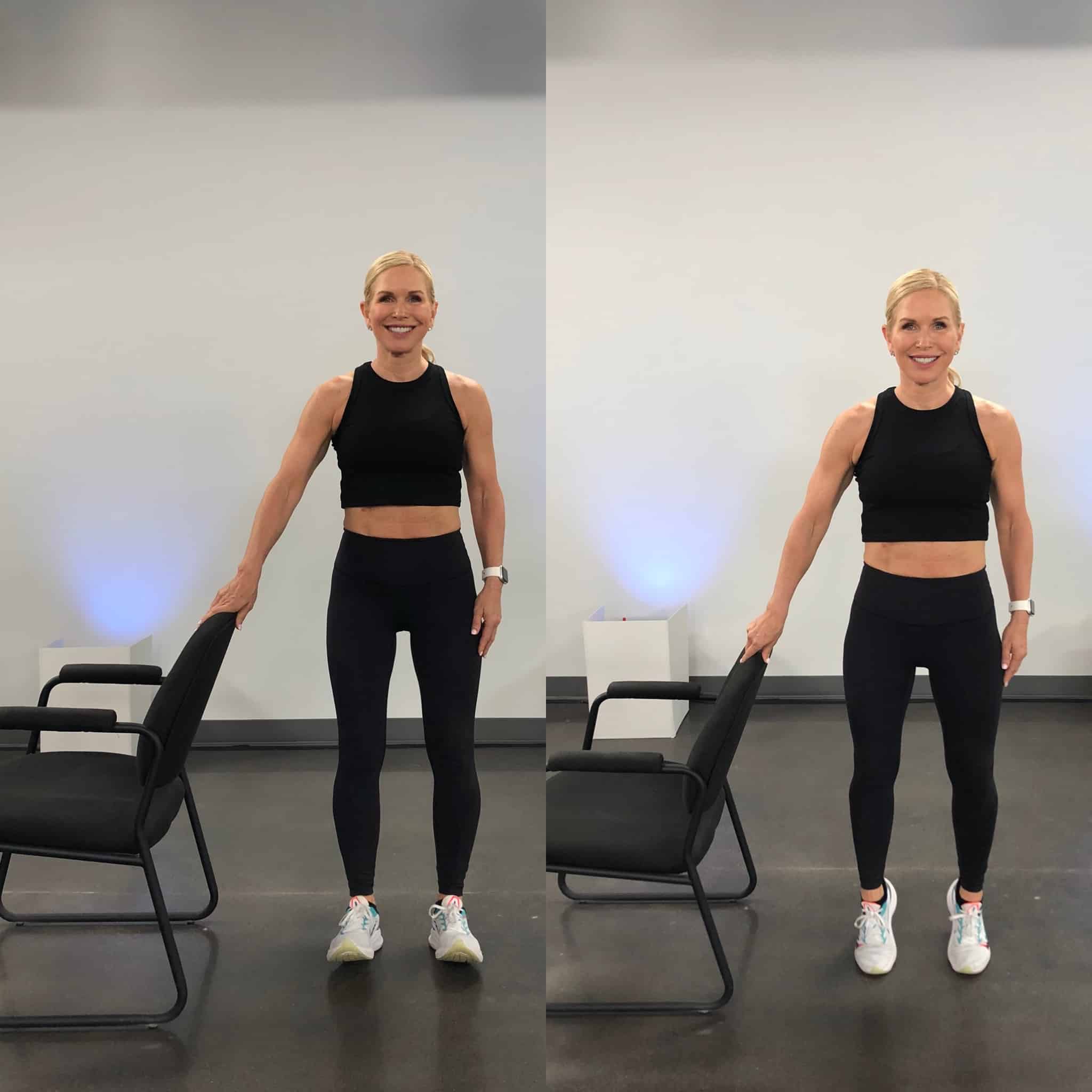
Chris Freytag demonstrating heel toe raises using a chair.

Photo Credit: Get Healthy U

How to do heel-toe raises:

  1. Stand with your feet hip-width apart.
  2. Roll back onto your heels (hold onto a chair if needed). 
  3. Roll forward onto your toes (hold onto a chair if needed).
  4. Keep repeating, moving back and forward for 30 seconds. 

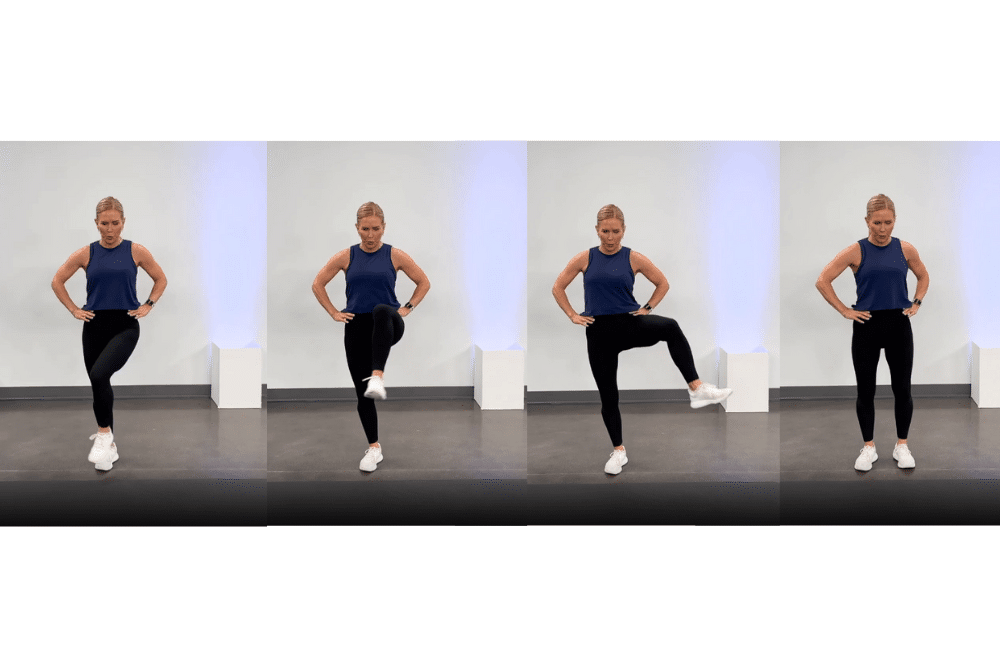
2. Side Leg Lifts
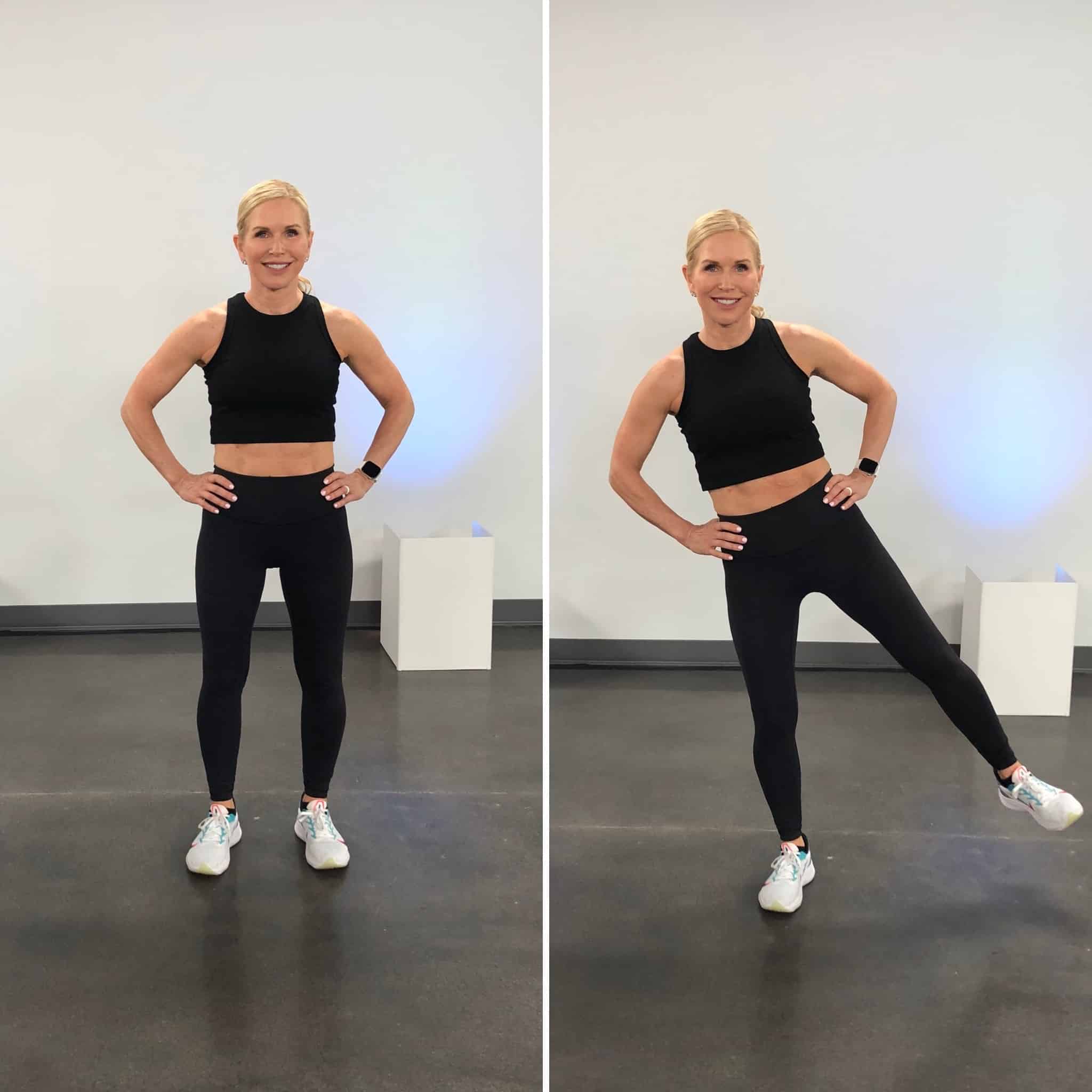
Chris Freytag demonstrating how to transfer weight onto one foot for a single leg balance exercise.

Photo Credit: Get Healthy U

How to do side leg lifts:

  1. Stand with your feet hip-width apart.
  2. Lift your right foot off the ground and your leg out to the side.  
  3. Hold for 10 seconds (hold onto a chair if needed).
  4. Repeat on the other leg. Do each side 2-3 times. 

3. Back Leg Extensions
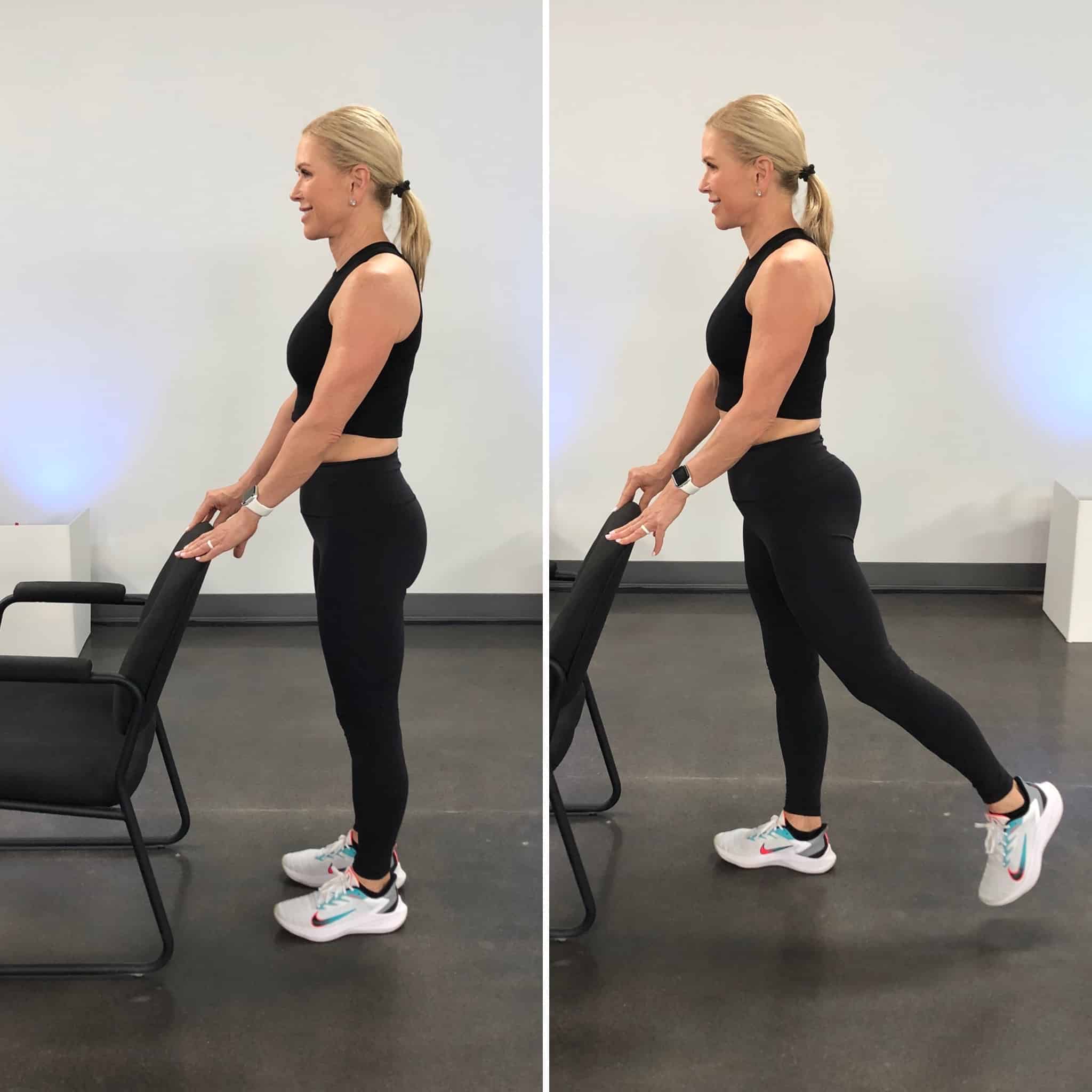
Chris Freytag demonstrating how to do a back leg lift balance using a black chair for stability.

Photo Credit: Get Healthy U

How to do back leg extensions:

  1. Stand with your feet hip-width apart.
  2. Raise your left foot off the ground and lift your left leg behind you.
  3. Hold for 10 seconds (hold onto a chair if needed). 
  4. Repeat on the other leg. Do each side 2-3 times.

4. Balance Beam Stance
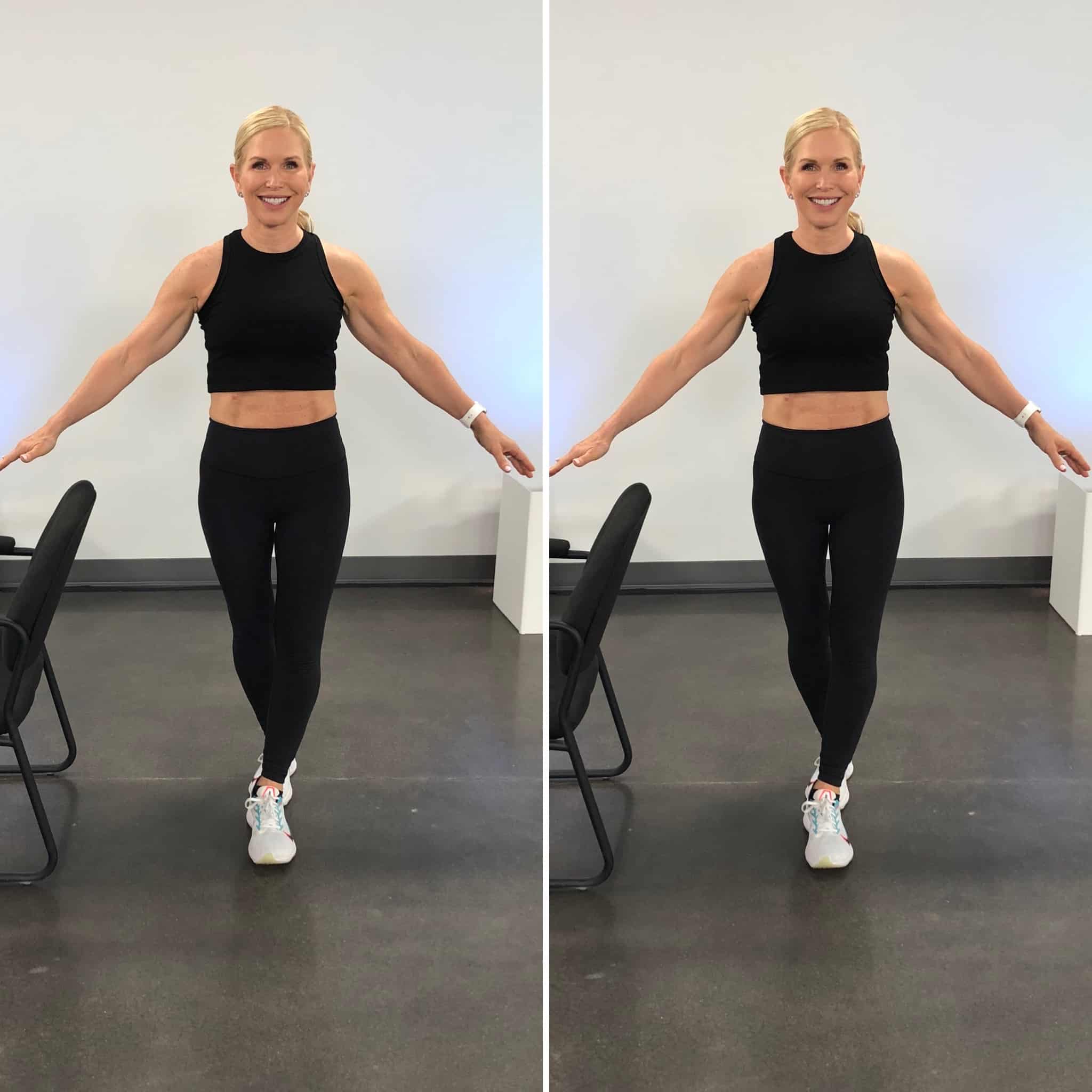
Chris Freytag demonstrating how to do a balance beam stance, balancing with one leg in front of the other.

Photo Credit: Get Healthy U

How to do a balance beam stance:

  1. Stand with your feet hip-width apart.
  2. Step one foot right in front of the other like you are on a balance beam.  
  3. Hold for 10 seconds (hold onto a chair if needed). 
  4. Repeat with the other leg in front. Do each side 2-3 times. 

5. Rock the Boat Exercise
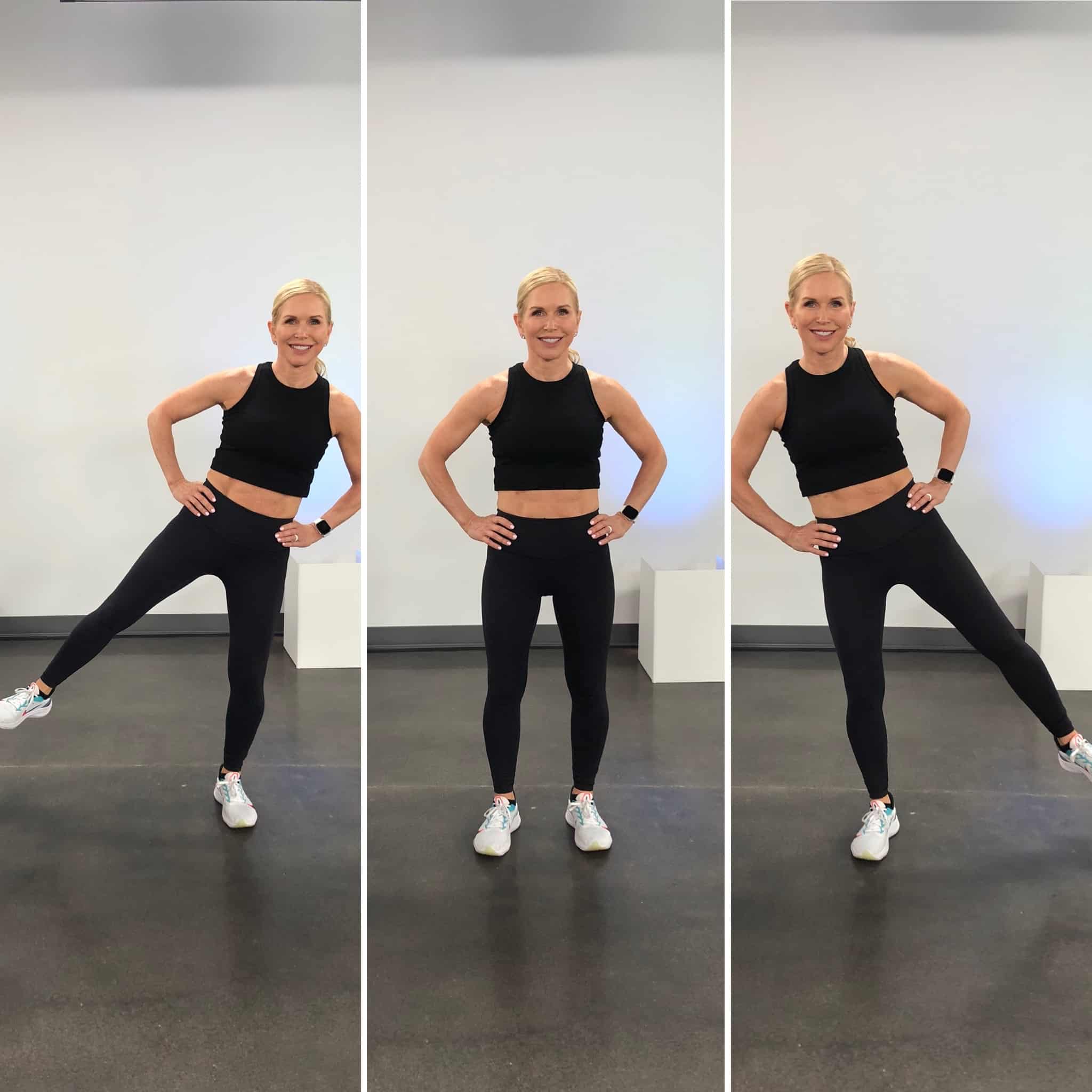
Chris Freytag demonstrating the rock the boat, transferring weight from one foot to the other.

Photo Credit: Get Healthy U

How to do a rock the boat exercise:

  1. Stand with your feet hip-width apart.
  2. Lift your right foot off the ground and your leg out to the side.
  3. Step back to center and then lift your left foot off the ground and your leg out to the side. (Hold onto a chair if needed). 
  4. Move side to side, transferring weight from one foot to the other, for 30 seconds. 

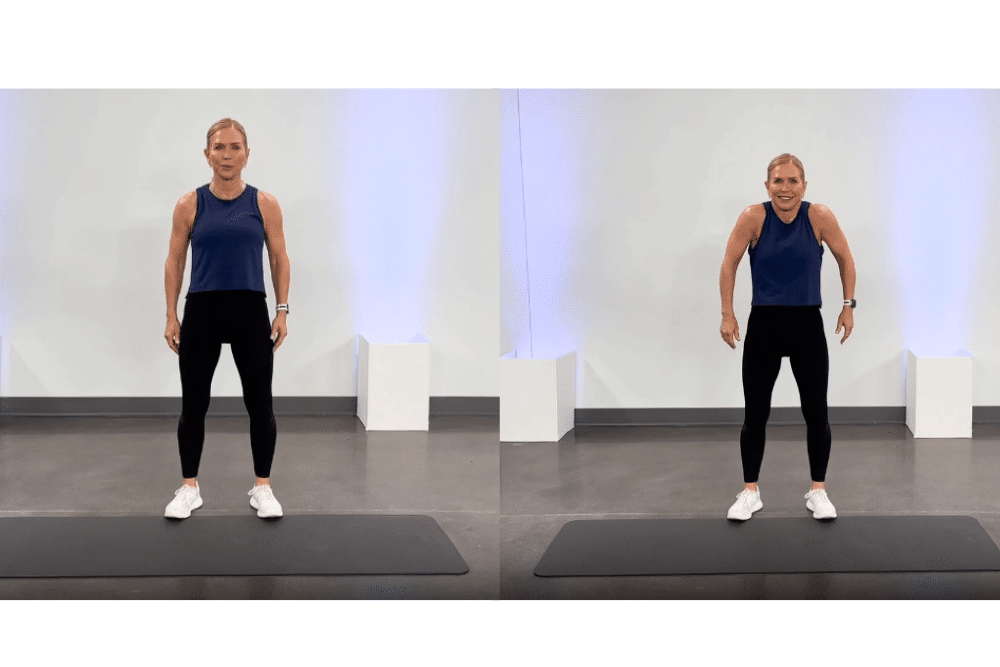
6. Chair Squats 
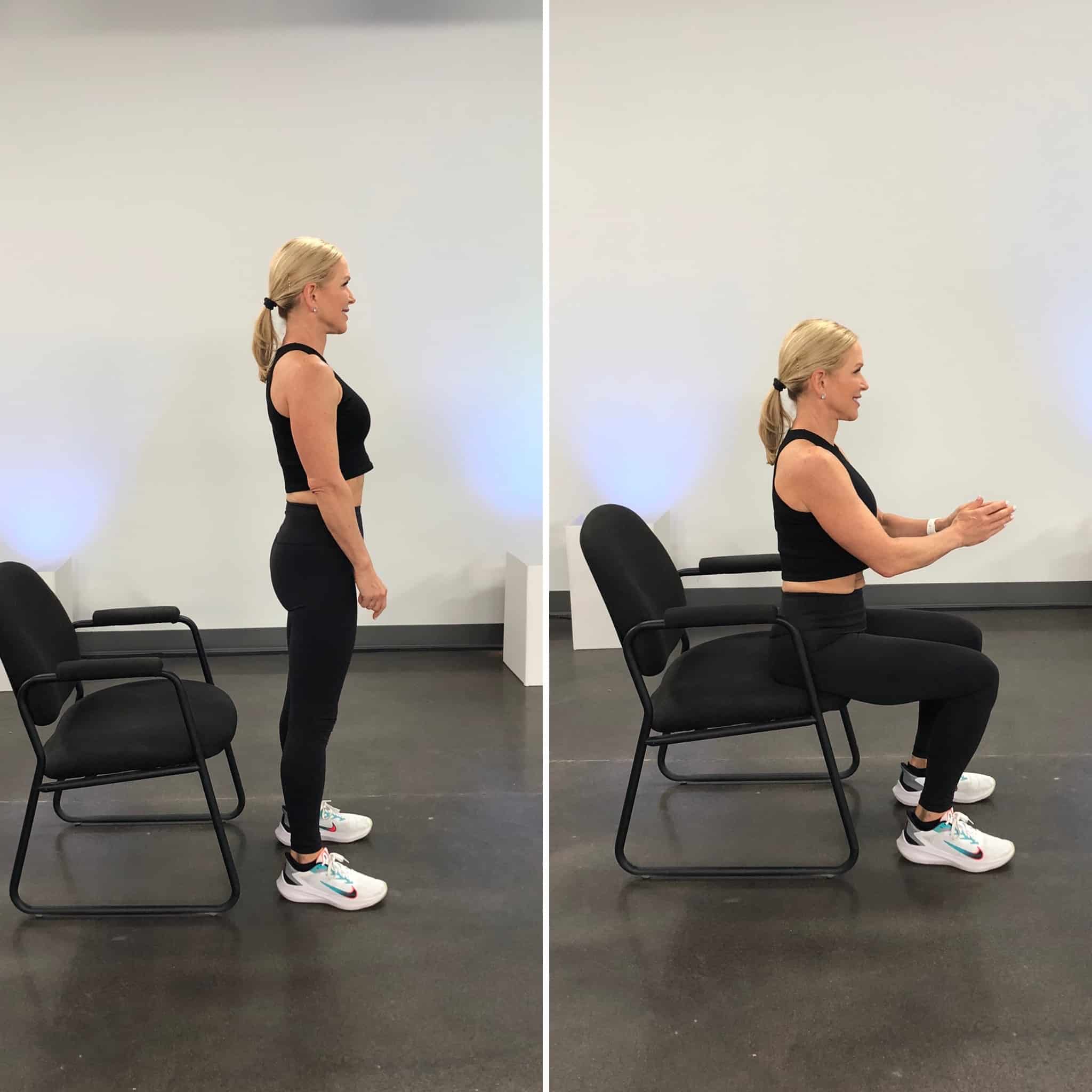
Chris Freytag demonstrating the two positions of a chair squat using a black chair to improve balance

Photo Credit: Get Healthy U

How to do chair squats:

  1. Start sitting in a chair with your feet hip-width apart.
  2. Slowly stand up, keeping your abs tight, and squeeze your glutes.
  3. Sit back down into the chair with control 
  4. Repeat for 30 seconds.

7. Single Foot Balance
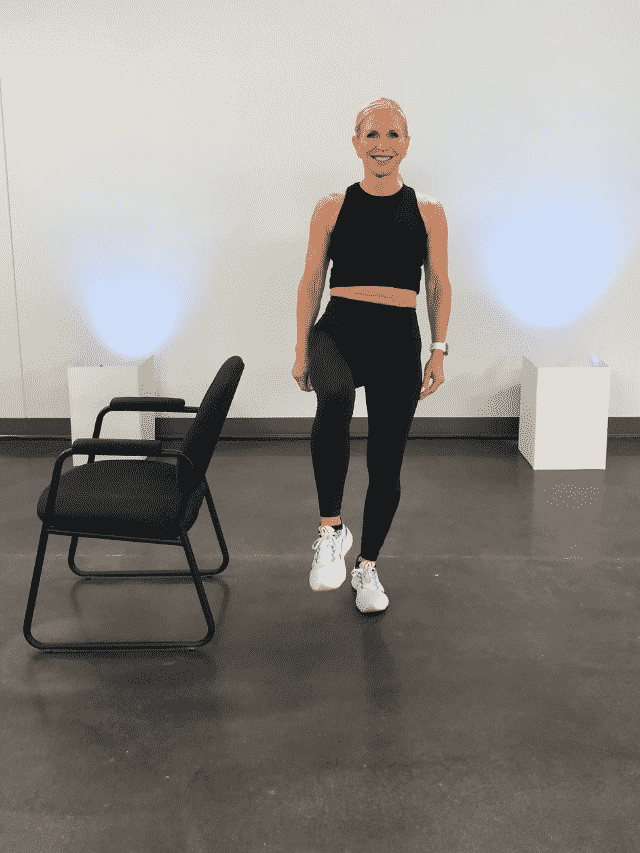
Senior exercise for balance: Chris Freytag demonstrating how to balance on one foot, with a black chair nearby for balance support.

Photo Credit: Get Healthy U

How to do a single foot balance:

  • Stand with your feet hip-width apart.
  • Raise your right foot off the ground (bend your knee and lift as high as feels ok). 
  • Hold for 10 seconds (hold onto a chair if needed). 
  • Repeat on the other leg. Do each side 2-3 times.

More Tips For Improving Your Balance

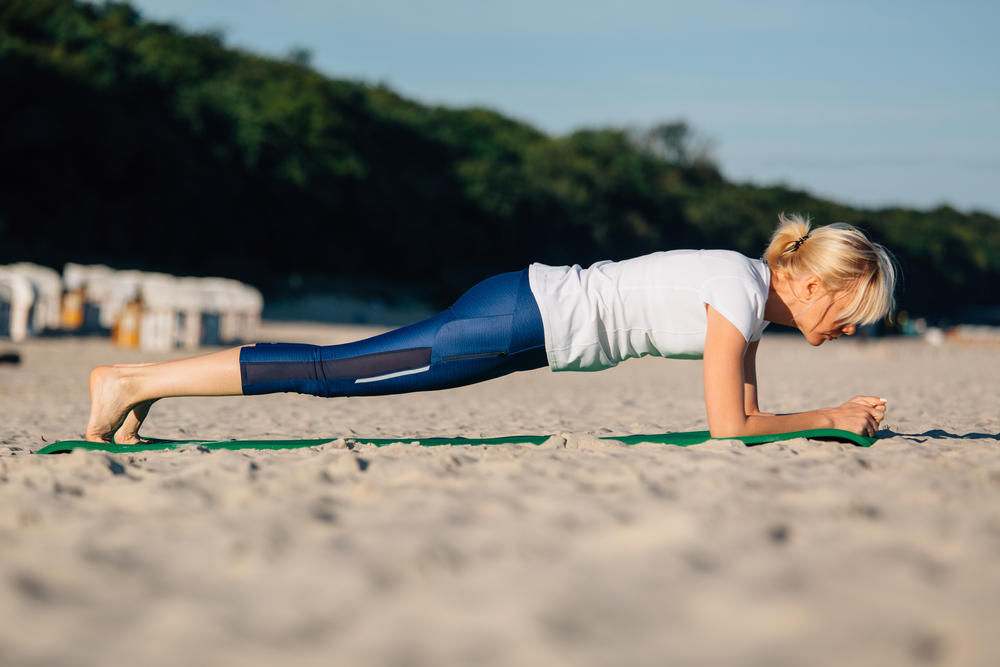
Older woman holding a plank exercise.

Photo Credit: Shutterstock

Along with adding the previous exercises to your routine, you can also practice these strategies to help improve balance:

  • Stand on one foot from time to time during the day. (Hold onto a counter, table, or chair if needed.) 
  • Sit on an exercise ball at your desk instead of a chair.
  • Squat one inch over a chair and hold for a few seconds before sitting down. 
  • Walk with a book on your head. (Old school but effective!)
  • Try some of my favorite daily yoga poses.
  • Stand still with your eyes closed. Pick up a foot, count to 10, then switch. (This is more advanced.) 
10 Powerful Mobility Exercises Every Senior Should Try Today

One of the best things you can do to stay healthy and active with age is to make mobility exercises a regular part of your routine!

Even if you’re already noticing mobility issues crop up, it’s never too late to start exercising. In fact, a quick mobility routine is often all it takes to start feeling better.

Here are the biggest benefits of mobility exercises:

  • Keeps joints healthy
  • Improves stiffness and pain 
  • Makes everyday activities easier
  • Help you stay active
  • Helps you look (and feel!) younger

To see these benefits firsthand, try our 10 mobility exercises for seniors to help keep you in action and improve your overall health for years to come.

Tips for Doing These Exercises

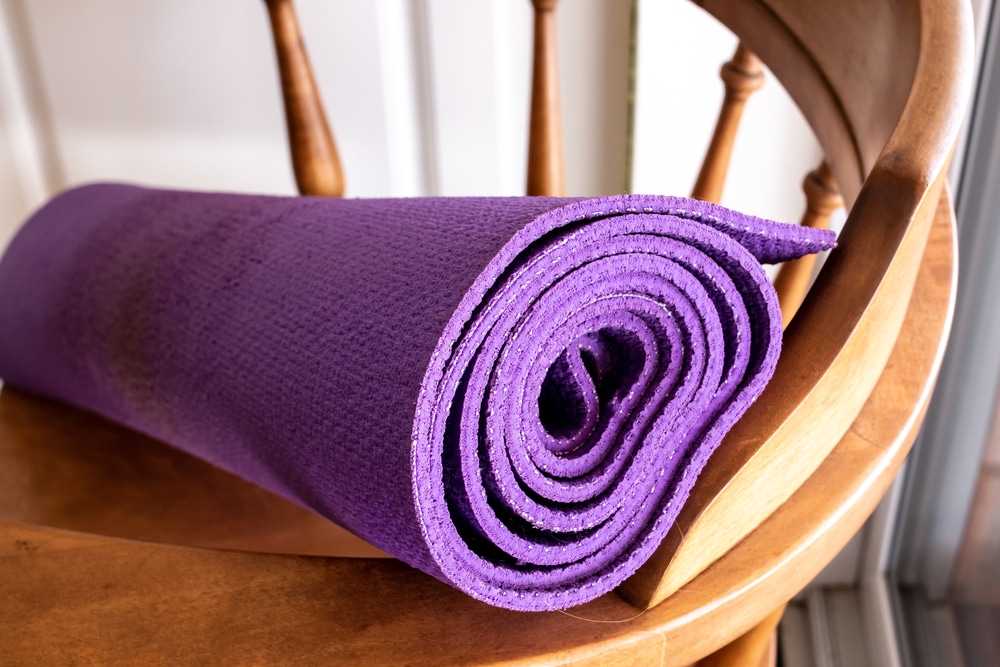
A rolled up purple yoga mat on a wooden chair.

Photo Credit: Shutterstock

Before starting the next 10 exercises, here are a few tips to keep in mind:

  • These mobility exercises are for older adults with mobility issues and those looking to stay active. They’re not for people with injuries. These folks should work with a physical therapist or other healthcare provider who can supervise their recovery.
  • You only need floor space, a yoga mat, and a chair for most of these exercises.
  • Do these exercises two to three times per week. Keep your movements controlled and work at a comfortable pace.
  • At first, these exercises might feel awkward and stiff. But the more you do them, the warmer your muscles and the looser your joints will get. Over time, the following exercises will feel easier, and so will daily physical activity.
  • Can’t do an exercise as written? Good news! We’ve included tips to modify a move if needed. 

Let’s get started!

1. Shoulder Rolls

Chris Freytag demonstrating shoulder rolls.

Photo Credit: Get Healthy U

Basic shoulder rolls are simple exercises that loosen up the shoulder muscles and joints. Shoulder mobility is critical for basic tasks like reaching overhead and sports like tennis and swimming. 

How to perform a shoulder roll:

  1. Stand with your feet hip-width apart.
  2. Shrug your shoulders up toward your ears. Then, slowly roll them in a forward motion.
  3. After about 30 seconds, roll your shoulders in a backward motion. 

Muscle Groups Targeted: Shoulders

2. Arm Circles

Chris Freytag demonstrating arm circles.

Photo Credit: Get Healthy U

This move loosens the shoulder joints and engages the shoulders, biceps, and triceps. It’s an easy way to improve posture and get your arms and shoulders ready for sports like swimming and pickleball.

How to perform an arm circle:

  1. Stand tall with your feet shoulder-width apart. 
  2. Raise and extend your arms to your sides. 
  3. Without bending the elbows, rotate your arms forward in small circles for 30 seconds. Then, rotate your arms backward in small circles for 30 seconds. 

Muscle Groups Targeted: Shoulders, Biceps, Triceps, Upper Back

3. Hip Circles

Chris Freytag demonstrating hip circles.

Photo Credit: Get Healthy U

This simple exercise helps loosen up the muscles and joints in your hips. As the hips play a role in practically every activity you do, it’s important for them to have a healthy range of motion.

How to perform a hip circle:

  1. Stand tall with your feet shoulder-width apart and place your hands on your hips.
  2. Keeping a slight bend in your knees, slowly circle your hips in a clockwise direction for 30 seconds. Then switch directions and circle your hips counterclockwise for 30 seconds.. 

Muscle Groups Targeted: Lower Back, Hips

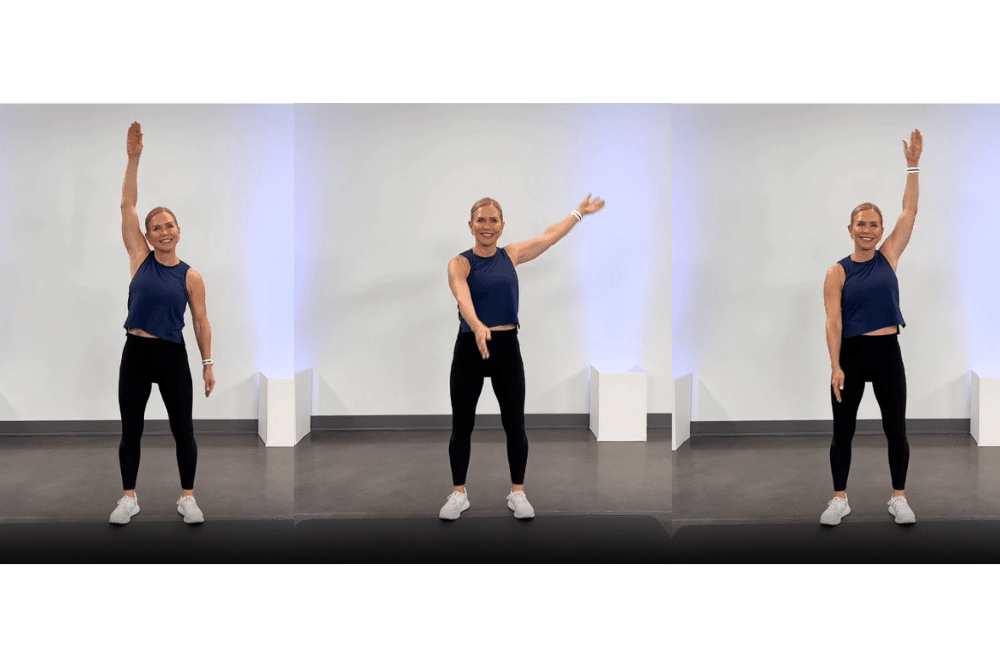
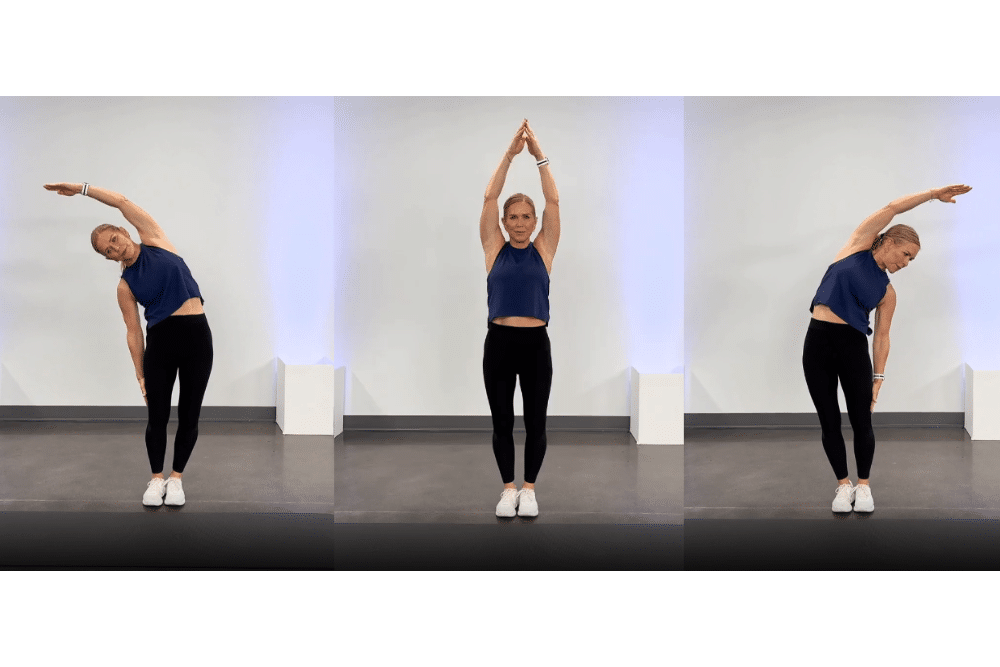
4. Standing Side Bends

Chris Freytag demonstrating standing side bends.

Photo Credit: Get Healthy U

The standing side bend stretches the spine and obliques (side abs). This helps improve posture for sports, new exercise, and daily activities.

How to perform a standing side bend:

  1. Stand tall with feet and legs together. On an inhale, reach both arms straight up overhead. 
  2. Lower your right arm to the right side of your body. On an exhale, lengthen the left arm over your head, bending your body gently to the right. 
  3. Inhale to return both arms overhead and repeat on the left side. Do six to 10 reps per side.

Do this exercise in a sturdy chair if you get tired from standing or can’t keep your balance while bending. If chair exercises fit your comfort zone, try these 10 best chair exercises for seniors too!

Muscle Groups Targeted: Spine, Obliques

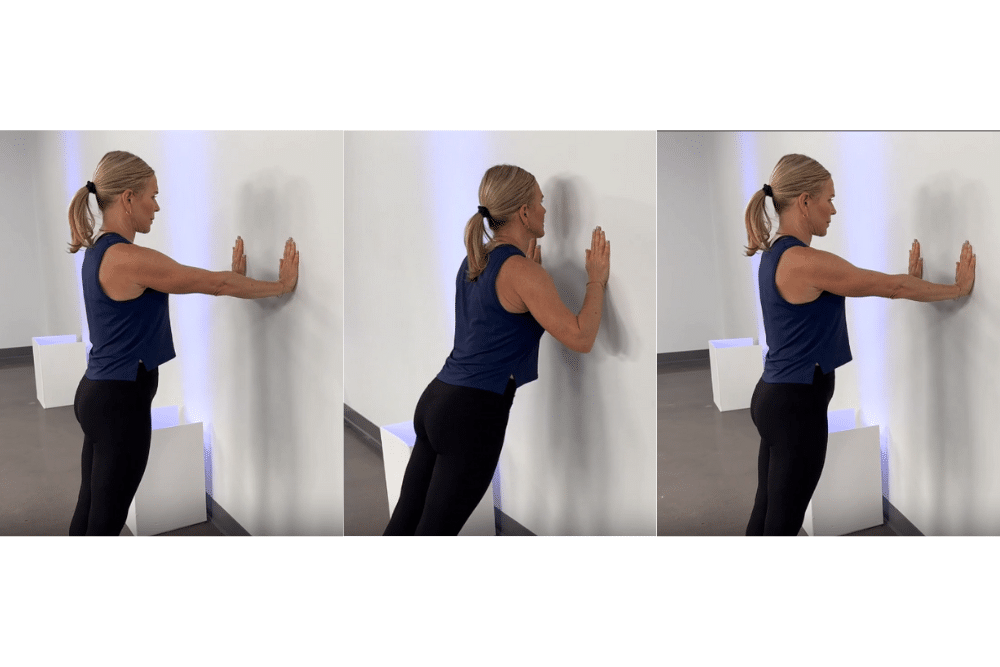
5. Wall Push-Ups

Chris Freytag demonstrating wall push-ups.

Photo Credit: Get Healthy U

Wall push-ups are a great mobility exercise for seniors that target the shoulders, chest and triceps. It helps with daily activities such as pushing open doors and getting up from a chair.

How to perform a wall push-up:

  1. While standing, place your hands on a wall shoulder-width apart.
  2. Perform a push-up, lowering your chest toward the wall slowly. Then press back up.
  3. Your elbows should angle behind you, not point straight out to the sides.
  4. Do six to 10 reps.

Muscle Groups Targeted: Shoulders, Triceps

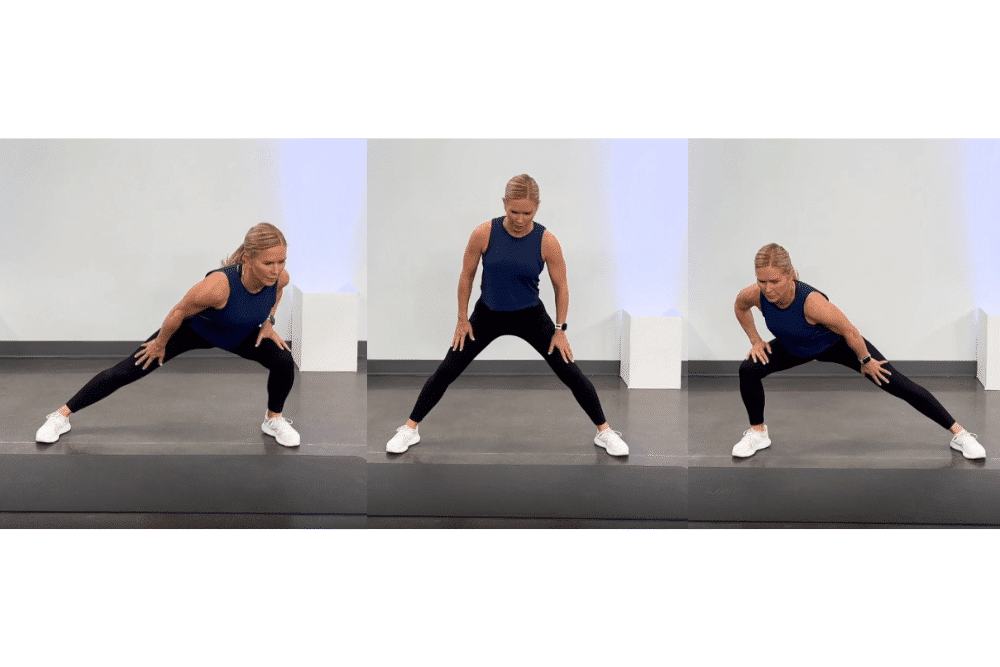
6. Side-to-Side Lunges

Chris Freytag demonstrating side to side lunges.

Photo Credit: Get Healthy U

This is a great lower body exercise for strengthening your quads, glutes, hamstrings, and inner and outer thighs. And by moving side-to-side, you’ll improve balance and stability.

How to perform a side-to-side lunge:

  1. Start standing with feet slightly wider than shoulder-width apart and toes pointed forward. 
  2. Shift your body weight onto one leg and bend the knee to a 90-degree angle. Press your glutes behind you and keep the other leg straight. 
  3. Return to the center and switch sides. Do six to 10 reps per side.

To make this exercise easier, shorten your range of motion or hold onto the back of a chair for balance.

Muscle Groups Targeted: Quads, Glutes, Hamstrings, Outer Thighs, Inner Thighs

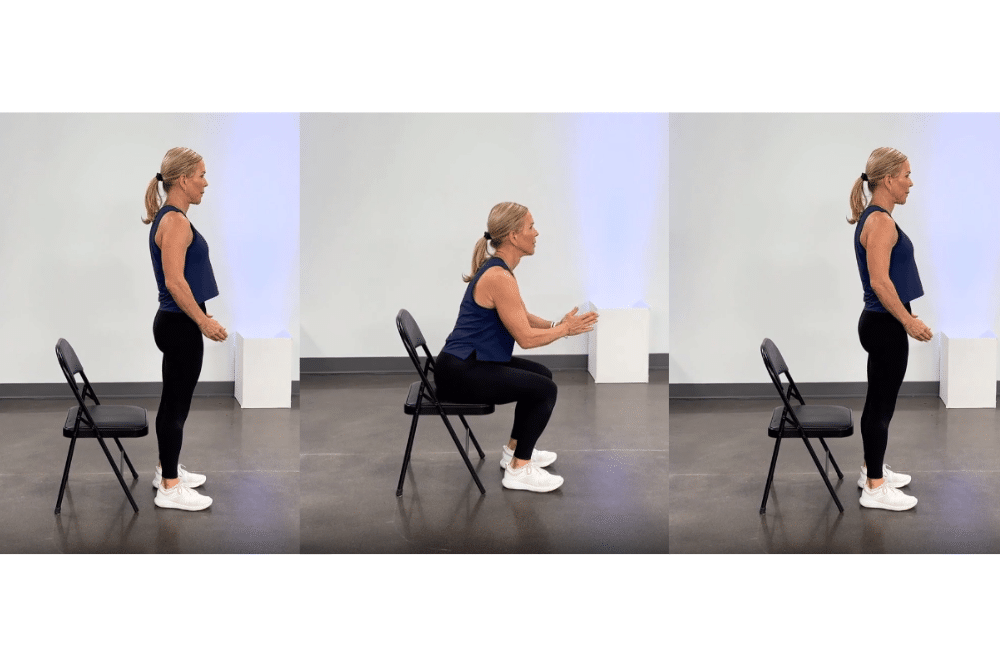
7. Chair Squats

Chris Freytag demonstrating chair squats.

Photo Credit: Get Healthy U

This move strengthens the lower body and opens up the hips, helping build the strength and mobility you need to climb stairs and go from sitting to standing. 

How to perform a chair squat:

  1. Stand directly in front of your chair, facing away from it with feet shoulder-width apart and toes pointing forward.
  2. Keeping your chest lifted, bend your knees to sit your hips down and back. Gently tap the chair with your butt.
  3. Push yourself back up to the starting position. Do six to 10 reps.

Muscle Groups Targeted: Quads, Glutes, Hamstrings

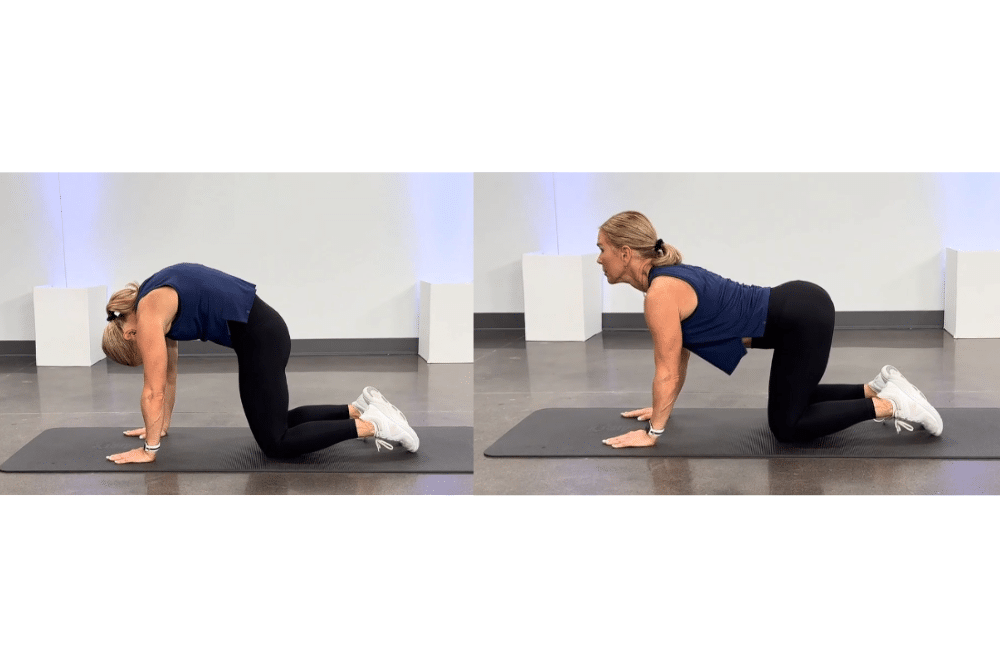
8. Cat-Cows

Chris Freytag demonstraing cat-cows.

Photo Credit: Get Healthy U

The cat-cow yoga pose is a great mobility exercise for seniors that uses slow movements to release tension all along the spine, from the neck to the tailbone. It’s very effective for improving posture and doesn’t require any special equipment.

How to perform a cat-cow:

  1. Begin on your hands and knees with hands directly under shoulders and knees directly under hips. 
  2. Start with your spine in a “neutral” or long position. On an exhale, slowly tuck your tailbone, lowering the crown of your head so your back gently rounds into a cat pose. 
  3. Return to a neutral spine. On an inhale, gently lift your chest and tailbone so your lower back curves downward. Look slightly upward with a relaxed neck. This is cow pose.
  4. Continue alternating between cat and cow for six to 10 reps.

You can also do cat-cow standing if the floor version is too challenging. Simply place your hands on top of your knees or on the seat of a chair and focus on moving your spine.

Muscle Groups Targeted: Neck, Spine, Shoulders, Upper Back, Middle Back, Lower Back

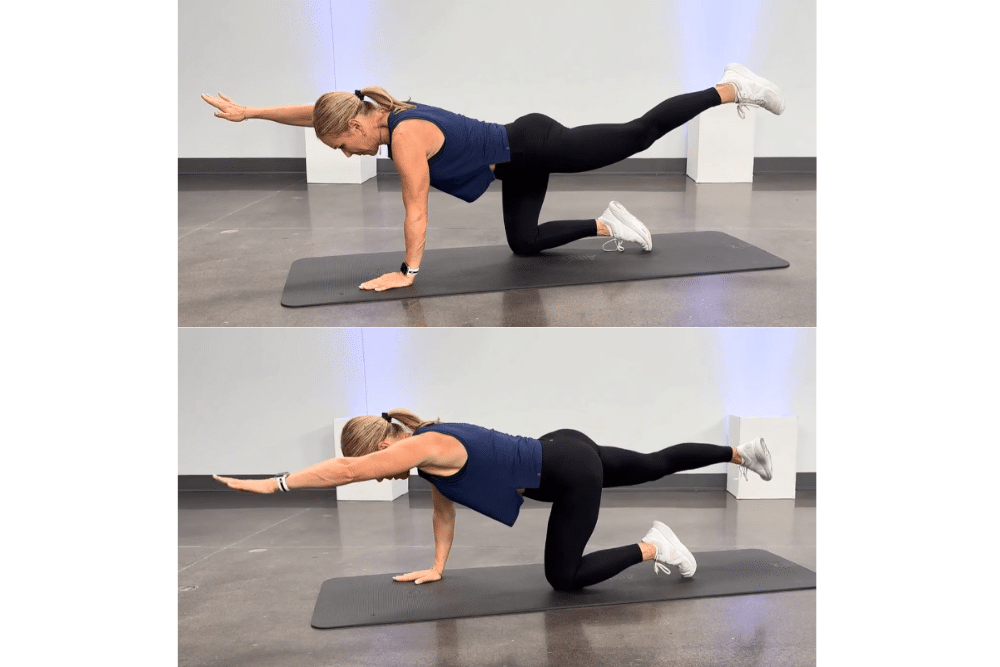
9. Bird Dogs

Chris Freytag demonstrating bird dogs.

Photo Credit: Get Healthy U

The bird-dog strengthens the lower back and abdominals while teaching your body to balance and find stability.

How to perform a bird-dog:

  1. Begin on your hands and knees with hands directly under shoulders and knees directly under hips. 
  2. Reach one arm long, draw in the abdominals, and extend the opposite leg behind you. Hold briefly. 
  3. Return your hand and knee to the floor and repeat on the other side. Do six to 10 reps per side.

To make the exercise easier, lift just one limb at a time instead of two. Or keep your limbs closer to the ground. 

Muscle Groups Targeted: Abdominals, Lower back

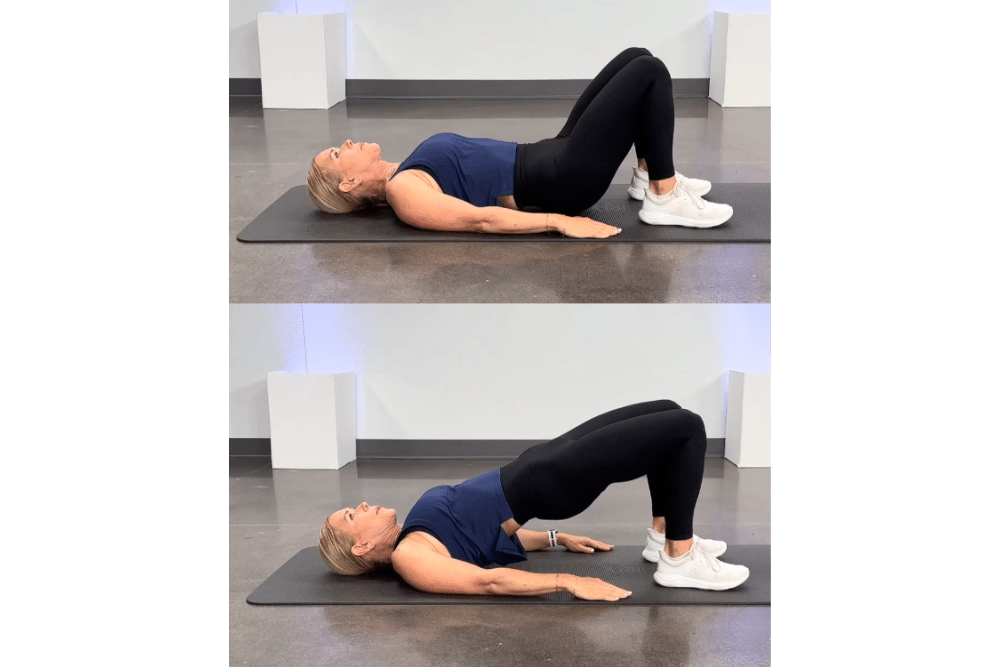
10. Bridges

Chris Freytag demonstrating a bridge exercise.

Photo Credit: Get Healthy U

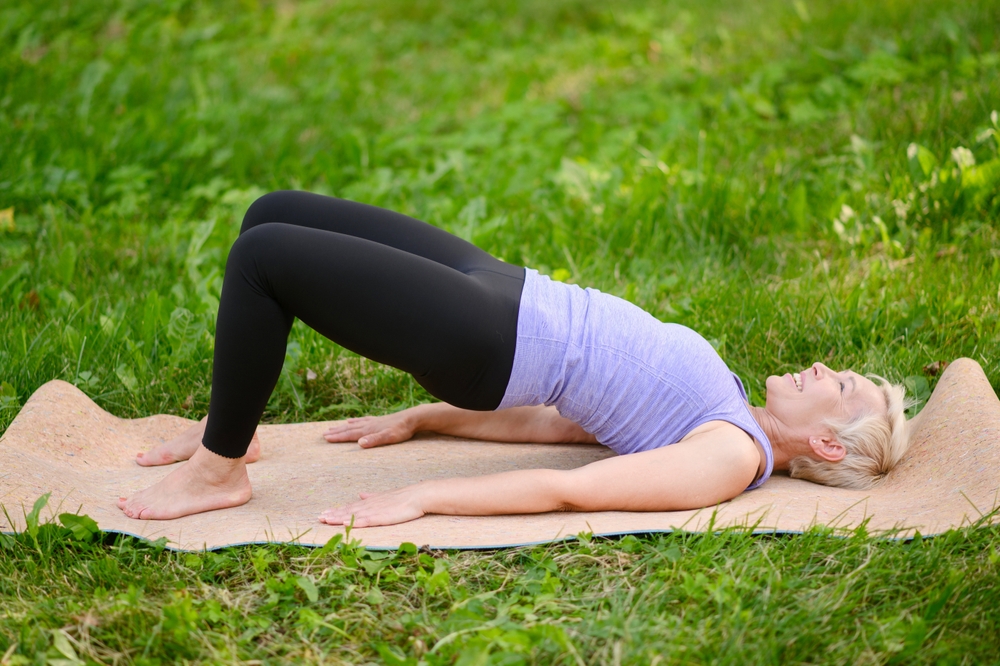
The bridge is a classic yoga pose that stretches the chest, neck, spine and hips and also strengthens the glutes, core and lower back.

How to perform a bridge:

  1. Lie on your back with knees bent and feet flat on the floor close to your glutes. Your knees should be in line with your hip bones.
  2. Place your arms flat on the floor at your sides and tuck your shoulders under your back.
  3. Press your palms into the ground as you raise your hips, squeezing your glutes and abdominals. Keep your neck relaxed on the mat.
  4. Continue to move your hips up and down for 30 seconds.

Muscle Groups Targeted: Chest, Neck, Spine, Glutes, Abdominals, Lower Back

Stubborn Belly Fat? These 9 Expert Tips Can Help

Believe it or not, you can get the body you want – at any age!

Ready to lose lower belly fat? Unfortunately, endless sit-ups aren’t the answer.

The reason? You can’t spot-reduce belly fat. If you want to lose fat, you have to lose it all over.

Getting rid of stubborn belly fat and sculpting the muscles underneath requires a healthy diet and ramping up your workouts. 

Here are nine helpful lifestyle and exercise tips from experts to help get rid of that annoying lower belly fat.

1. Get Active!

A senior couple power walking in the park.

Photo Credit: Depositphotos

To lose weight all over, you have to shed your “extra layer” of visceral fat to see the muscles underneath. That’s where cardio comes in!

The CDC recommends 150 minutes of moderate-intensity exercise each week, including anything from jogging, jumping rope, cycling, or a spin class.

Walking is also a great option! There are so many benefits from regular walking, including:

  • It burns calories: A power walk can burn anywhere from 200 to 400 calories per hour or more, depending on the speed.
  • It can ease knee pain from osteoarthritis.
  • It can protect your heart: Research shows walking can lower your risk of cardiovascular events like a heart attack or stroke.
  • It can help prevent varicose veins.
  • It helps improve your immune system.
  • It can lower your blood pressure.

The bottom line? Whether you enjoy running, walking, or dancing, there is no “right” way to raise your heart rate, so pick what you like to do!

2. Try HIIT Workouts

A woman running on a treadmill at the gym.

Photo Credit: Shutterstock

If you are willing to try High-Intensity Interval Training (or HIIT), it’s a top choice for anyone looking to get rid of belly fat. HIIT helps you burn more fat and calories in less time!

HIIT exercises require maximum effort through quick, intense bursts of exercise followed by short recovery periods. HIIT workouts include some of the best exercises to train and condition your aerobic and anaerobic energy systems.

Consider HIIT your intense workouts, which you only need two to three times a week. Combine them with low-intensity exercise to maximize weight loss!

3. Incorporate Ab-Targeting Exercises

happy middle aged menopausal woman doing exercise plank

Photo Credit: Depositphotos

While you can’t spot-reduce fat in any area of your body, you can absolutely work to tone (or spot-sculpt) specific areas (especially your abs) by using strength training and toning exercises.

Core exercises and lower ab workouts will strengthen and tighten your abs and promote healthy aging. Strong core muscles are important for better balance and most daily activities.

If you’re not sure how to get started, check out some of our best lower-ab exercises that target unwanted belly fat!

4. Create a Calorie Deficit

A woman in a pink shirt blending a smoothie in the kitchen.

Photo Credit: Shutterstock

It’s fairly straightforward: If you want to lose excess fat and get rid of that lower belly pooch fast, you need to burn more calories than you take in. This is what is referred to as a “calorie deficit.”

In addition to exercise, you also need to maintain a balanced diet, cut down on processed foods (such as frozen meals, deli meats, chips, cookies, etc.), and watch your liquid calorie intake (like alcohol, tea, and soda).

Journaling about your food intake will help you understand what you’re eating and the calories in each meal. If a journal isn’t your thing, try an app like MyFitnessPal.

5. Boost Your Protein and Fiber Intake

Happy older couple unpacking a bag of groceries in the kitchen.

Photo Credit: Shutterstock

Fiber has a wide range of benefits, including helping you lose weight. Some types of fiber slow the absorption of nutrients, allowing you to feel full longer, which helps you consume fewer calories throughout the day.

Foods high in fiber include fruits (raspberries, bananas, avocados, and pears), veggies (peas, broccoli, and turnip greens), grains (whole wheat pasta and quinoa), and legumes (lentils and black beans).

Protein is made up of amino acids and helps feed and repair our muscles; however, it’s where you are getting your protein that matters most! Try good protein sources such as fish, poultry, eggs, low-fat dairy, leafy greens, broccoli, and asparagus.

6. Reduce Sugar and Refined Carbs

Close up of a woman drinking cola in a glass with a straw.

Photo Credit: Shutterstock

To maximize weight loss, especially in your lower belly, you should significantly limit or eliminate added sugars and refined carbohydrates (or “empty” calories).

Foods high in refined carbs include white flour and bread, pastries, cookies, cakes, donuts, muffins, breakfast foods like waffles and pancakes, white rice, and pizza dough.

Added sugars like those in sugary drinks (such as soda and juice), processed meals, fast food, and candy increase your hunger and desire for more sugar, neither of which makes weight loss easier! Try sticking to the natural sugar found in fruits, veggies, and dairy products.

7. Stay Hydrated

A woman holding a glass of water.

Photo Credit: Shutterstock

Water has plenty of benefits, including maintaining a healthy weight, aiding digestion (thus reducing belly bloat), improving energy, and reducing hunger.

Moreover, in a living, moving body, skeletal muscle is 75 to 80 percent water. In order to put healthy muscle on your body, drinking water is necessary!

On average, you should be drinking at least 8-10 glasses of water a day. If you exercise regularly, add another glass or two to that.

8. Focus on Stress Management

A calm woman meditating.

Photo Credit: Shutterstock

Although it’s not necessarily the first step in reducing belly fat, chronic stress can certainly be counterproductive to weight loss. Research suggests a correlation between high cortisol levels (also known as the stress hormone) and increased abdominal fat. 

Some ways to help manage stress include meditation, yoga, breathing exercises, self-care, therapy, and exercise.

9. Prioritize Sleep

Overhead view of a middle-age woman sleeping on bright blue sheets.

Photo Credit: Shutterstock

You may not think sleep is connected to your weight loss journey, but research shows otherwise!

A study published in the journal Annals of Internal Medicine found that when dieters got a full night’s sleep, more than half of their weight loss was fat, as opposed to sleep-deprived dieters whose fat loss only accounted for one-fourth of their total weight loss.

Adults should regularly get the recommended 7 to 9 hours of sleep to stay healthy. Try these 15 tips for getting better sleep.

7 Minute Plank Challenge for Stronger Summer Abs

Planks are one of those solid, tried-and-true workout moves that deliver on what it promises — tight, strong abs. If you’ve nailed the basic plank and are ready to take it to the next level, we’ve got you covered. This is the challenge you need to stay fit in 2024!

Each of our plank variations offers the elements of balance, symmetry, oblique lifts, and lower back engagement to give you a complete, all-around core strength challenge.

Follow These Workout Instructions for Optimal Results:

  • Perform each exercise for the time provided and move directly to the next one.
  • Go through the routine twice for a 7-minute ab-building workout.
  • Your form is crucial, so keep everything tight and aligned.
  • This is a great challenge to add to the end of your cardio workout or at-home workout when you have a few spare minutes and want to work your core!

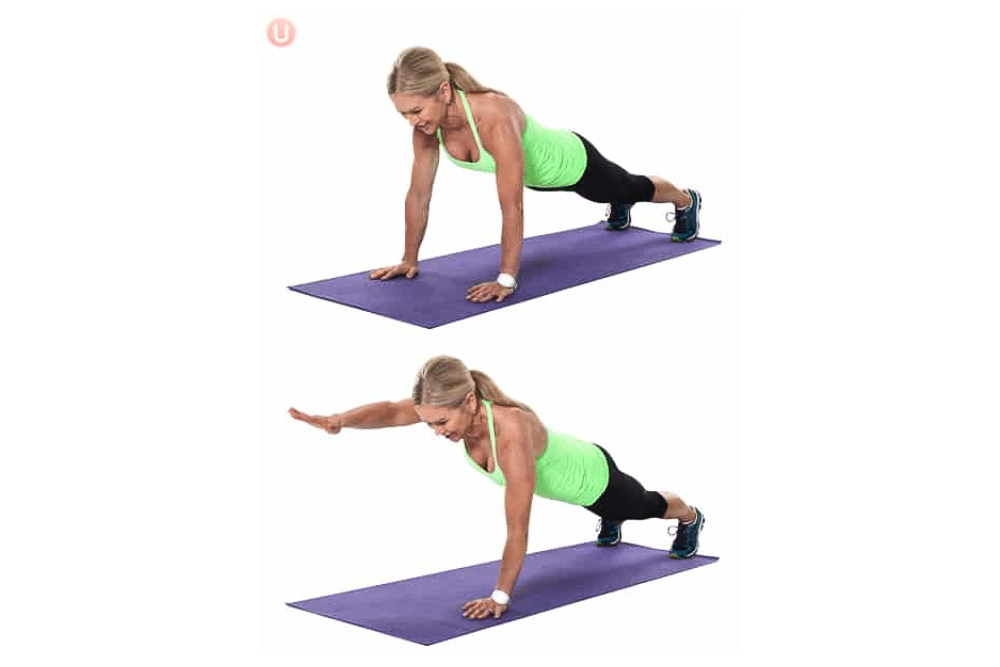
1. Plank to Single-Arm Reach

Chris Freytag demonstrating a plank to single-arm reach.

Photo Credit: Get Healthy U

How to do a plank to single-arm reach:

  1. Begin in a plank position with your shoulders over your wrists, your feet together, and your body in a straight line.
  2. Raise your right arm and hold for one count.  Repeat on the other side.
  3. Continue for 30 seconds.

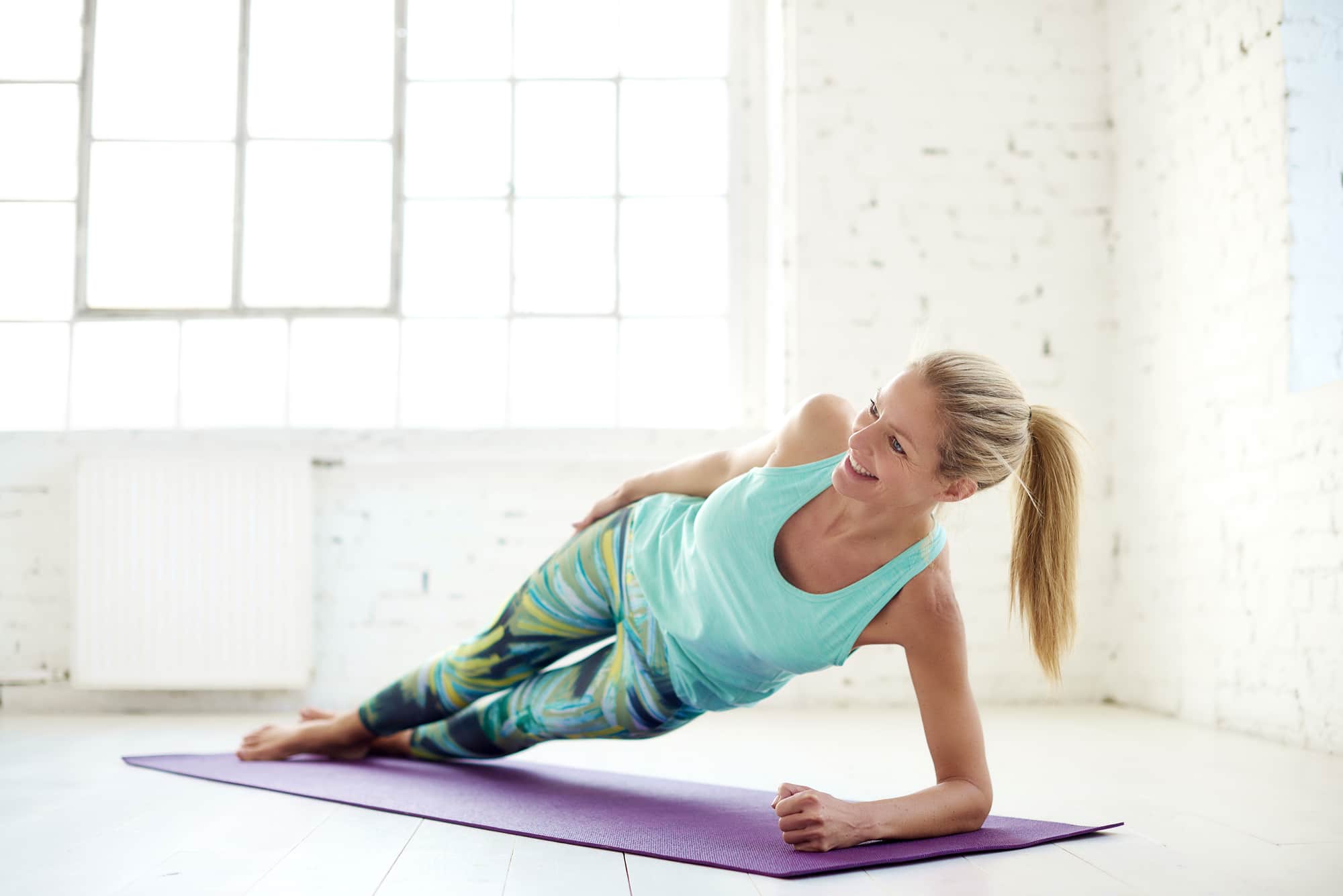
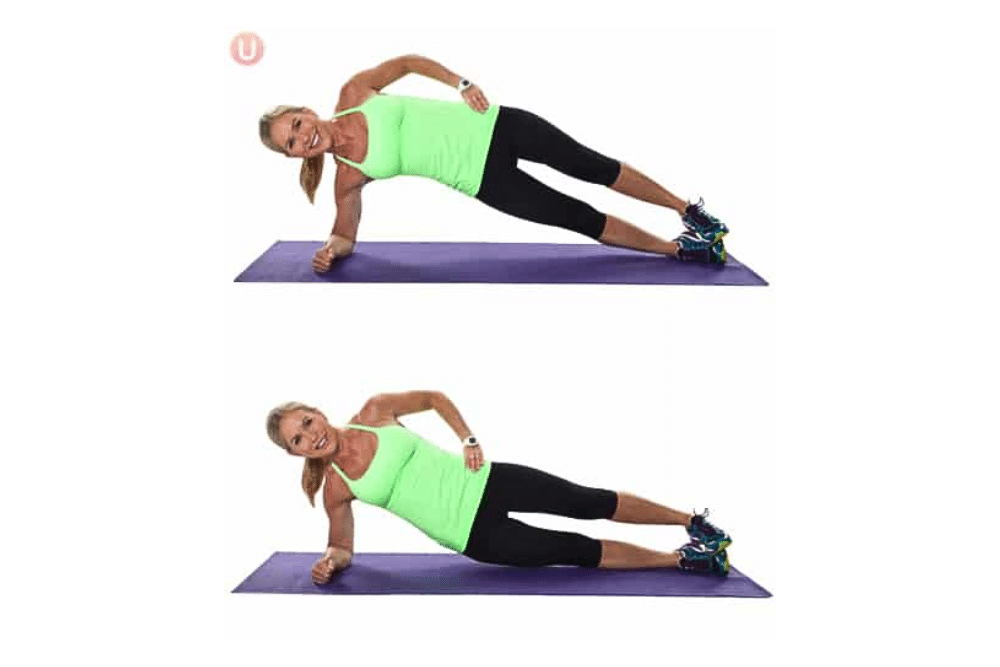
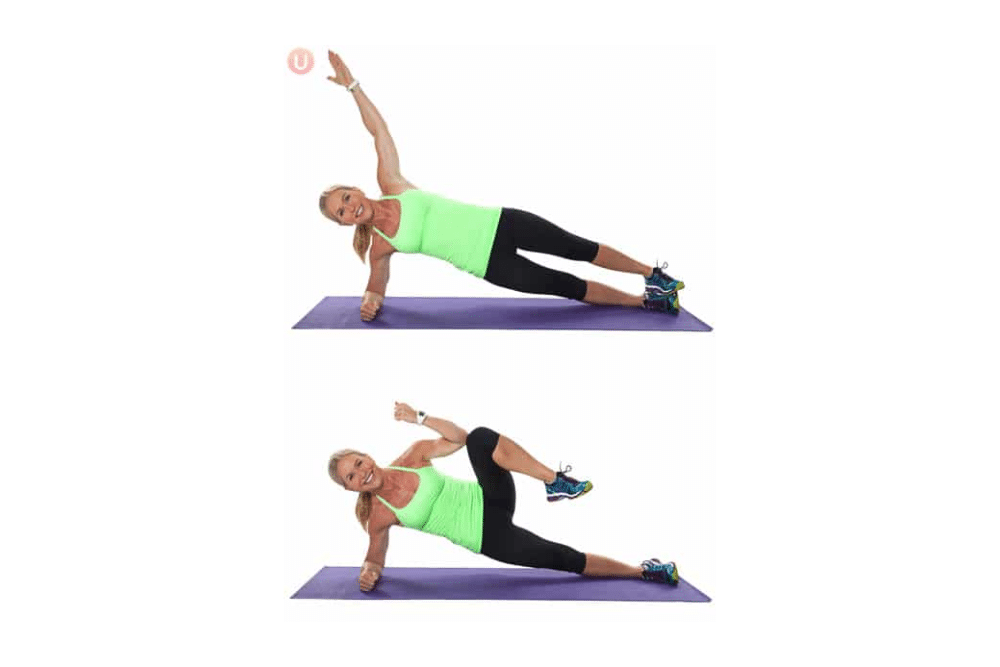
2. Side Plank Lift-and-Lower Exercise

Chris Freytag demonstrating a side plank lift and lower exercise.

Photo Credit: Get Healthy U

How to do a side plank lift-and-lower:

  • Come into a side forearm plank by lying in one long line on one side, stacking your elbow under your shoulder and keeping your forearm on the mat perpendicular to your body. Stack your feet and stay in one long line as you engage your core and lift your hips up forming a side forearm plank.
  • Dip your hips down toward the mat and lift back up using your obliques and core muscles.
  • Keep dipping for 30 seconds. Then, switch to the other side for another 30 seconds.

3. Side Plank Crunch

Chris Freytag demonstrating a side plank crunch.

Photo Credit: Get Healthy U

How to do a side plank crunch:

  1. Come into a side forearm plank by lying in one long line on one side, stacking your elbow under your shoulder, and keeping your forearm on mat perpendicular to your body. Stack your feet and stay in one long line as you engage your core and lift your hips up forming a side forearm plank. Lift your top arm toward the ceiling.
  2. Bring the elbow on your top arm and knee on your top leg in to tap the elbow and knee together. Then reach both long and repeat the tap working your obliques and entire core with these crunches.
  3. Perform for 30 seconds on each side.

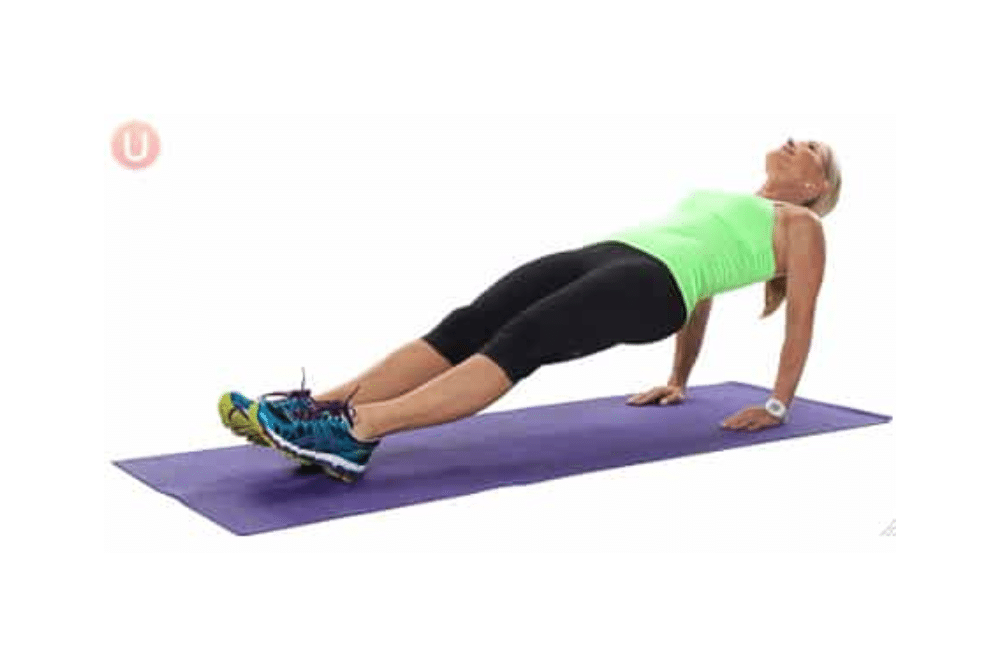
4. Reverse Plank Exercise

Chris Freytag demonstrating a reverse plank.

Photo Credit: Get Healthy U

How to do a reverse plank:

  1. Start seated on the floor with legs long in front of your body. Place hands behind your hips slightly wider than shoulders with fingers pointed toward your feet.
  2. Lift hips and torso off the floor and gaze up toward the ceiling keeping your neck relaxed. Keep your body in a long line with softly pointed toes. Keep abdominals tight and do not let your back sag.
  3. Hold for 30 seconds, then release to the floor slowly.

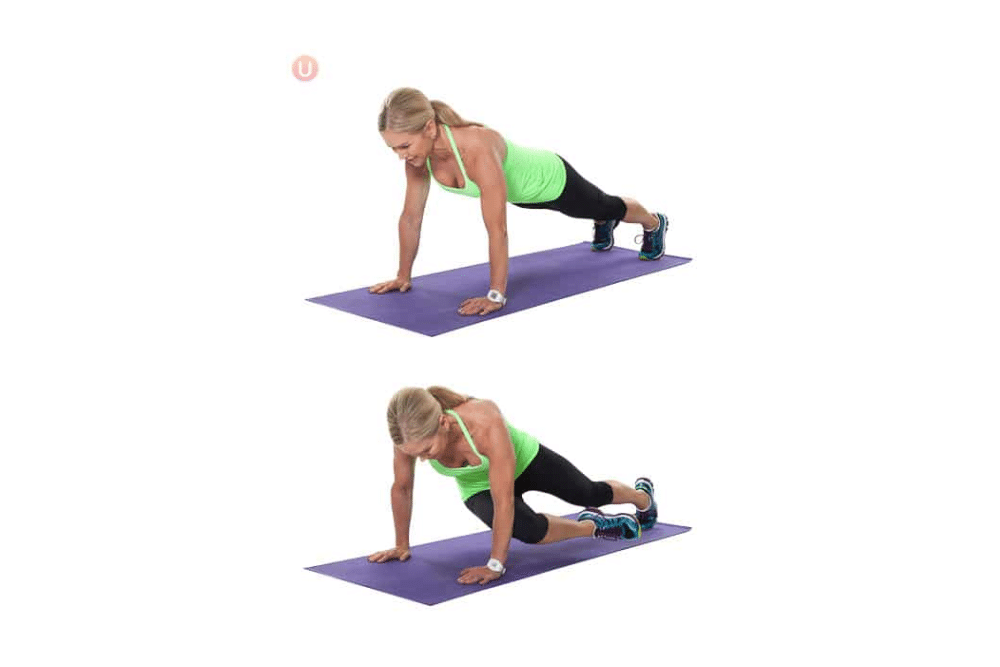
5. Cross-Body Plank

Chris Freytag demonstrating a cross body plank.

Photo Credit: Get Healthy U

To perform a cross-body plank:

  1. Begin in a plank position with your shoulders over your wrists, your feet together, and your body in a straight line.
  2. Lift your right leg off the floor and bring your knee toward your chest and across your body, bringing your knee as close to your opposite elbow as possible. Return your leg to be back in a full plank and repeat on the opposite side.
  3. Repeat for 30 seconds.

Rest for 30 seconds and repeat all five moves for a total of 7 minutes!

Embracing a Positive Menopause Mindset: 5 Expert Tips

Use my five expert tips to transform your energy to focus on a positive menopause mindset and enjoy this stage of life!

I’ve always been a firm believer in the power of positive thinking. I have long repeated the phrase, “where our mind goes, our energy flows.” And as the menopause transition started to rear it’s head in my life,  I realized that I was going to have to embrace this next chapter with a can-do attitude.

How I managed menopause was going to be up to my mindset. 

Growing up, our female relatives may not have discussed menopause with us, or if they did, it was often only in reference to the common menopause symptoms like unpleasant hot flashes, night sweats, and mood swings that come with it. Because of this, as most of us approach menopause, we’re typically greeted with either a lack of information altogether or a completely negative picture of how to deal with it. 

Menopause is a significant transition in a woman’s life. Now on the other side of the transition, I want to share how a positive menopause mindset during this phase helped me maintain my sanity. Mindset is crucial for several reasons, impacting both mental and physical well-being.

Here’s why a positive attitude can make all the difference.

This Is Not Your Mother’s Menopause

In the past, menopause was often shrouded in secrecy, treated as something to be endured quietly. Today, however, we have the opportunity to redefine this stage of life.

Menopause is not a curse; it’s a natural transition that every woman goes through.

It’s time to let go of those outdated beliefs and educate ourselves on what is really happening to our bodies. Menopause is not an end but a new beginning—a chance to focus on our health and well-being like never before.

Many of us live for decades after menopause and how we look at this new part of our lives will define what comes next. 

My Personal Journey with Menopause

Perimenopause just snuck up on me. I had a full six months where I felt tired and moody and I didn’t put two and two together till after the fact that it was my fluctuating hormones causing these physical symptoms.I was struggling in my workouts, had brain fog, and in general felt flat. 

And then I realized it was the beginning of my journey through menopause.

I never was taught anything about menopause in my earlier years and never discussed it with my mom or friends so this was all new for me. To start feeling better, I decided to “reset my mindset”  and dig into the books, research, podcasts, anything I could get my hands on.

I’ve put together the best tips that worked for me below so you can hopefully have a manageable and positive peri- and post menopausal transition:

1. Embrace the Change

Menopause is a natural part of life’s journey, marking the transition from one stage to another. By seeing menopause as a natural and expected milestone, you can approach it with acceptance and even anticipation.

Remember that this change signifies a new chapter filled with opportunities for growth, self-discovery, and renewed focus on personal health and well-being. This phase can be a time to reconnect with yourself, discover new interests, and set new goals.

2. Knowledge is Power

Get educated about what is happening to your body and what to expect. Understanding the biological and hormonal changes can demystify the process and reduce anxiety.

Read books, attend seminars, and talk to healthcare providers who specialize in menopause.

Knowing what to expect and learning about various coping strategies can demystify the process and equip you with the tools needed to navigate it confidently. The more informed you are, the more control you’ll feel over your own health journey.

3. Lifestyle Tweaks

Small, intentional changes in your lifestyle can have a profound impact on how you experience menopause.

Focus on these three basics:

  • Healthy Eating: Incorporate a balanced menopause diet rich in fruits, vegetables, whole grains, and lean proteins. Foods high in calcium and vitamin D are essential for bone health, which becomes more critical during menopause.
  • Regular Exercise: Establish a consistent workout routine that includes cardiovascular exercises, strength training, and flexibility exercises. Physical activity can alleviate many menopause symptoms, including weight gain, mood swings, and sleep disturbances.
  • Mindfulness Practices: Incorporate activities like a yoga practice, meditation, or deep-breathing exercises to reduce stress and promote mental clarity. These practices can enhance emotional well-being and help you stay grounded.

These tweaks not only boost your physical health but also enhance your emotional resilience, helping you feel more energized and in control.

4. Find Your People

Building a support network is essential during menopause. Surround yourself with friends, family, and peers who understand what you’re going through.

Sharing experiences, advice, and even a good laugh can be incredibly uplifting. Don’t be shy about reaching out—you’re not alone.

5. Accept the Challenge

Look at menopause-related challenges as opportunities to grow and become more resilient. Each hurdle you encounter is a chance to gain wisdom, resilience, and a deeper understanding of yourself.

Embrace the changes with an open heart, and focus on the personal growth and strength that come from navigating this transition. By maintaining a positive mindset and seeing challenges as opportunities, you’ll find yourself more equipped to handle the ups and downs with grace and confidence.

Taking Charge of Your Health

Changing your mindset is just the beginning. There are so many symptoms of menopause but here are some practical steps you can take to navigate this time of life with confidence: 

  • Stay Active: Regular exercise can help manage symptoms like weight gain, sleep disturbances, and mood swings. Find activities you enjoy and make them a part of your routine.
  • Eat Balanced Meals: Focus on a balanced diet rich in fruits, vegetables, lean proteins, and whole grains. Proper nutrition can alleviate many menopause symptoms.
  • Prioritize Sleep: Quality sleep is essential. Establish a bedtime routine, create a comfortable sleep environment, and avoid caffeine and electronics before bed. These are my best tips for getting better sleep.
  • Manage Stress: Incorporate stress-reducing activities such as yoga, meditation, or deep breathing exercises into your daily life.
  • Stay Hydrated: Drink plenty of water to help manage hot flashes and maintain overall health. These are the best tips for drinking more water every day.

Embracing a New Chapter

Menopause is a significant life transition, but it doesn’t have to be negative. As a personal trainer, health coach and post menopausal woman, I’ve seen firsthand how powerful a positive mindset can be.

Embrace the change, educate yourself, and make small lifestyle tweaks to enhance your well-being. Surround yourself with supportive people and view challenges as opportunities for growth.

You’ve got this. Menopause is just another chapter in your incredible life story. Let’s make it a beautiful one.

10 Ways To Burn Calories Without Exercising

While more intense exercise like high-intensity interval training (HIIT) is essential for losing fat, there are plenty of everyday activities that burn calories! Even better? They also count towards the CDC-recommended 150 minutes of moderate-intensity activity per week.

Moderate-intensity activities get you moving strenuously enough to burn off three to six times as much energy per minute as you do when sitting quietly.

Even though moderate-intensity, everyday activities might not seem like exercise, there are still great health benefits, like:

  • Increased energy
  • Reduced blood pressure
  • Reduced risk for type 2 diabetes, heart attack, stroke, and cancer
  • Lessened arthritis pain
  • Lowered risk of osteoporosis
  • Decreased  symptoms of anxiety and depression

So, if you don’t have time for a workout, try one of these 12 daily activities that burn more calories than you might realize.

(Note: All of the calorie estimates are based on data for a person weighing around 150 lbs. You may burn more or less, depending on your weight.)

1. Shopping

Midsection of a couple walking with shopping bags.

Photo Credit: Shutterstock

Calories Burned: 500-600 calories in 3 hours

It’s fun to head out for a day of shopping to find something fresh and new! A 150-pound person can burn up to 200 calories per hour walking at about 2 mph. And let’s face it—no one shops for just an hour!

2. Cleaning

Woman in gloves holding a mop bucket in the kitchen.

Photo Credit: Shutterstock

Calories Burned: 324 calories per hour

Maybe cleaning isn’t under the category of things you enjoy. (Or maybe it is!) In either case, it’s a very active way to spend your day and quickly burn calories!

Doing some heavy cleaning, whether it’s mopping, shining the windows, or washing the car by hand, is a great way to be productive while getting in a decent workout.

3. Painting the House

Couple painting the wall in their house.

Photo Credit: Shutterstock

Calories Burned: 352 calories per hour

There’s something refreshing about painting a room, isn’t there? It brightens the entire space and gives it a calm, clean feel.

Instead of spending hundreds of dollars hiring a painter for your next painting job, save the money and do it yourself. Paint is relatively cheap, and you’ll burn tons of calories in the process.

4. Grocery Shopping

Happy older couple unpacking a bag of groceries in the kitchen.

Photo Credit: Shutterstock

Calories Burned: 212 calories per hour

You have to do it anyway, right? Instead of ordering groceries online and having them delivered, burn some calories by doing it yourself!

Pushing a cart up and down the grocery store aisles for an hour will burn around 200 calories. Bonus if you bag your own groceries!

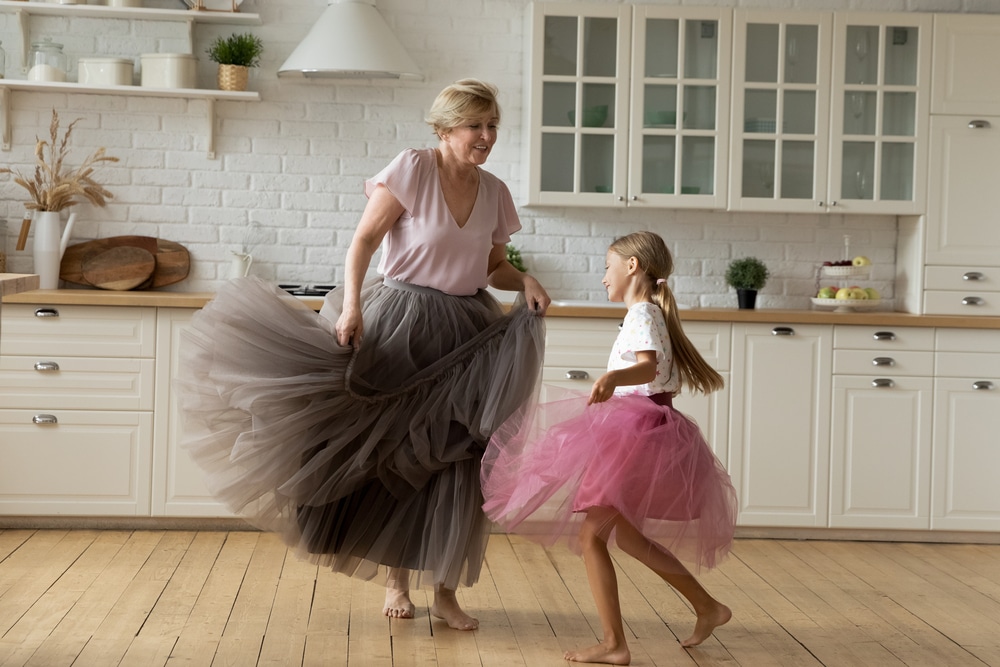
5. Playing with the Kids

A grandmother dancing in the kitchen with her granddaughter.

Photo Credit: Shutterstock

Calories Burned: Around 282 calories per hour

Whether they’re your kids or your grandkids, getting some one-on-one play time can be incredibly beneficial! Play hopscotch, dance, help them ride a bike, play tag, or get moving in another way that everyone enjoys.

Try these 45 fun and healthy activities to do with kids for even more great ideas!

6. Outdoor Clean-Up

A volunteer collecting trash on the beach.

Photo Credit: Shutterstock

Calories Burned: Around 1800 calories in four hours

If you’re into volunteering, cleaning up a beach or other outdoor area is great exercise!

If you head out for a few hours to pick up trash, you’ll do something good for the community and torch a bunch of calories in the process.

7. Mowing the Lawn

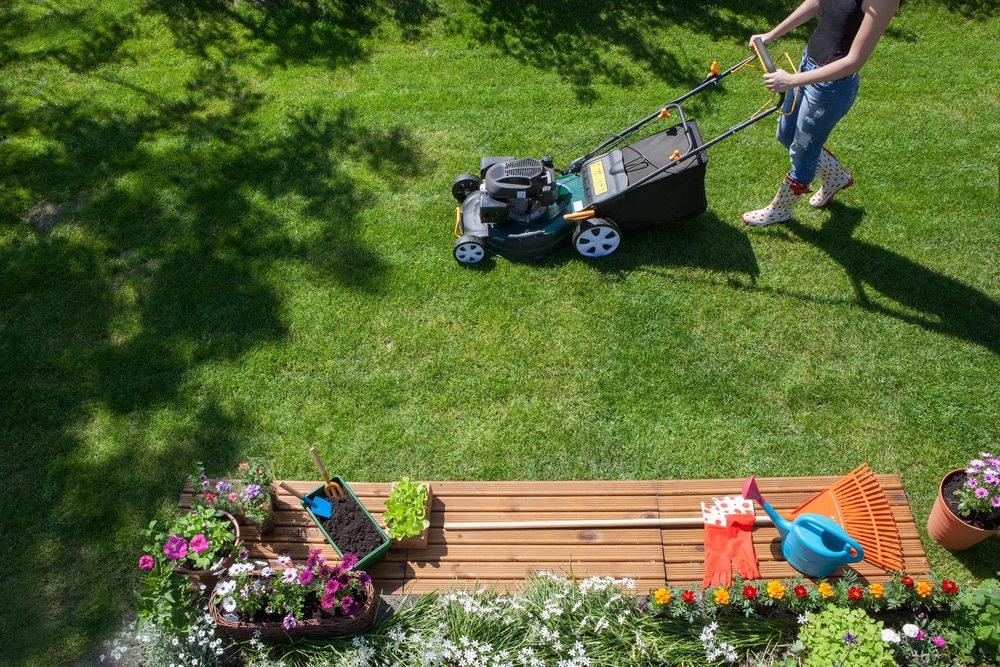
A woman pushing a lawnmower across a green a lawn.

Photo Credit: Shutterstock

Calories Burned: 396 calories per hour

No, not with a riding mower! Pushing a lawnmower, even the self-propelled style, is a fantastic cardiovascular and strength activity combined in one.

Plus, you’ll get a great leg workout with bonus core strengthening when you pull your abs in to protect your back.

8. Walking the Dog

woman walking dog

Photo Credit: Shutterstock

Calories Burned: 133 calories in 30 minutes

When you take your dog out for some fresh air (and a potty break), you can burn over 100 calories in 30 minutes just by walking 3.5 mph. Not too shabby, right?

If you don’t have a dog, grab a cup of coffee and enjoy a morning stroll. A leisurely walk might not feel like much, but you’re getting more of a workout than you think!

Try my power walking challenge to up your steps while getting support along the way.

9. Moving

An older couple packing moving boxes.

Photo Credit: Shutterstock

Calories Burned: 500 calories per hour

No one likes moving, but the next time your friend asks for help, you might want to consider it!

Moving heavy boxes around can burn around 500 calories per hour. And since moving is usually an all-day affair, you’ll get a pretty major workout without going near a gym!

10. Sleeping

woman sleeping in bed

Photo Credit: Shutterstock

Calories Burned: 44 calories per hour

Yep—you burn calories while you sleep! This might motivate you to aim for those coveted 7-8 hours of sleep every night: getting a good 8 hours can burn around 350 calories.

These are my favorite tips for getting better sleep!