While individual concerns can vary widely, there are some common health concerns among women over 50. As a 58-year-old fitness trainer, Chris Freytag works with women on these concerns every day, and she’s narrowed down the most frequent.
Here are her top five concerns for women over 50, along with advice on how to help.
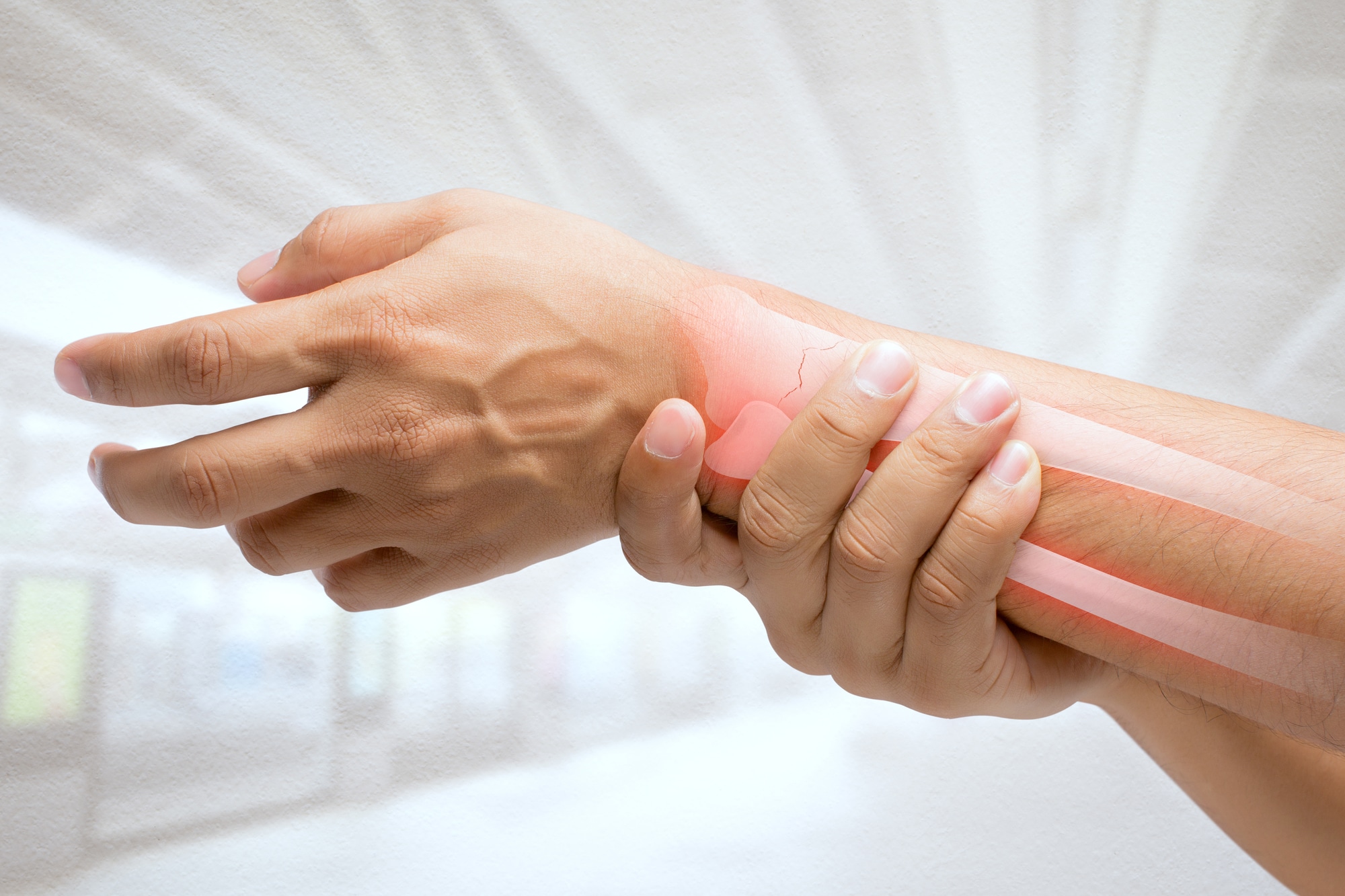
Solution: Weight-bearing exercises, resistance training, and activities like walking and dancing can help maintain bone density. Adequate calcium and vitamin D intake are also crucial!
You can ask your healthcare provider whether calcium and/or vitamin D supplements may benefit your specific needs.
Concern #2: Weight Management and Metabolism
Photo Credit: Shutterstock
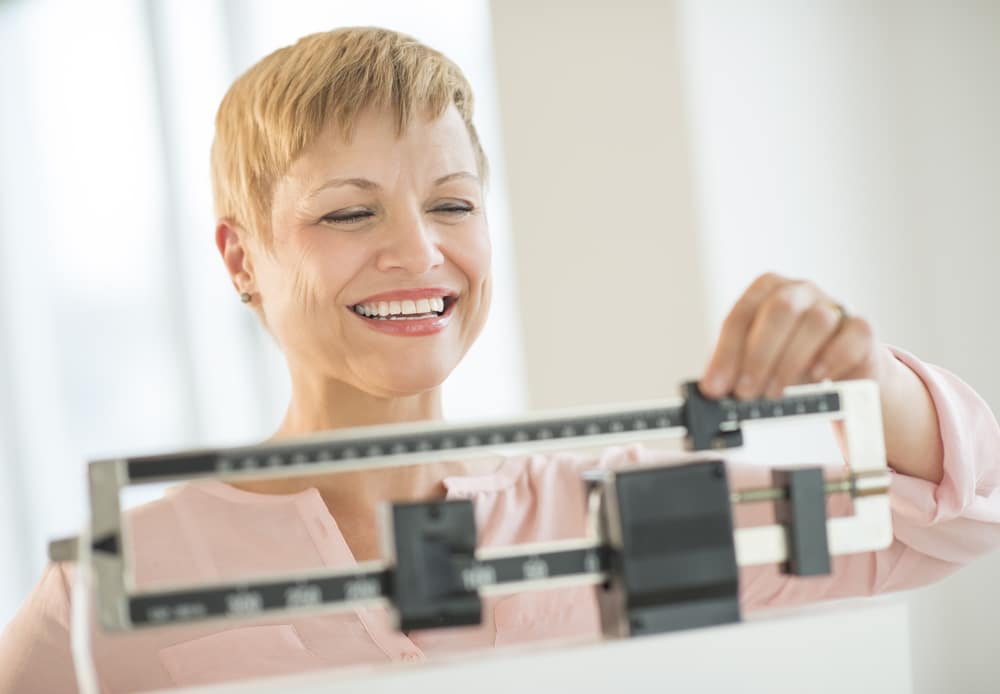
Many women over 50 find it harder to maintain a healthy weight and struggle with a slowing metabolism.
Solution: Regular exercise, including both aerobic activities (like walking or swimming) and strength training, can boost metabolism and maintain muscle mass.
Moreover, eating habits play an important role in maintaining a healthy metabolism. Eating small meals more frequently throughout the day can help speed up your metabolism after 50 and keep it running at its optimal level.
It’s important to eat balanced meals that include lean proteins, complex carbohydrates, and healthy fats. Avoid processed foods high in sugar and saturated fat, as these can slow down your metabolism over time.
Concern #3: Heart Health and Cardiovascular Disease
Photo Credit: Shutterstock
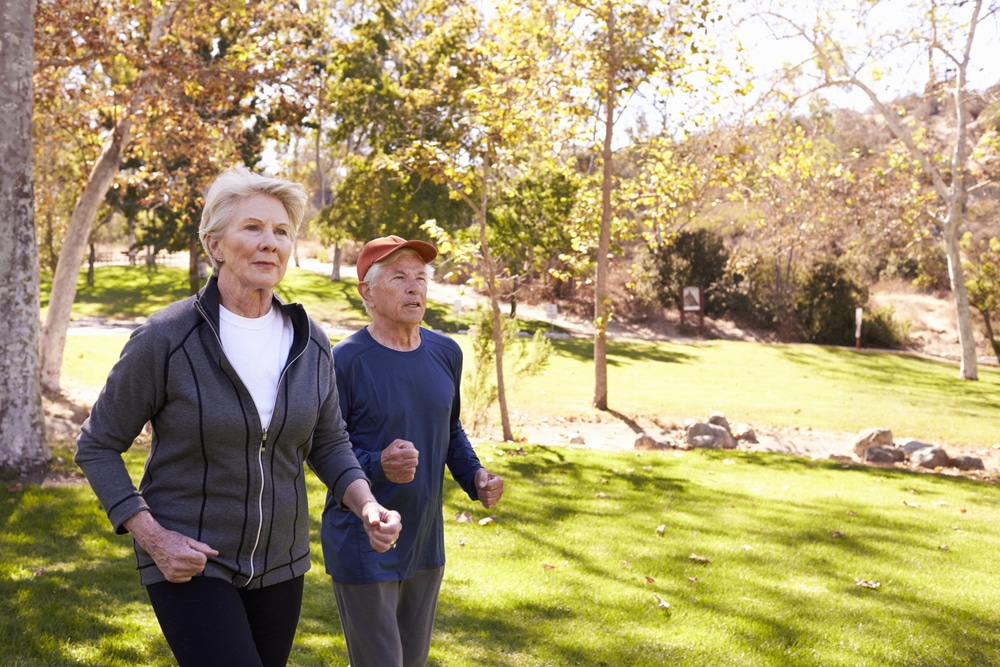
Heart disease risk increases with age, making cardiovascular health a significant concern.
Solution: Engage in aerobic exercises regularly to keep the heart healthy. This could include activities like jogging, cycling, or even brisk walking.
Additionally, managing stress through practices like yoga or meditation can also support heart health.
Concern #4: Joint Pain and Arthritis
Photo Credit: Shutterstock
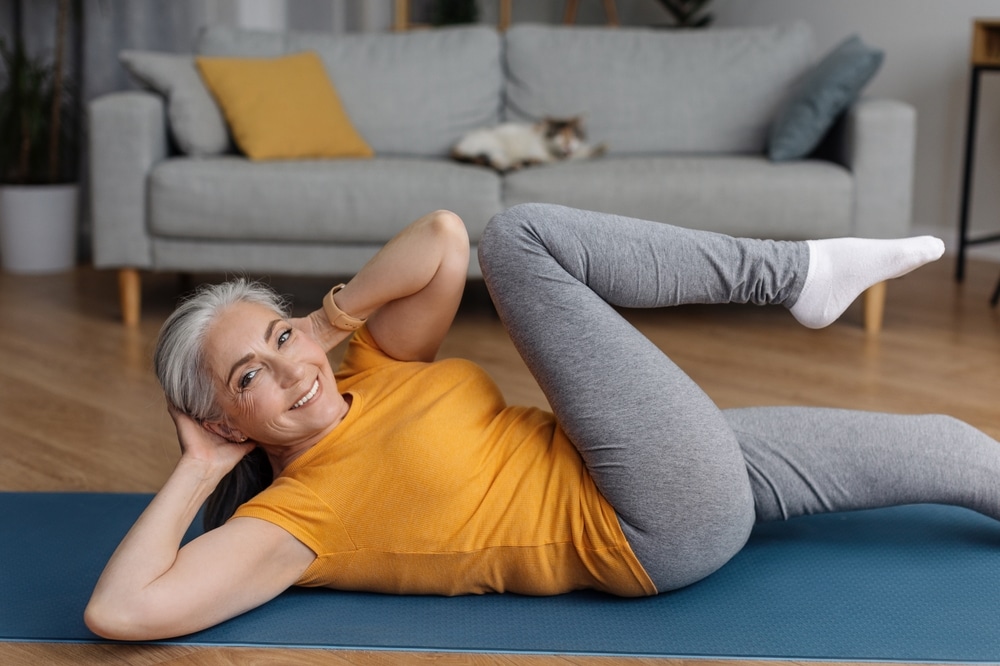
Joint pain and arthritis become more common, limiting mobility and affecting the overall quality of life.
Solution: Low-impact exercises such as swimming and water aerobics can help reduce joint stress.
Strength training to support the muscles around the joints can also alleviate pain. Maintaining a healthy weight is crucial, as it reduces the load on joints.
Decreasing inflammation is also important! Researchers have identified that many foods found in the Mediterranean diet can help combat inflammation, which is a major cause of arthritis-related joint pain.
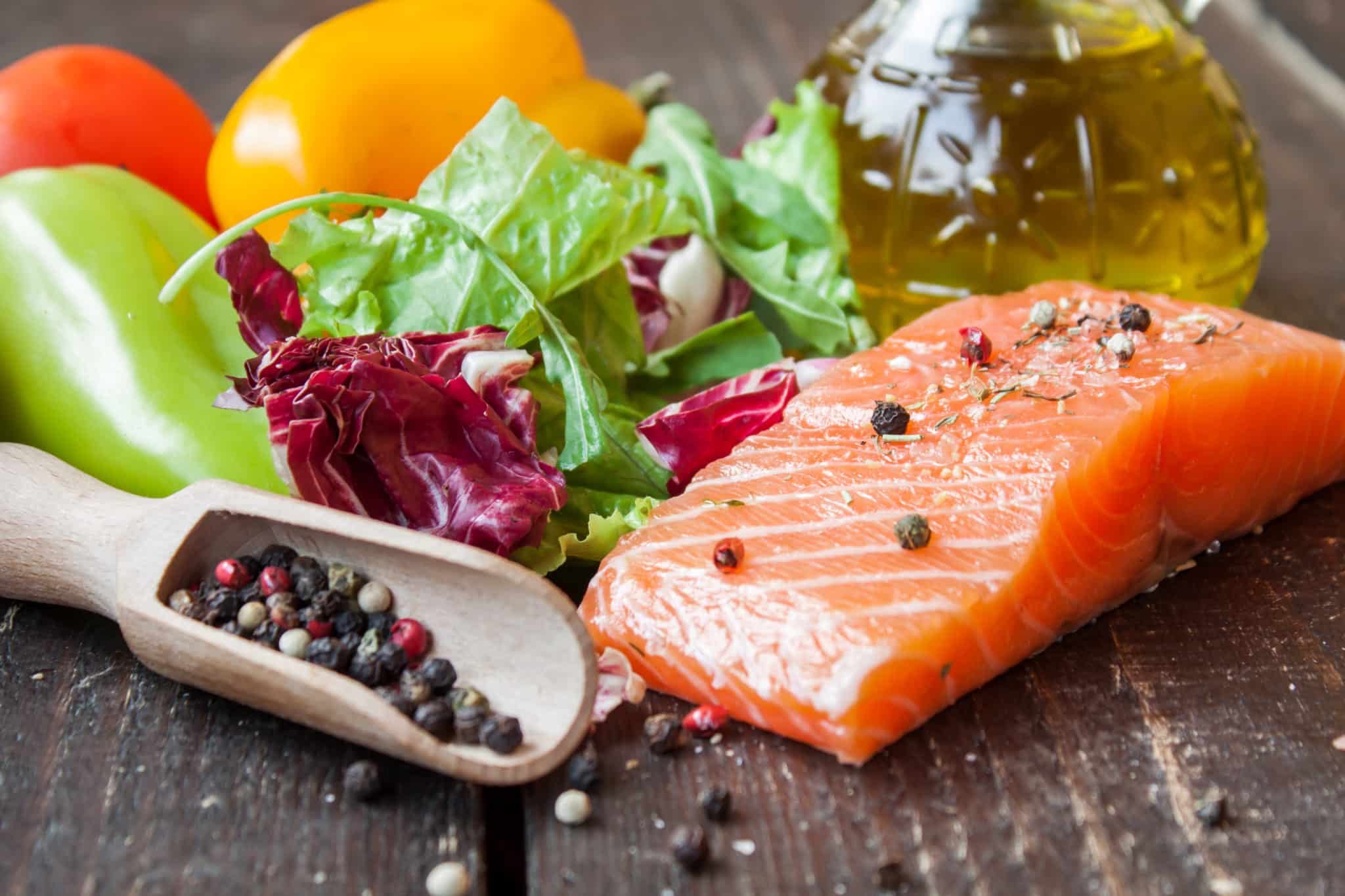
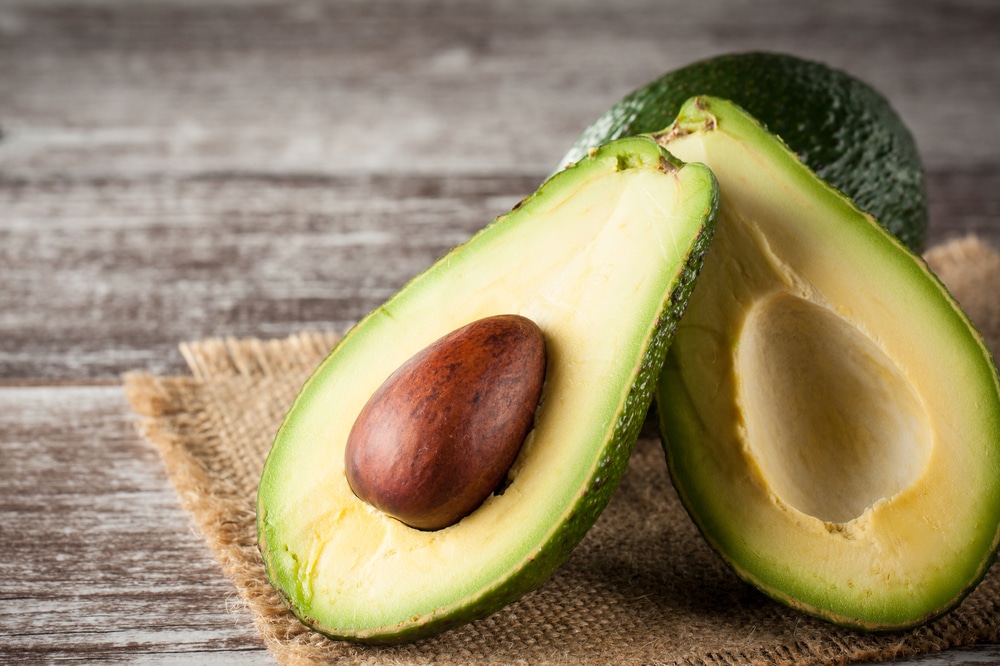
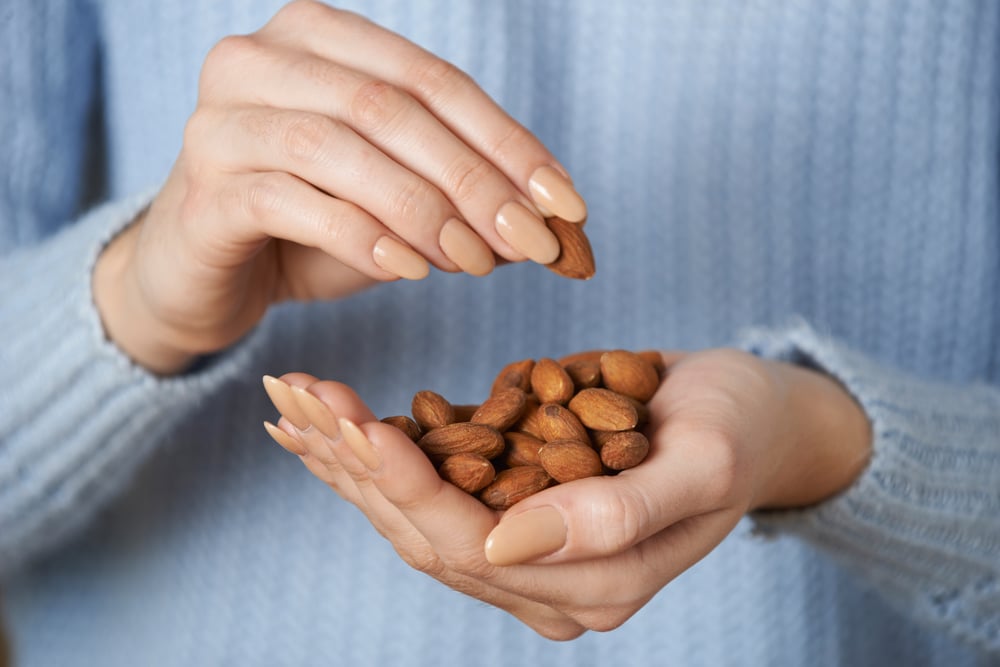
Staples of the Mediterranean diet include fish like salmon, tuna, and sardines; antioxidant-rich fruits and veggies like berries, spinach, and kale; and monounsaturated fat sources like almonds, avocados, and olive oil.
Concern #5: Mental Health and Cognitive Function
Photo Credit: Shutterstock
Mental health issues and cognitive decline, including memory loss and dementia, are concerns for many aging women.
Solution: Regular physical activity is linked to improved mood and cognitive function. Engage in activities that challenge the brain, such as puzzles or learning new skills. Prioritize social connections and consider practices like mindfulness meditation, which can support overall mental well-being.
Remember, it’s always best for individuals to consult with healthcare providers, including fitness experts or trainers, to create personalized plans that address these concerns based on their specific health needs and goals.
As the most common symptom of perimenopause and menopause, hot flashes have become the nemesis of women everywhere. While medical options can help, there are also natural remedies to try!
The most common symptoms of a hot flash include:
A sudden feeling of warmth spreading through your upper body and face
A flushed appearance with red, blotchy skin
Rapid heartbeat
Sweating (especially on your upper body)
A chilled feeling as the hot flash lets up
Hot flashes are bothersome and can be very disruptive to a woman’s life. But before rushing off to look for a prescription (that may or may not be good for you in the long run), let’s take a look at the best natural remedies for hot flashes.
1. Exercise
Photo Credit: Shutterstock
Tip number one: exercise! (Is there anything exercise doesn’t help? The answer is no!)
Women who exercise regularly report much lower frequencies and intensity of hot flashes. In a study published in The Journal of Physiology, women who undertook a gym-based exercise program for 16 weeks experienced less severe symptoms from their hot flashes.
In a separate study published in Maturitas, women who did strength training three times a week experienced almost a 50 percent reduction in hot flashes after 15 weeks!
Need help getting started? Try one of the following workouts:
There are foods that ease hot flash symptoms and those that aggravate them. The good news is the right foods will better your health in so many other ways, too!
Here are the best foods to help prevent hot flashes:
Fruits and Vegetables
All fruits and vegetables are good, but especially those with Vitamin C and E, which are antioxidants and help reduce inflammation in your body. In addition, they support the adrenal gland functions that promote hormone production, like estrogen, which ultimately helps subdue hot flashes.
Whole Grains
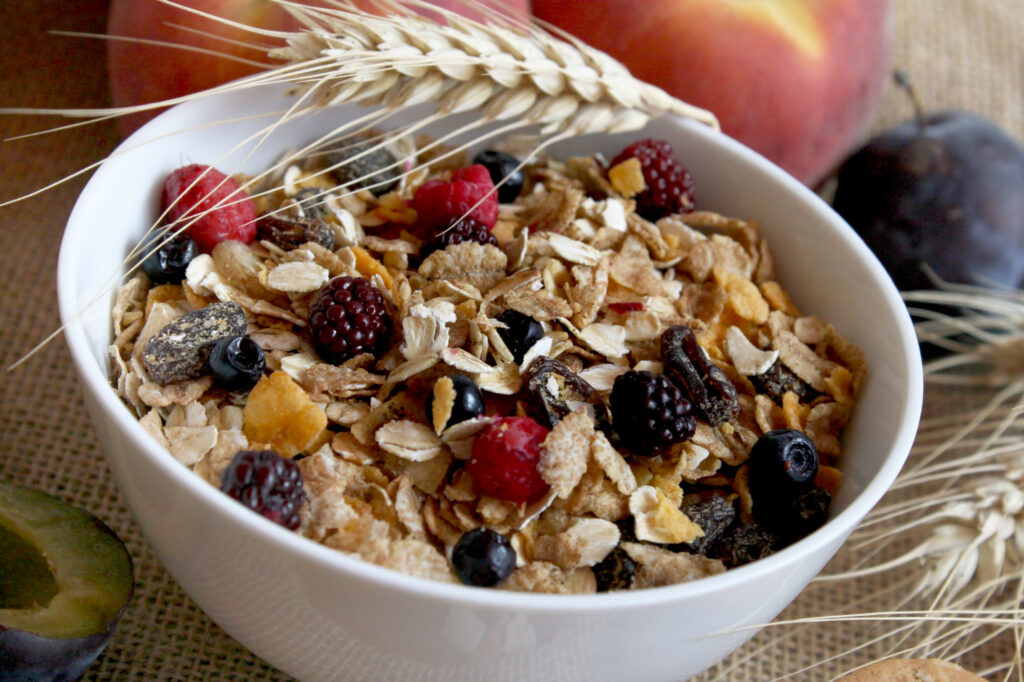
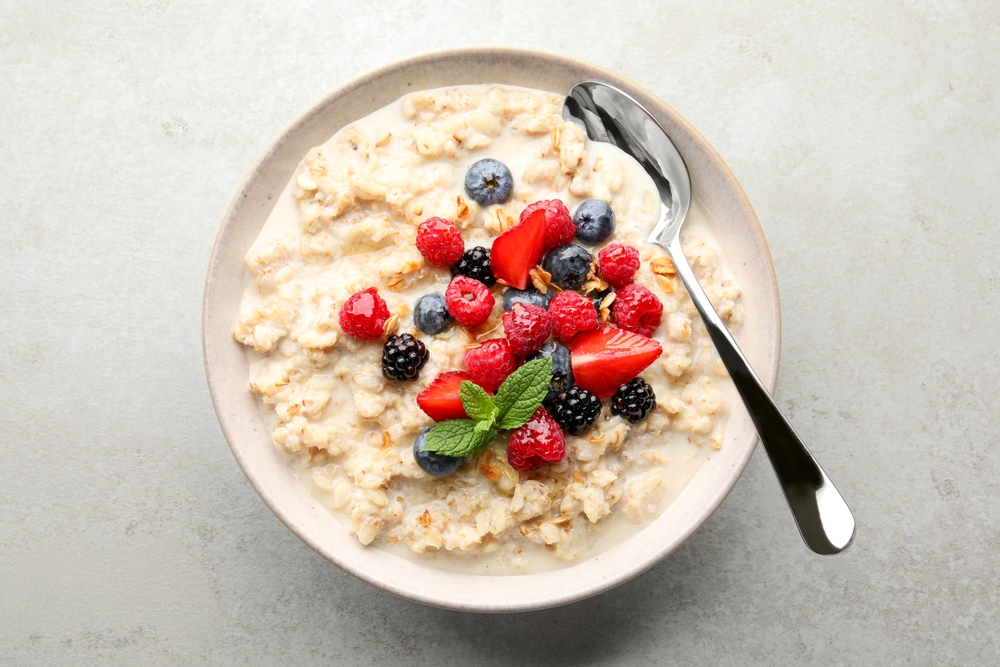
Whole grains like brown rice and oatmeal are rich in fiber, which absorbs water, keeping your stools soft and your system moving! When the system is clear, the hot flashes are fewer.
Healthy Fats
Research suggests foods high in omega-3 fatty acids may help relieve night sweats.
An additional study published in the Archives of Pharmacy Practice found that omega-3 supplements combined with vitamin E reduced hot flashes.
Foods that are high in omega-3 fatty acids include:
Sardines
Salmon
Anchovies
Flaxseeds
Avocados
Chia and hemp seeds
Soy Products
Some research suggests that soy contains compounds called genistein and daidzein that can help control hot flashes.
Some soy products to try include:
Tofu
Soybeans
Edamame
Soy milk
Tempeh
Phytoestrogen-Rich Foods
Phytoestrogens (also known as dietary estrogens) are naturally occurring compounds found in plants. When you eat foods rich in phytoestrogen, it may have a similar effect to estrogen produced by the body. This can help keep your hormones in balance during menopause and reduce hot flashes.
Some common foods that contain phytoestrogens include:
Berries
Oats
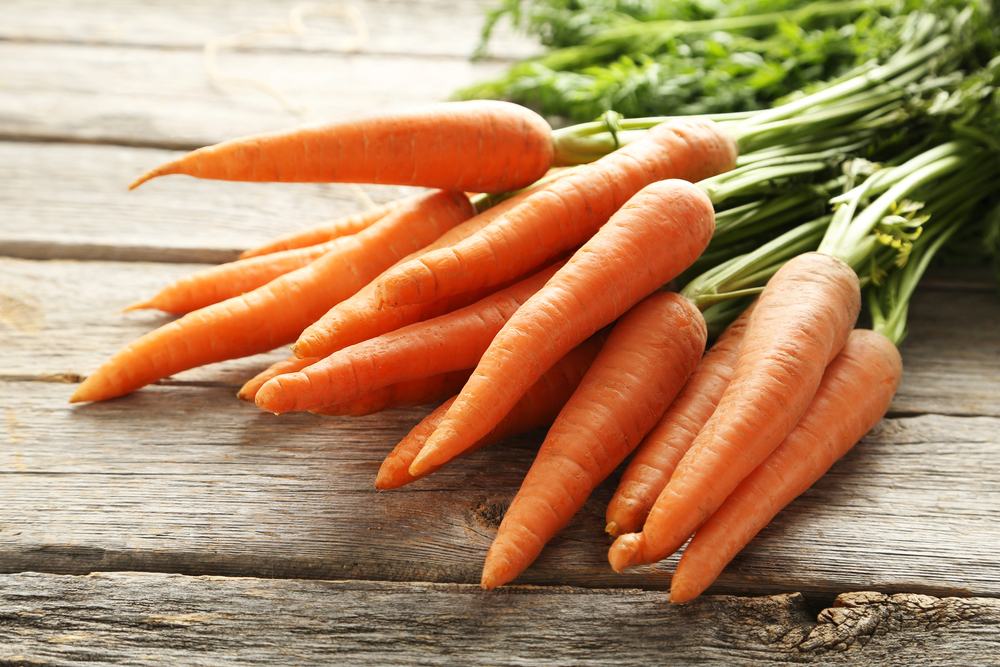
Carrots
Apples
Walnuts
Almonds
Sesame seeds
Flaxseeds
Sunflower seeds
Lentils
Wheat
Dried beans
3. Cut Out Foods that Make Symptoms Worse
Photo Credit: Depositphotos
Yep, unfortunately, some foods can exacerbate hot flash symptoms.
Here are the main culprits to try and cut back on:
Spicy Food
When you eat spicy food, your core body temperature actually rises, and some people even sweat a bit. If you are already dealing with hot flashes, you don’t need one more reason to sweat! Eat spicy food rarely and in small doses, drinking lots of water along with it.
Caffeine
Caffeine can make you moody and tired, and can increase your hot flashes. Be careful if you are consuming copious amounts of coffee or other caffeinated beverages!
Start by tapering it down to just a small amount in the morning, and, if necessary, take a week or two to cut it out completely and see what happens.
Processed Sugar
This bad boy makes your own blood sugar rise and fall quickly, which plays with the heat regulation in your body. One sure-fire way to have night sweats is to eat a sweet, sugary dessert right before bed. It’s important to cut back on sugar as much as possible!
Alcohol
Since alcohol metabolizes in a similar manner to processed sugar, you are going to have more trouble with hot flashes, night sweats, and sleep overall. Try to drink in moderation, or save it for special occasions if you’re constantly plagued with hot flashes.
4. Try Herbal Supplements and Oils
Photo Credit: Depositphotos
Herbal supplements and essential oils are great options if you’re looking to stay away from prescription meds. That said, it is still best to consult with your doctor prior to starting a supplement or oil routine.
Here are the best herbal supplements and oils for hot flashes, according to experts and research:
Dong Quai
Dong Quai is a root grown in the cold, damp mountains of Korea, Japan, and China. Also called the “female ginseng”, Dong Quai has been used for over a thousand years as a spice, tonic, and medicine.
Though studies showing implications for human health are few, Dong Quai is said to be helpful for everything from bone health to decreasing depression, lowering blood sugar, and, yes, decreasing the symptoms of menopause, including hot flashes!
Black Cohosh
Native Americans get the credit for discovering this amazing plant that helps relieve menstrual cramps and menopausal symptoms such as hot flashes, irritability, mood swings, and sleep disturbances.
Some research shows it might also help improve sleep quality, reduce hormonal imbalances tied to diabetes or fibroids, and even help women with fertility prior to menopause.
Clary Sage
Some studies have shown that sage reduces both frequency and intensity of night sweats and hot flashes. It is believed that clary sage has estrogen-like compounds that help balance the hormones in your body. A few drops of clary sage on the back of your neck or all over your feet, and you might just cool down those hot flashes!
Peppermint Oil
Peppermint can also be used to reduce the discomfort of hot flashes. Apply the same way as clary sage or add a few drops to water in a misting bottle and use it to mist your face. Bonus: the smell will be amazing!
5. Reduce Stress
Photo Credit: Shutterstock
It can be tough to reduce stress altogether, but practicing relaxation techniques may help reduce the frequency and severity of hot flashes. Moreover, anxiety and stress levels have also been associated with more hot flashes.
Some effective ways to reduce stress and promote relaxation include:
If your hot flashes tend to strike at random, here are some everyday lifestyle tips that can help:
Dress in layers and remove them as needed when a hot flash hits.
Carry a portable fan to use during a hot flash.
Keep your bedroom cool at night, and dress in loose-fitting clothes.
Increase your water intake to make up for the loss you experience during hot flashes and night sweats.
7. Stop Smoking
Photo Credit: Depositphotos
Easier said than done, but it could make all the difference! (And the benefits extend far beyond less frequent hot flashes.)
Research suggests that people who quit smoking were less likely to have hot flashes over seven years. If they did occur, they were less severe and frequent than those who smoked.
This was especially true for those who had quit smoking at least five years before menopause began.
Around the world, more than a billion people suffer from high blood pressure (known as hypertension). Unfortunately, high blood pressure increases the risk of cardiovascular diseases such as heart attack and stroke.
One of the biggest lifestyle changes to lowering blood pressure is following the right diet. The National Heart, Lung, and Blood Institute (NHLBI) recommends the DASH diet for hypertension.
Here, we’ll take a closer look at the DASH diet, 10 foods that help lower blood pressure naturally, and which foods can worsen hypertension.
The DASH Diet for High Blood Pressure: What Is It?
Including fat-free or low-fat dairy products, fish, poultry, beans, nuts, and vegetable oils
Limiting foods that are high in saturated fat (fatty meats, full-fat dairy products, and tropical oils such as coconut, palm kernel, and palm oils)
Limiting sugar-sweetened beverages and sweets
This diet has been shown to reduce the risk of heart disease by lowering high blood pressure and improving cholesterol levels.
The following are 10 foods included in the DASH diet that help naturally lower your blood pressure.
1. Berries
Photo Credit: Shutterstock
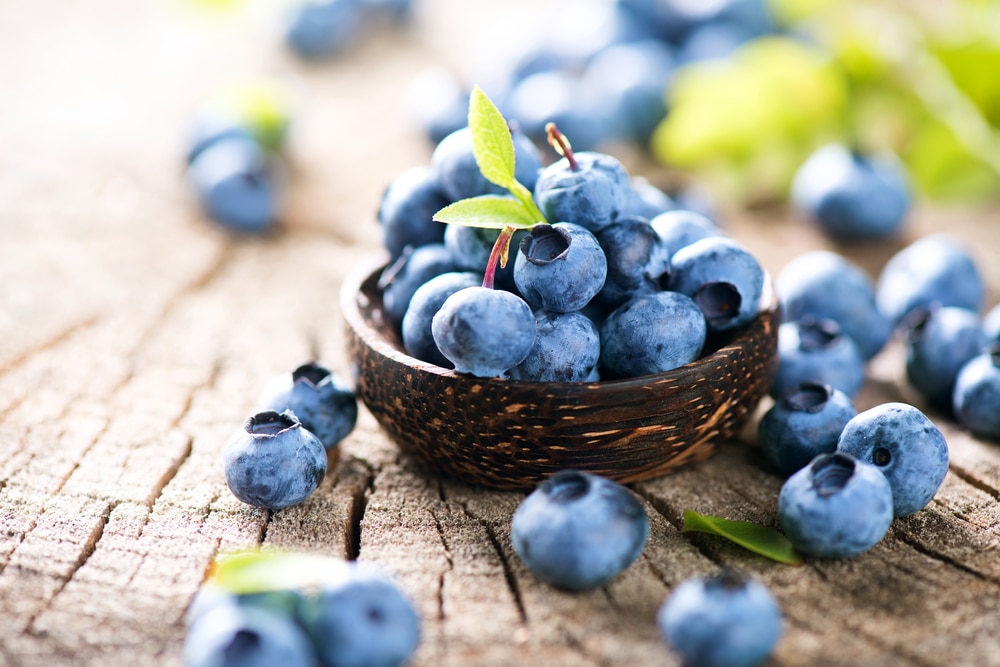
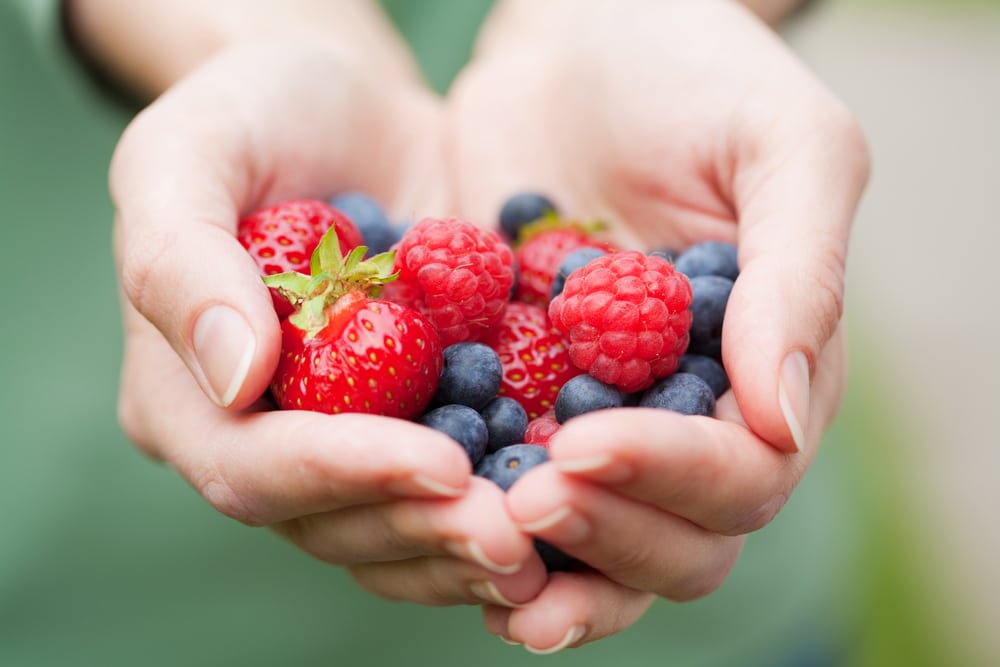
Strawberries and blueberries are rich in antioxidant compounds called anthocyanins. (And out of all the berries, blueberries contain the largest amount of anthocyanins!) Research shows that anthocyanins may help with blood flow and blood pressure regulation.
Eating about one cup of berries per day has the potential to improve blood vessel function and decrease systolic blood pressure. Sprinkle them onto yogurt, oatmeal, and cereal, or enjoy them by the handful!
2. Unsweetened Yogurt
Photo Credit: Shutterstock
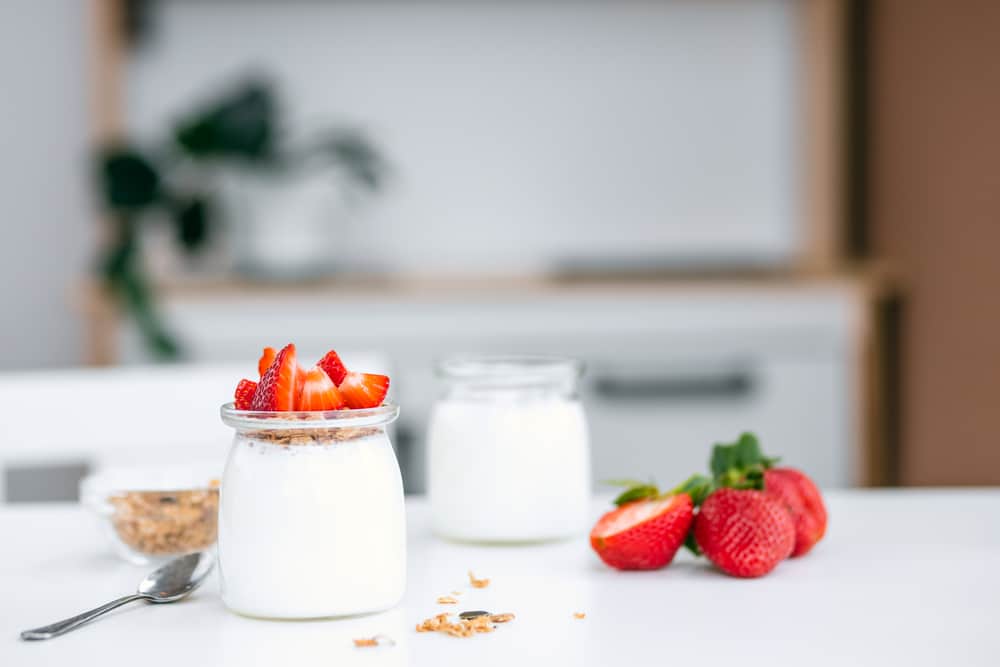
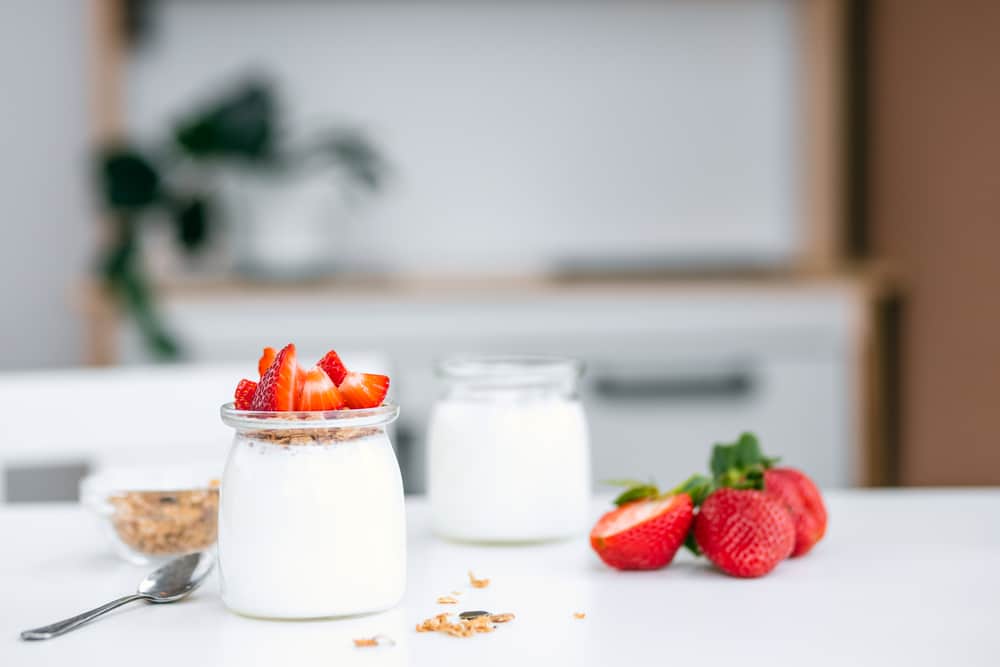
A study out of the University of South Australia found that a daily dose of yogurt may be associated with lower blood pressure—even in small amounts!
According to Dr. Alexandra Wade, one of the study’s researchers, “This study showed for people with elevated blood pressure, even small amounts of yogurt were associated with lower blood pressure. And for those who consumed yogurt regularly, the results were even stronger, with blood pressure readings nearly seven points lower than those who did not consume yogurt.”
Here’s why: Dairy products such as yogurt contain calcium, potassium, and magnesium, which are all essential in regulating blood pressure. Yogurt, in particular, also contains bacteria that help release proteins that lower blood pressure.
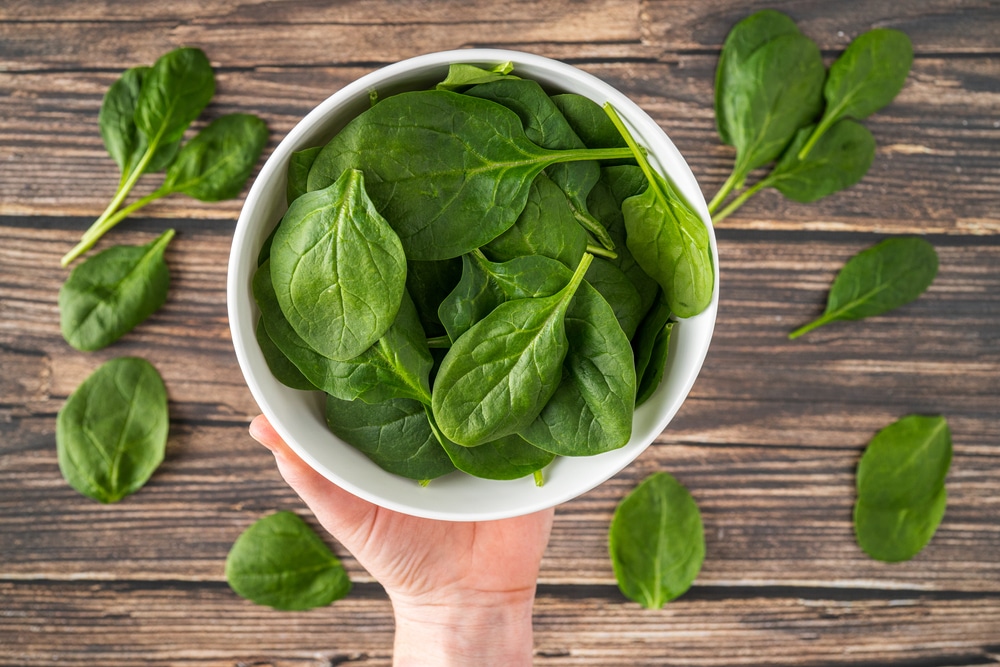
Moreover, research suggests that you can lower your blood pressure and reduce your risk of cardiovascular disease by eating at least one cup of leafy green vegetables per day, including kale, collard greens, cabbage, mustard greens, spinach, and Swiss chard.
Add them as a side dish or mix them into your main meal!
4. Fatty Fish
Photo Credit: Shutterstock
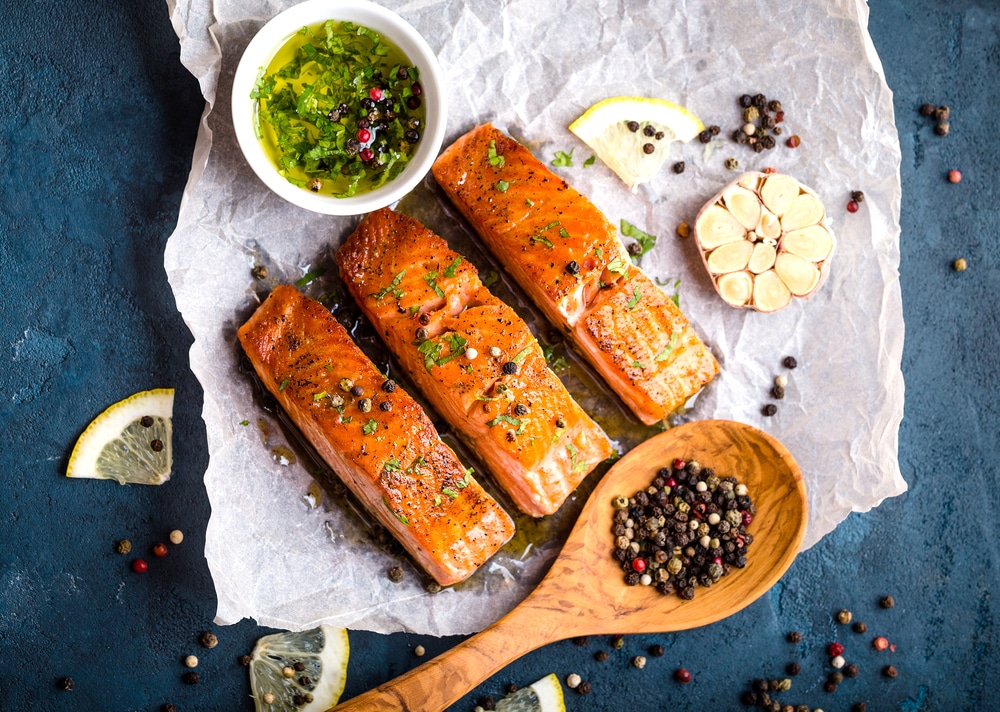
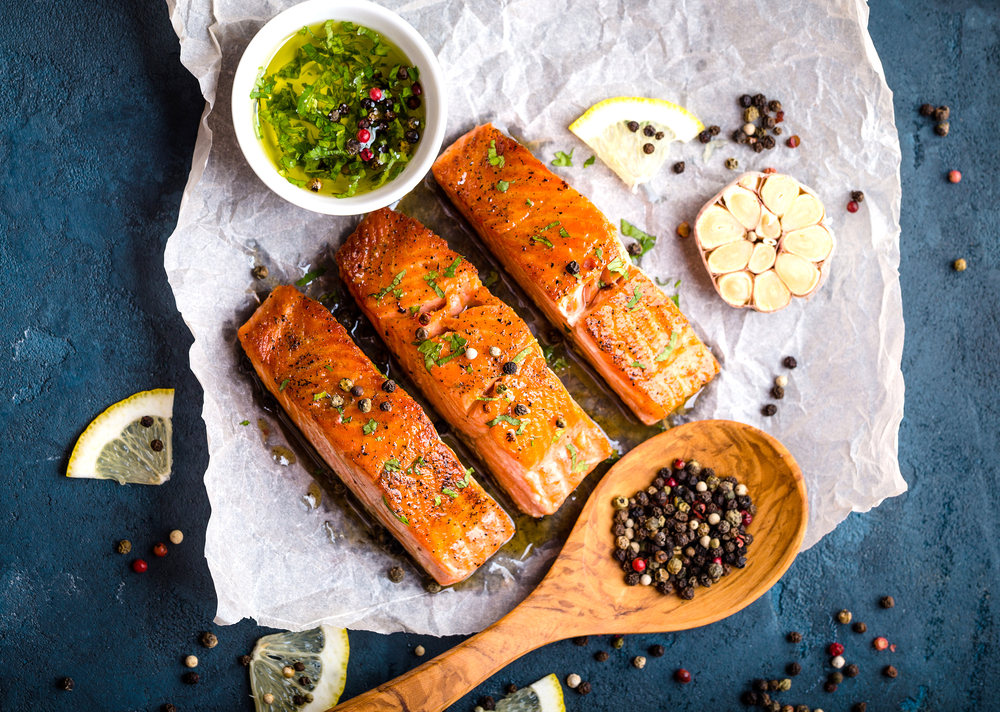
The American Heart Association recommends eating at least two 3-ounce servings of fatty fish per week. The reason? They’re packed with omega-3 fatty acids (including EPA and DHA), which may help reduce blood pressure.
Omega-3 fatty acids also support brain function and memory, reduce inflammation, and improve cardiovascular health.
Fatty fish that contain the most omega-3 fatty acids include:
Salmon
Mackerel
Black cod
Bluefin tuna
Herring
Striped bass
Anchovies
5. Bananas
Photo Credit: Shutterstock
Bananas contain heart-healthy potassium, an electrolyte that counterbalances sodium. Since high sodium intake can lead to higher blood pressure, potassium is a great way to counteract this.
The best part? Just one medium-sized banana contains around 422 milligrams of potassium! That said, too many bananas can increase your calorie intake (potentially offsetting their nutritional benefits), so aim for 1-2 per day.
Other potassium-rich foods include beans, tomatoes, mushrooms, avocados, chicken, salmon, spinach, and broccoli.
6. Whole Grains
Photo Credit: Shutterstock
Get this: A study published in the American Journal of Clinical Nutrition suggests that eating whole grains, such as whole-grain wheat and oats, is as effective as taking medication for high blood pressure.
The study included over 200 volunteers, and researchers found that eating three portions of whole-grain foods per day reduces your risk of high blood pressure.
The main benefits of whole-grain foods include:
Managing weight, since they can make you feel full longer
Increasing your potassium level, which is linked to lower blood pressure
Decreasing your risk of insulin resistance
Reducing damage to blood vessels
All of these benefits are essential to maintaining a healthy blood pressure.
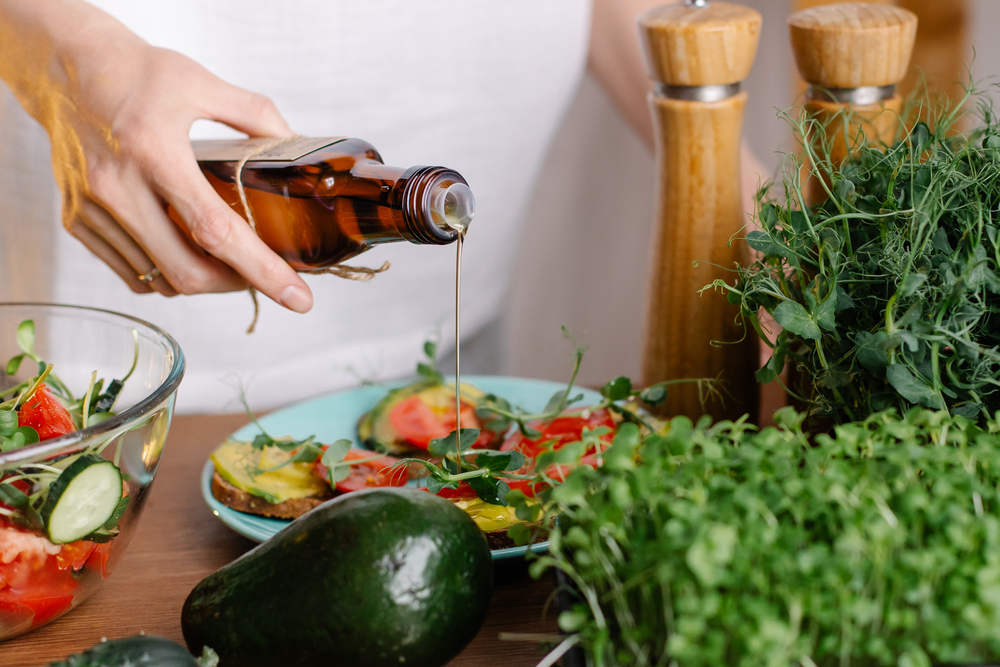
7. Extra Virgin Olive Oil
Photo Credit: Shutterstock
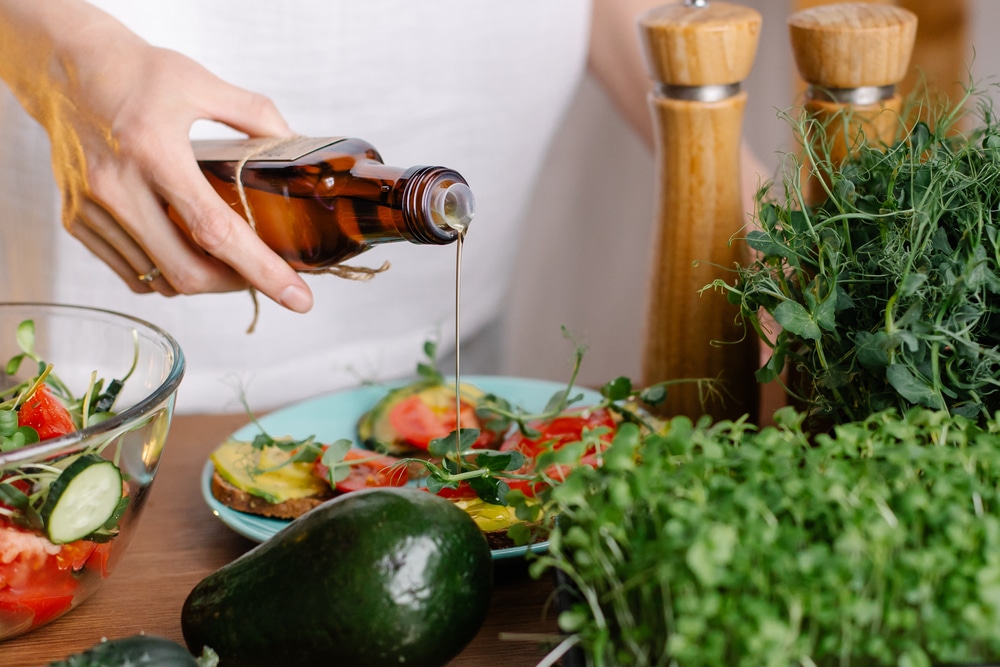
According to the American Heart Association, extra virgin olive oil (EVOO) has a high percentage of monounsaturated fat, which lowers “bad” LDL cholesterol and increases “good” HDL cholesterol and has been shown to lower blood pressure.
Along with lower blood pressure, research has also found that eating more than half a tablespoon per day lowers premature death rates from cardiovascular disease and Alzheimer’s disease.
Just be sure to look for extra virgin olive oil that has been “first-pressed” or “cold-pressed,” meaning it’s a natural product that has undergone a single, simple milling process that hasn’t altered its quality.
8. Beets
Photo Credit: Depositphotos
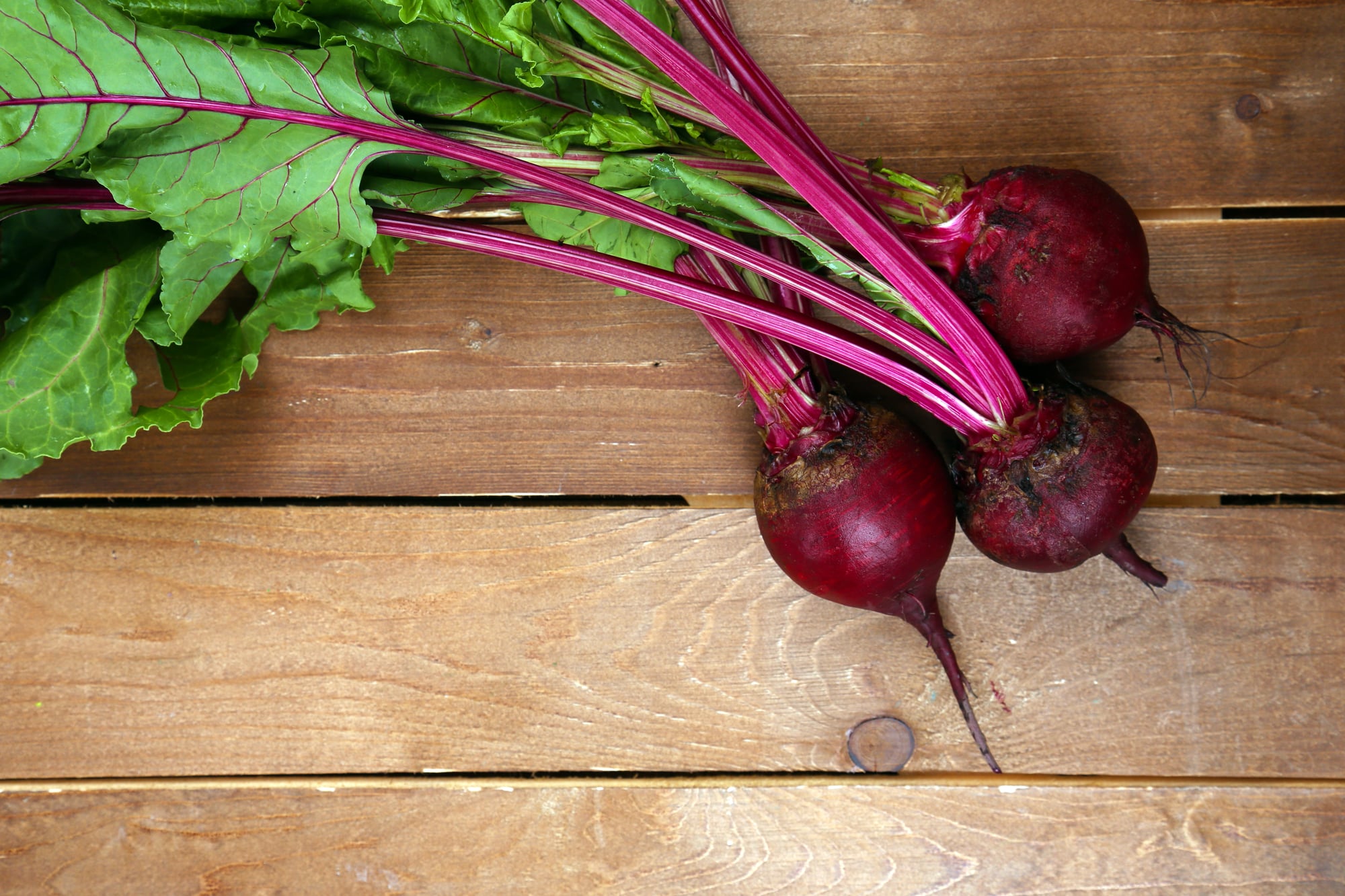
Beets are another food that is high in nitric oxide, which helps lower blood pressure.
Research has also shown that drinking beetroot juice can help lower your systolic blood pressure (the top number in your blood pressure reading) by 4 to 5 mmHg. This, in turn, can reduce the risk of cardiovascular events.
9. Sweet Potatoes
Photo Credit: Shutterstock
Sweet potatoes contain potassium and magnesium, which are an essential part of any healthy diet aimed at lowering blood pressure.
If you’re looking for even more reasons to eat sweet potatoes, they can also help reduce inflammation, regulate blood sugar levels, and aid in weight loss.
10. Kiwifruit
Photo Credit: Shutterstock
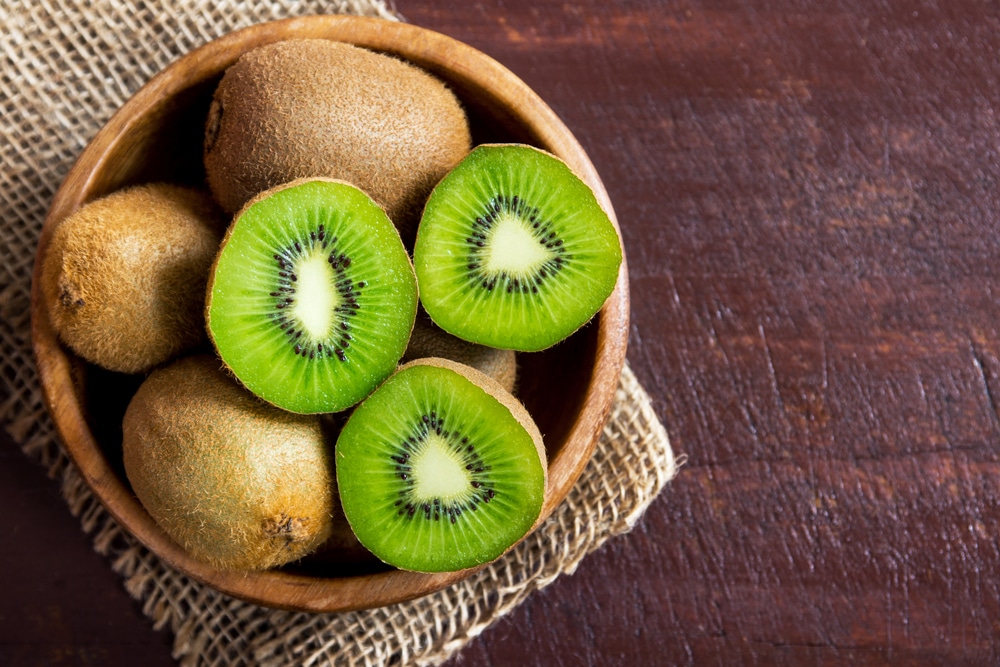
The American Heart Association shared a study that shows that eating three kiwifruit daily can significantly lower blood pressure. Kiwi contains lutein, an oxycarotenoid that has antioxidant properties — and increasing antioxidants may help lower blood pressure.
Kiwi is great by itself or chopped up and added to yogurt or fruit salad.
Foods That Can Worsen High Blood Pressure
Photo Credit: Shutterstock
In general, salty foods are the worst option if you have hypertension. The reason? When you eat salt, your body retains more fluids, which raises your blood volume and pressure. It’s also best to cut back on sugar as much as possible.
So, if you struggle with high blood pressure, here are the top foods to cut back on:
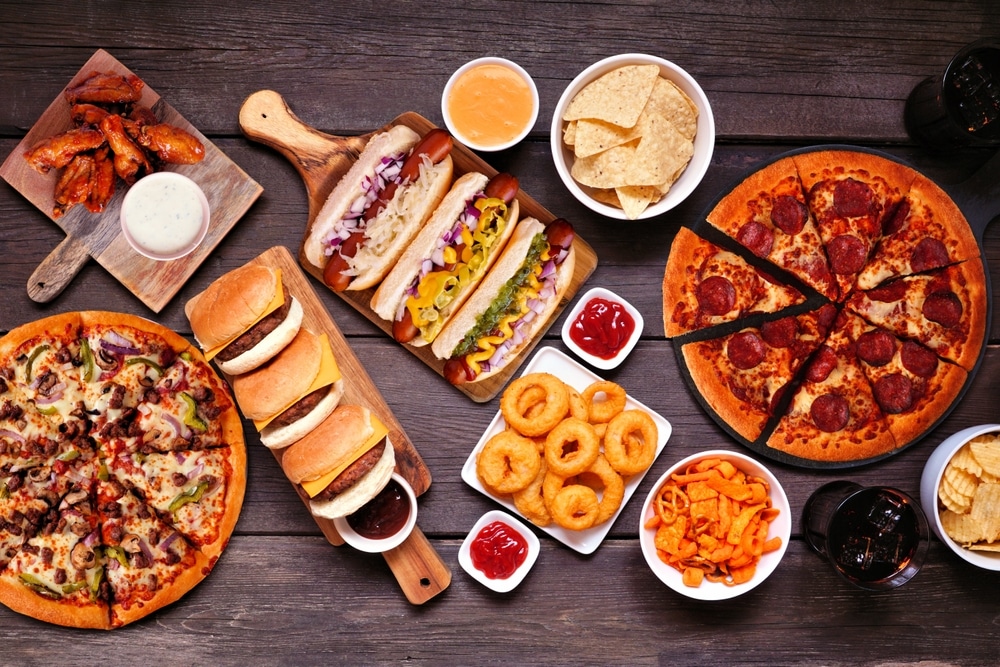
Processed meats, such as hot dogs, deli meat, bacon, and sausage
Restaurant food (most of it is packed with sodium)
Salty snacks, such as chips or pretzel sticks
Pizza (especially delivery or frozen pizza)
Pickles and pickled foods
Canned soups and tomato products
Condiments like ketchup, soy sauce, and BBQ sauce
White bread and rolls
Avoiding a lot of sodium, sugar, and saturated fat is your best bet for controlling your blood pressure.
Did you know your food can actually make you feel younger?
Longevity expert and doctor Mark Hyman, MD, is a 63-year-old practicing family physician and best-selling author of Young Forever: The Secrets to Living Your Longest, Healthiest Life. He’s an internationally recognized leader, speaker, educator, and advocate in the field of Functional Medicine.
He also has advice on how to keep your body young!
Dr. Hyman shared his daily routine and eating habits on his TikTok account, including five foods he swears by to keep his biological age 20 years younger. Because of their incredible health benefits, he says these foods help you live longer, age well, and reduce the risk of chronic disease.
Here are the five foods Dr. Hyman refers to as “medicine” for ensuring a long, healthy life.
1. Cruciferous Vegetables
Photo Credit: Shutterstock
Cruciferous vegetables include those like broccoli, brussels sprouts, kale, and cabbage. They are rich in phytonutrients, which help reduce inflammation and the risk of cancer. They also aid in digestion thanks to their magnesium, folate, and fiber content.
Dr. Hyman eats a cup or two of cruciferous vegetables every day.
Dr. Hyman stresses the importance of “good fats,” including extra virgin olive oil, which he uses in his cooking each day. Olive oil contains antioxidants known for reducing the risk of chronic health conditions and heart disease.
“You need to make sure you get lots of good fats, and olive oil is a great way to do it,” says Hyman.
3. Nuts
Photo Credit: Shutterstock
Nuts are full of healthy fats and a great source of protein. They also contain vitamins and minerals your body needs, like magnesium, folate, vitamin E, and selenium.
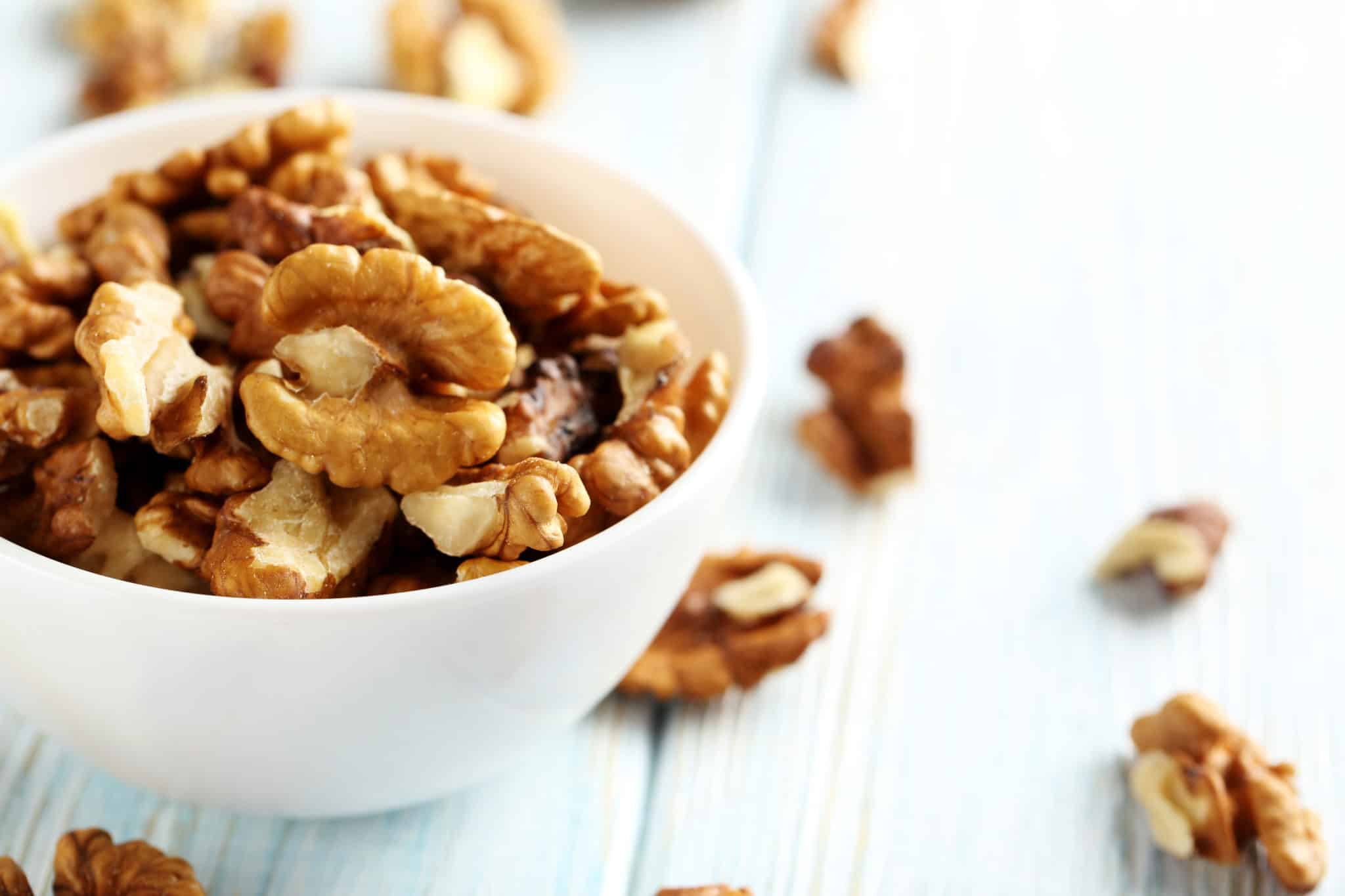
Hyman says nuts like cashews, almonds, and walnuts have been associated with a reduced risk for diabetes and can improve your health and life span. He recommends a handful a day.
4. Berries
Photo Credit: Shutterstock
Dr. Hyman explains that berries (especially blueberries and blackberries) contain a large amount of antioxidants and phytochemicals, which can improve longevity. They are also important for maintaining gut health, fighting inflammation, and reducing the risk of heart disease.
Grab a handful every day!
5. Green Tea
Photo Credit: Shutterstock
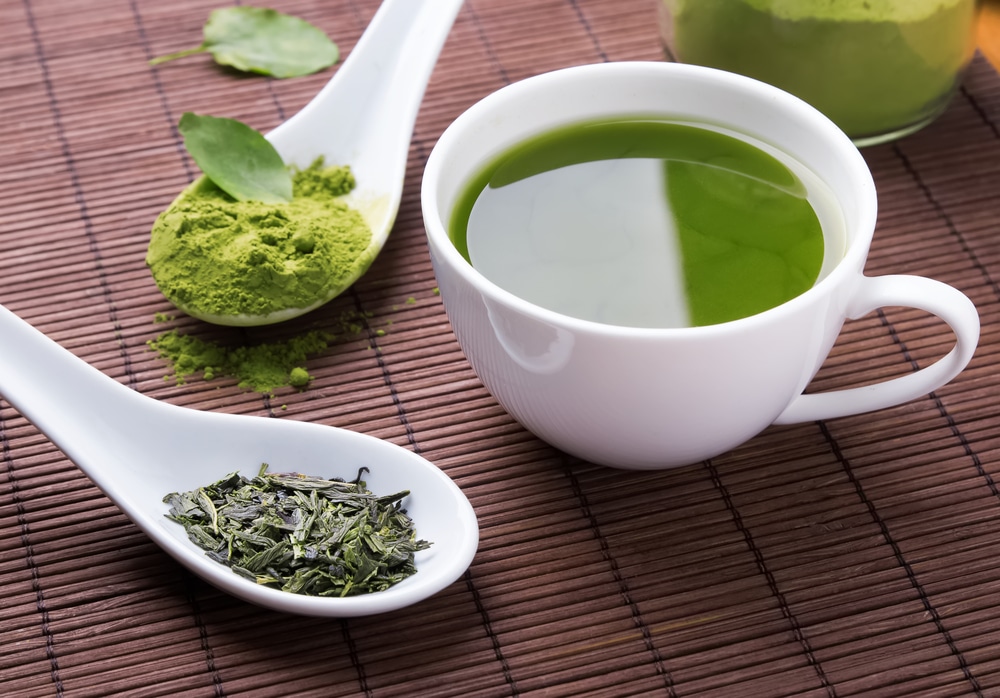
While this one is a drink rather than a food, it’s still a key part of Hyman’s longevity diet! Green tea can reduce harmful oxidative stress, which can negatively impact brain health.
Green tea also contains antioxidants that protect the brain from disease and promote healthy aging. Try a cup to start your day!
Your hips play a key role in healthy aging. They enable you to perform various daily activities, from standing to walking to climbing stairs, no matter what your age!
So, it’s hardly surprising that hip weakness and pain can be debilitating to your everyday life.
It’s never too late to turn things around! Regularly strengthening the hip muscles with targeted exercises is the best way to stay healthy and mobile. Start by incorporating these nine hip-strengthening exercises into your routine.
Workout Instructions to Follow:
If you struggle with your balance, feel free to grab a chair, couch, or even the wall to hold onto while performing the standing exercises.
For best results, perform these exercises at least twice a week.
1. Glute Bridge
Photo Credit: Shutterstock
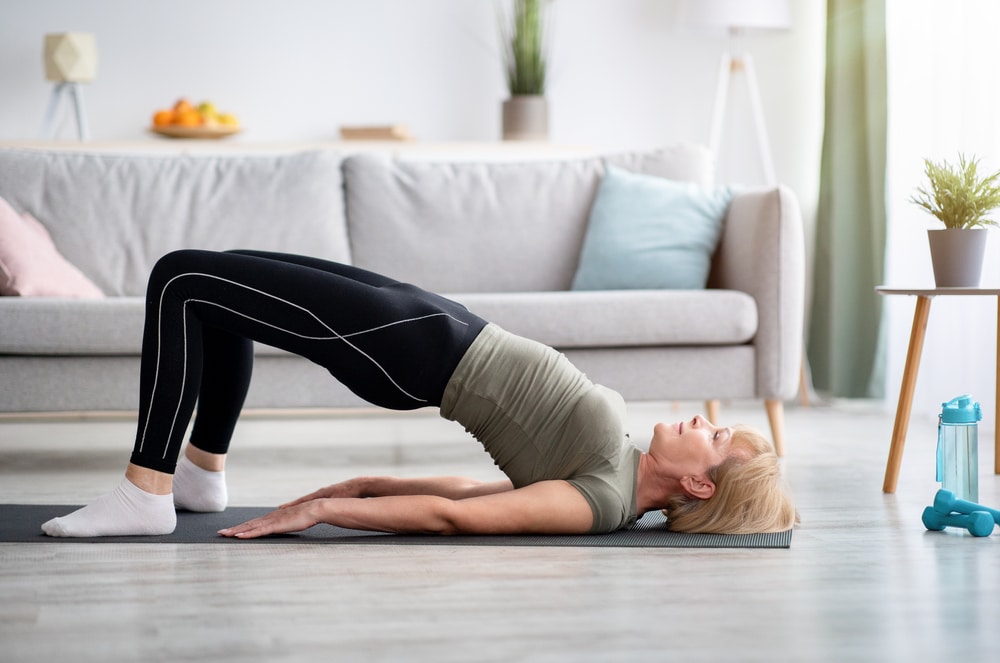
Lie on your back with knees bent and feet flat on the floor, hip-width apart.
Engage your abdominals, push your feet into the floor, and squeeze your glutes as you lift your hips.
Your knees, hips, and shoulders should be aligned in the top position.
Lower your hips to the floor with control. Perform 10 repetitions, 3 sets.
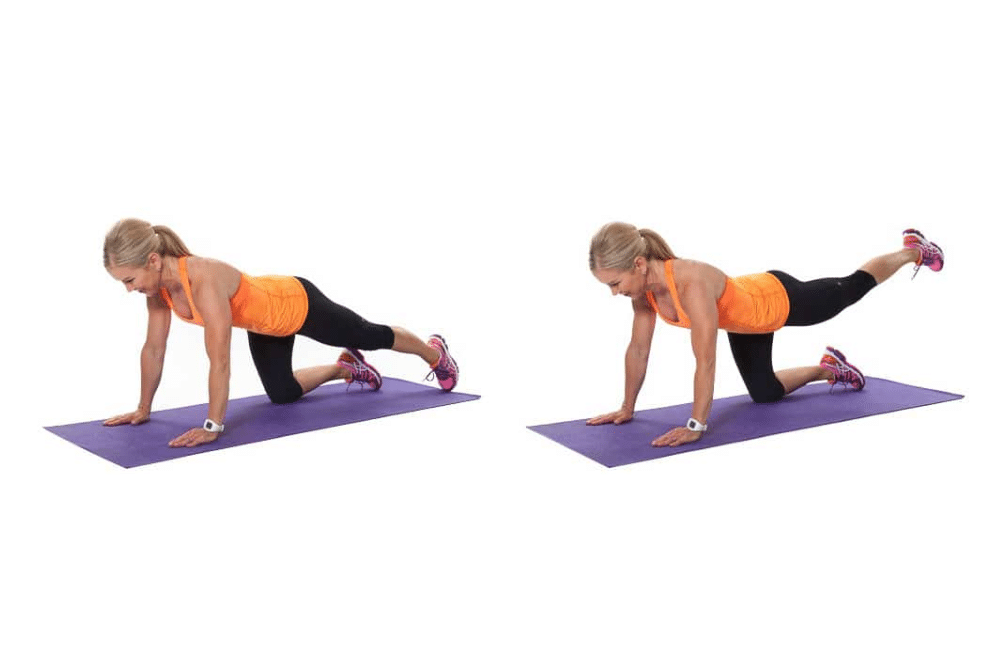
2. Leg Lift
Photo Credit: Get Healthy U
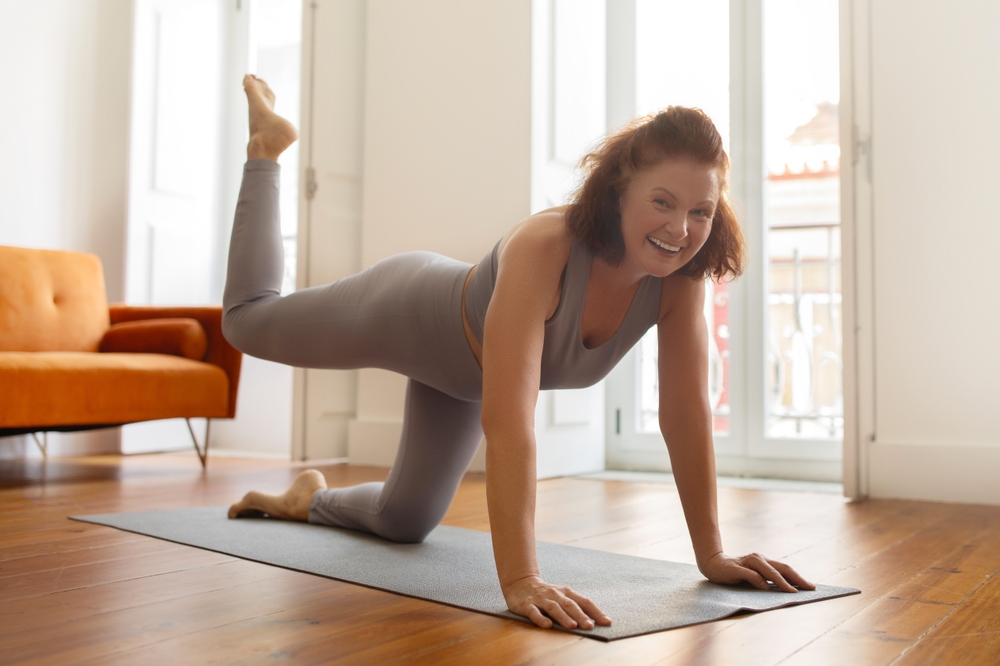
Get on all-fours with your hands directly under your shoulders and your knees directly under your hips.
Extend your right leg behind you and flex your right foot so your weight is on your toes.
Squeeze your right glute and hamstring to lift your right heel toward the ceiling. Make sure to keep your abs tight and back straight.
Slowly lower your right foot to the floor and repeat 10 times, 3 sets. Switch sides.
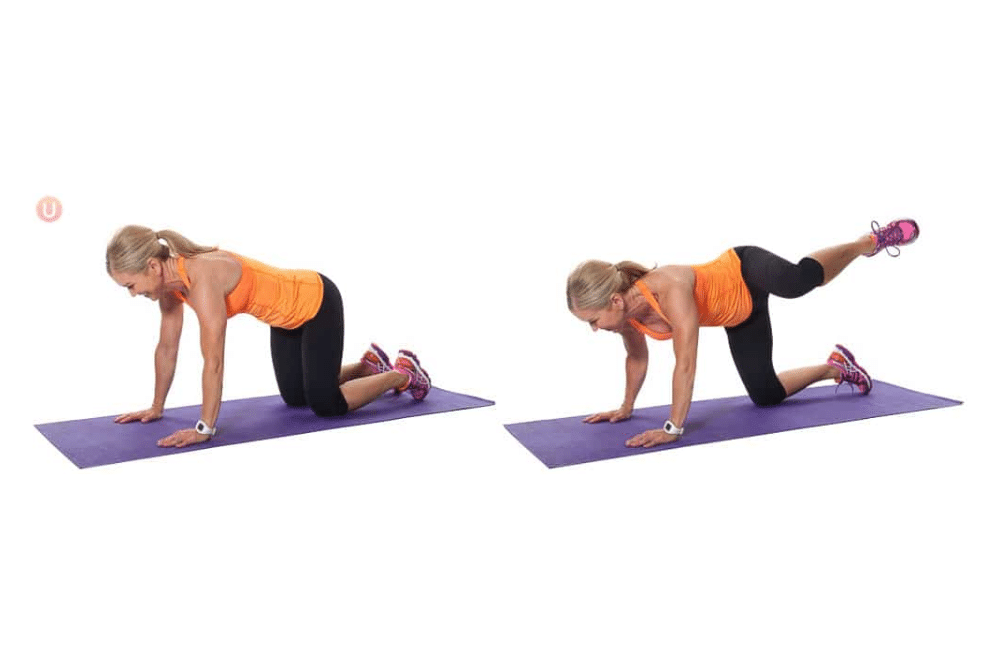
3. Fire Hydrant
Photo Credit: Get Healthy U
Get on all fours with your hands directly under your shoulders and your knees directly under your hips.
Engage the outer thigh muscles and glutes to lift your left knee to the side. (Much like a dog next to a fire hydrant!) Keep your knee bent at a 90-degree angle and torso facing the floor.
Slowly lower your left knee and repeat 10 times, 3 sets. Switch sides.
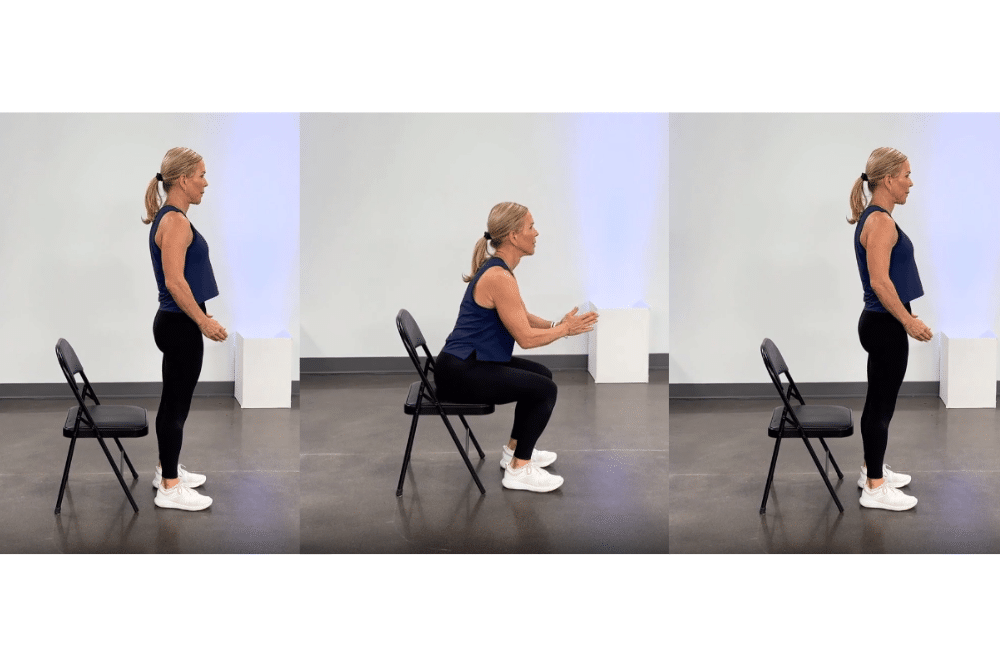
4. Sit-to-Stand
Photo Credit: Get Healthy U
Sit in a chair with feet hip-width apart on the floor.
Keeping your back straight and chest lifted, push your feet into the floor to stand.
Return to a seated position with control. Perform 10 repetitions, 3 sets.
Try not to use your arms as you sit and stand, unless needed.
There are plenty of exercises you can do sitting down if you need to! Try my favorite 10 chair exercises for seniors.
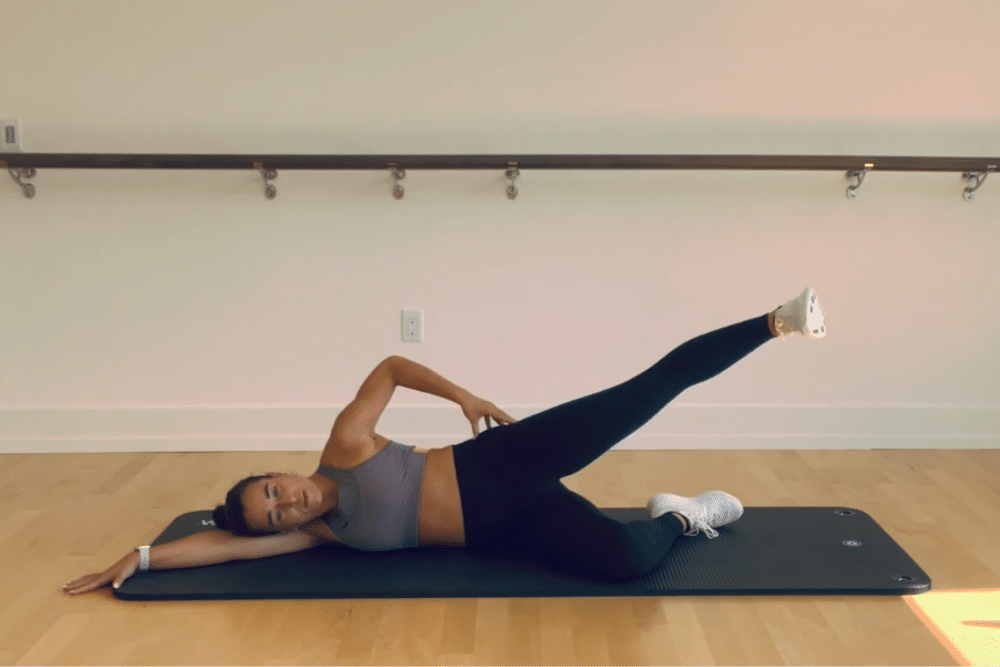
5. Side-Lying Leg Lift
Photo Credit: Get Healthy U
Lie on your right side with both legs extended, feet flexed. Use a pillow or support your head with your right hand.
Place your left hand on the floor in front of your torso to help you stabilize.
Keeping your feet flexed, engage the outer thigh muscles and glutes to lift your left leg as high as is comfortable.
Slowly lower your left leg. Preform 10 repetitions, 3 sets. Do all reps on one side before switching to other leg and repeat.
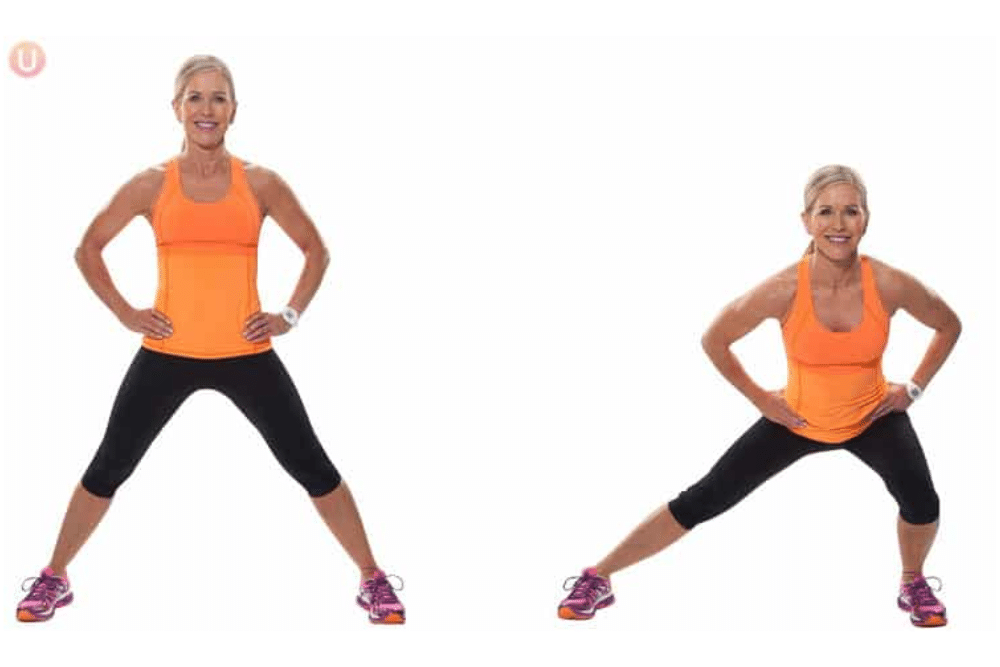
Stand with feet slightly wider than shoulder-width apart, toes pointed forward.
Shift your body weight to the right leg. Push your glutes back and bend the right knee until it reaches a 90-degree angle and the left leg is straight.
Return to the starting position. Alternate sides doing 10 repetitions, 3 sets.
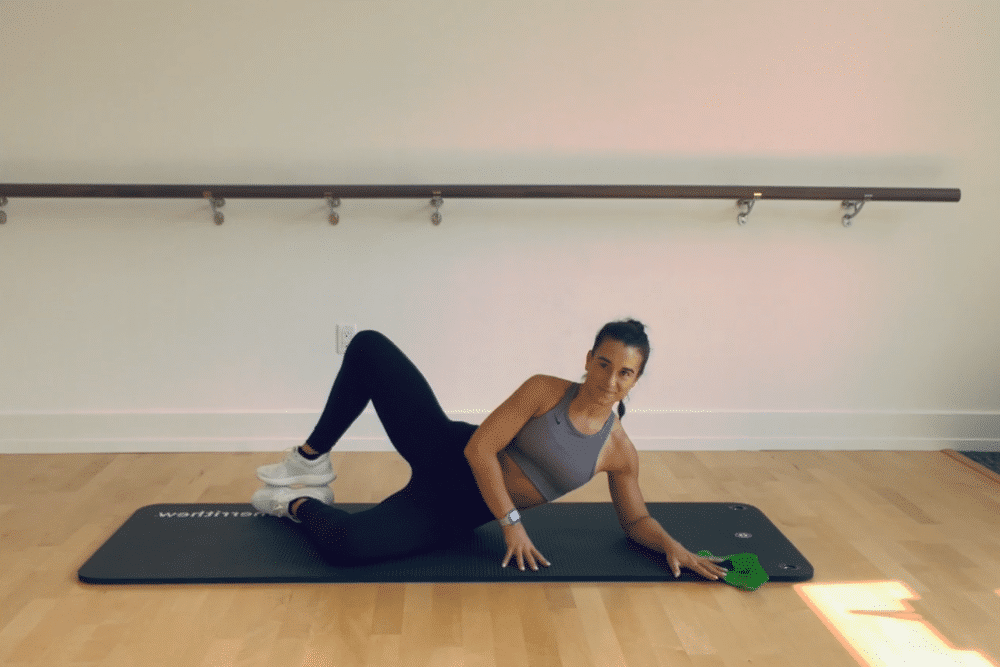
7. Clamshell
Photo Credit: Get Healthy U
Lie on your right side with your knees bent and hips stacked. Use a pillow or support your head with your right hand.
Place your left hand on the floor in front of your torso to help you stabilize.
Keeping your heels glued together, engage the outer thigh muscles and glutes to lift your left knee as high as is comfortable.
Slowly lower your left knee. Perform 10 repetitions, 3 sets. Do all reps on one side before switching.
To make the exercise harder, loop a small resistance band around your thighs, just above the knee.
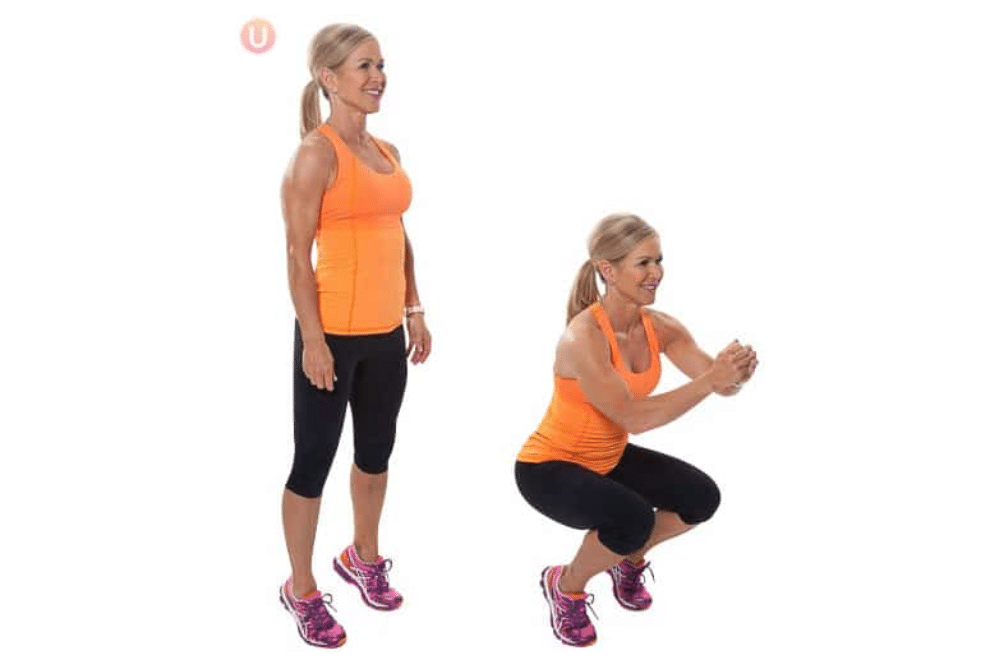
Squats are an extremely effective lower-body exercise! They come with an tons of benefits, like:
Strengthening and toning leg muscles (quadriceps, calves, and hamstrings)
Improving strength in your knee joints
Burning fat (which promotes weight loss)
Strengthening the lower back
Improving flexibility in your lower body
While the basic squat is still a great option, incorporating different squat variations is a great way to change up your leg workout and improve your strength, mobility, balance, and. Of course, they also give you that much-desired muscle definition in your legs and booty.
The following are nine squat variations to add to your fitness routine. They will help build and tone muscle no matter what your age!
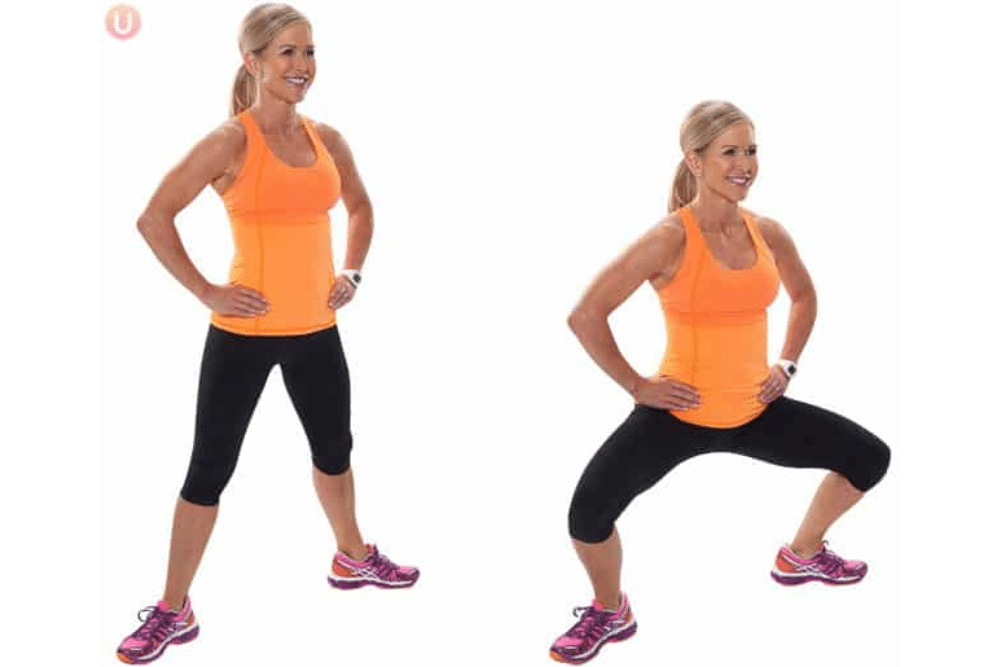
1. Plié Squat Exercise
Photo Credit: Get Healthy U
If you want more inner thigh work, a plié squat is a great choice. By turning your legs open (external rotation), the inner thigh muscles are activated and turned on for more help.
How to do plié squats:
Stand with feet slightly wider than shoulder distance apart and toes turned out into a 45-degree angle.
Bend knees and lower your torso, keeping your back straight and abs tight.
Squeeze your glutes and come to standing position.
2. Squat Jump
Photo Credit: Get Healthy U
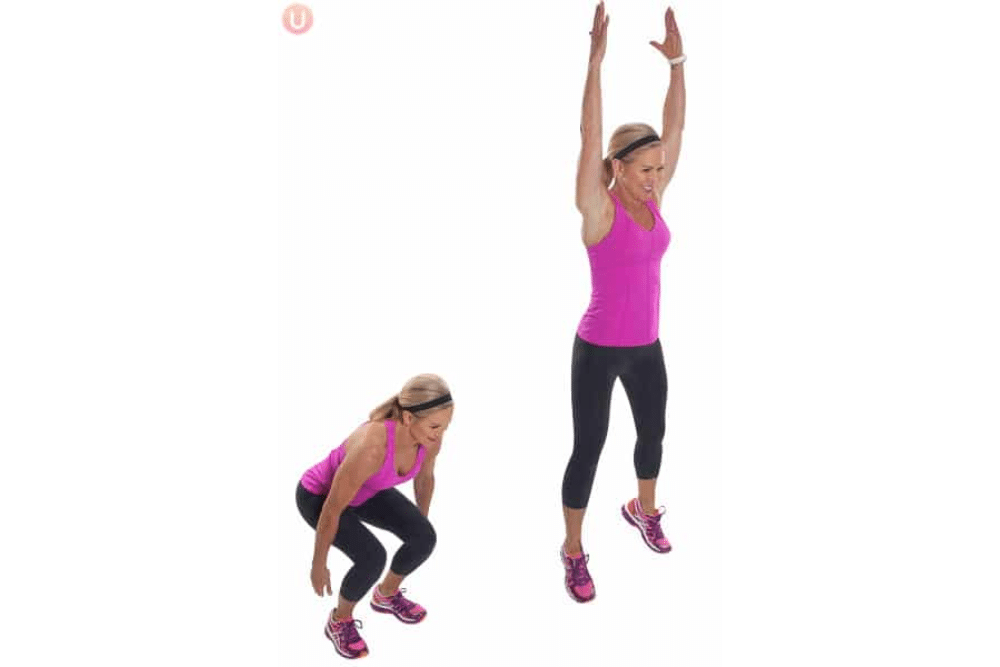
Want to burn extra fat and calories? Jump squats are your new friend. Feel Free to add in a kettlebell to up the ante.
How to do squat jumps:
Start standing with feet hip distance apart and lower into a squat position by bending the knees. Keep the spine straight, chest lifted, and knees behind toes. Arms are in front of the chest for balance.
Jump straight up and swing arms overhead. Return to squat.
3. Stiletto Squat Exercise
Photo Credit: Get Healthy U
How to do stiletto squats:
Start standing and lift heels high like you’re wearing heels. Keeping your abs engaged slowly drop into a squat bringing your hips to knee height.
Squeeze your glutes and return to you starting position.
4. Pistol Squat
Photo Credit: Get Healthy U
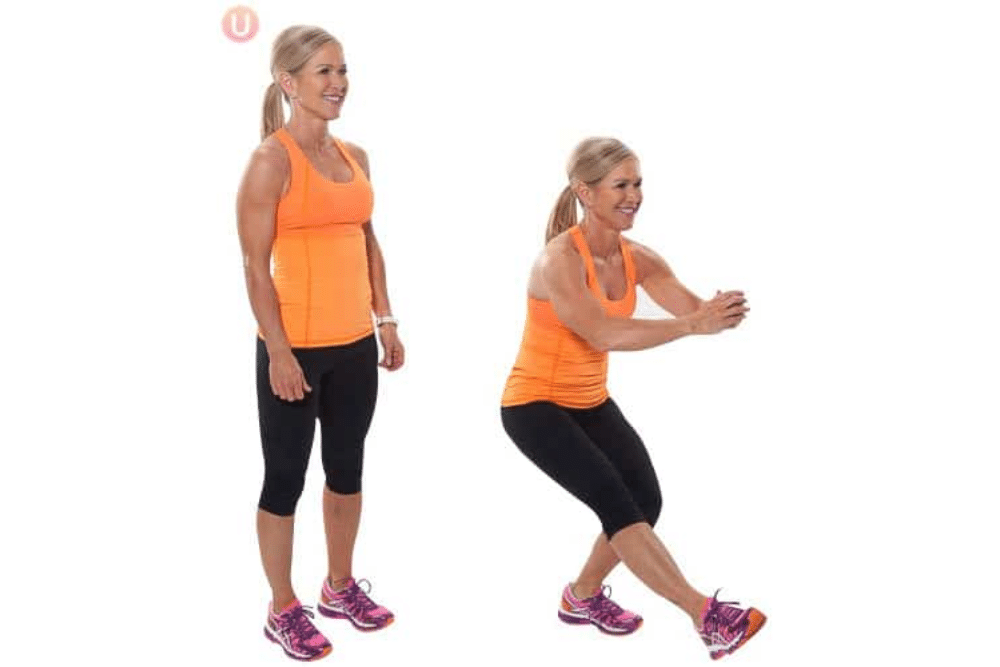
If your focus is solely on shaping your butt, then a pistol squat is a great variety to mix into your workout.
How to do pistol squats:
Stand with feet hip distance apart and extend 1 leg long on front of the body.
Bring hands to hips or the front of your body for balance. Sit back into a squat with weight in the heel of the foot, then slowly stand back up using your glute and hamstring muscles. Repeat for desired number of reps and switch sides.
5. Surfer Squat Exercise
Photo Credit: Get Healthy U
How to do surfer squats:
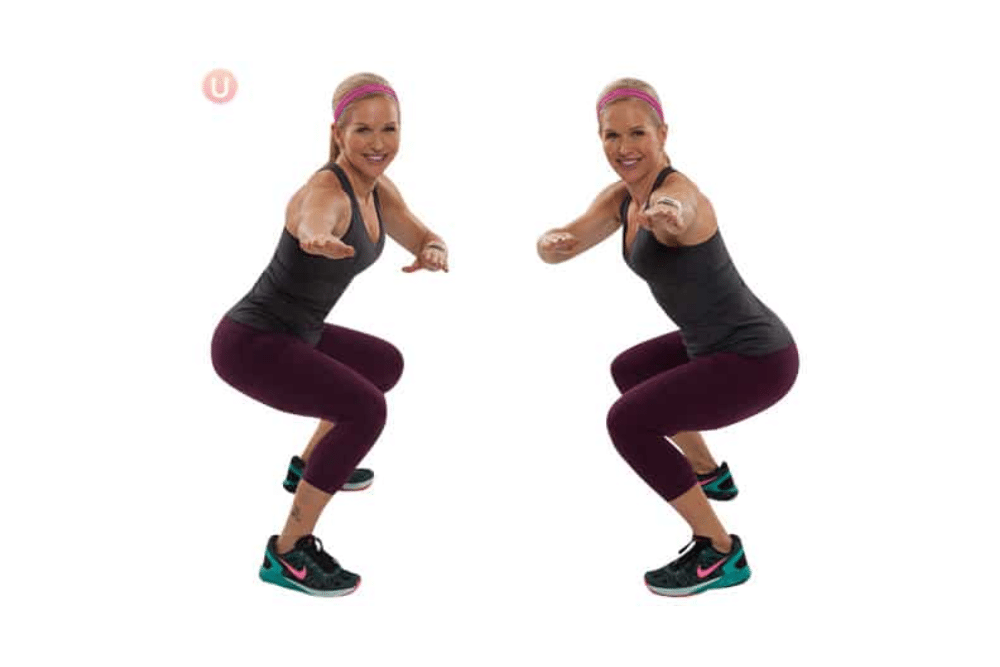
Start in a squat position with body facing the side of the room but eyes looking forward.
Jump a full 180 degrees and land in a squat so that body is now facing the other side of the room. Keep eyes forward.
Continue to make 180-degree jump-turns with eyes looking forward and body staying in squat position.
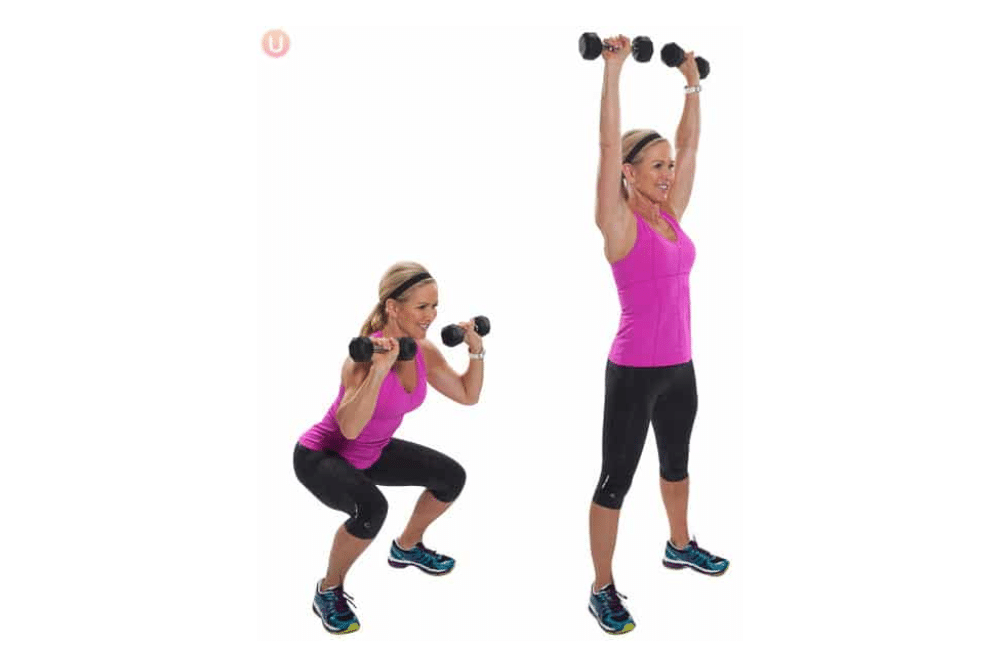
Start standing with feet hip distance apart and lower into a squat position by bending the knees. Keep the spine straight, chest lifted, and knees behind toes. The elbows are bent and dumbbells are at shoulder height.
Using the lower body, thrust up to standing and press the dumbbells overhead extending the arms long. Then lower back to starting position.
7. Medicine Ball Squat Toss
Photo Credit: Get Healthy U
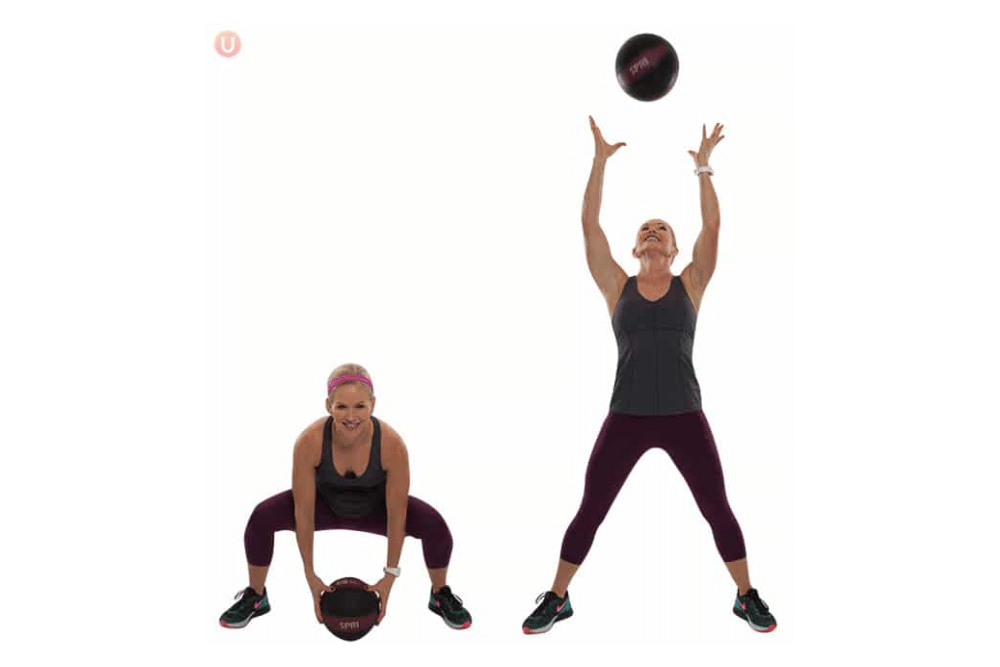
How to do medicine ball squat tosses:
Stand with feet hip width apart, knees slightly bent and hold the medicine ball with two hands in front of your chest.
Sit back in squat position, keeping chest lifted and lower ball to floor.
Stand up with an explosive movement while tossing ball up over head.
Catch the ball at chest level and sit back to squat position. Repeat for desired number of repetitions.
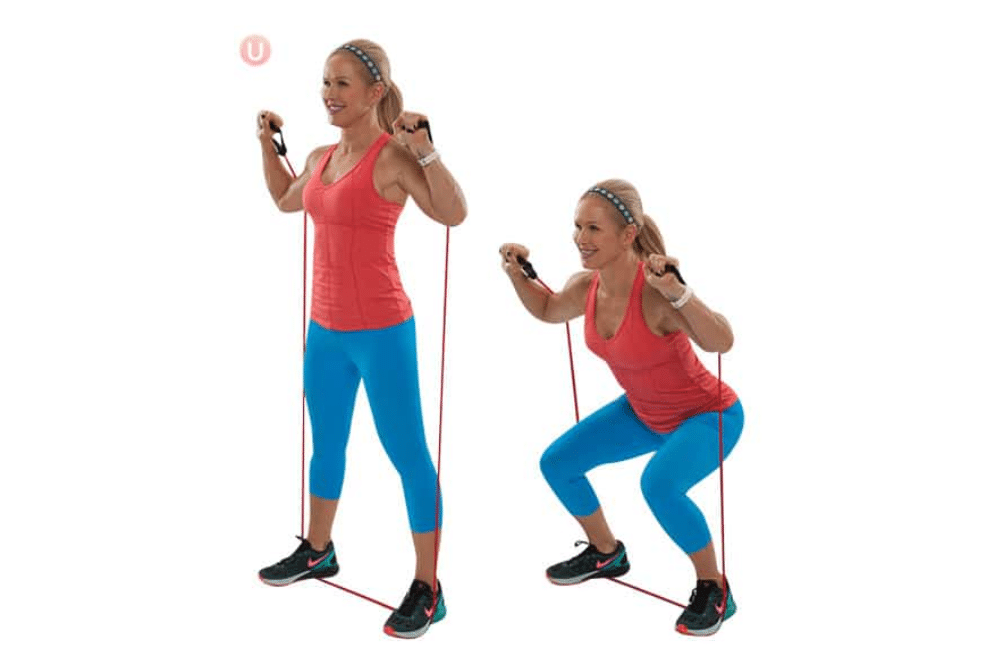
Stand on band with feet shoulder width apart and hold the handles next to your shoulders so the band is behind the back of your arms.
Slowly sit down and back into squat position keeping abdominals tight and chest lifted.
Press back up through heels, squeezing glutes.
9. Side-to-Side Squat
Photo Credit: Get Healthy U
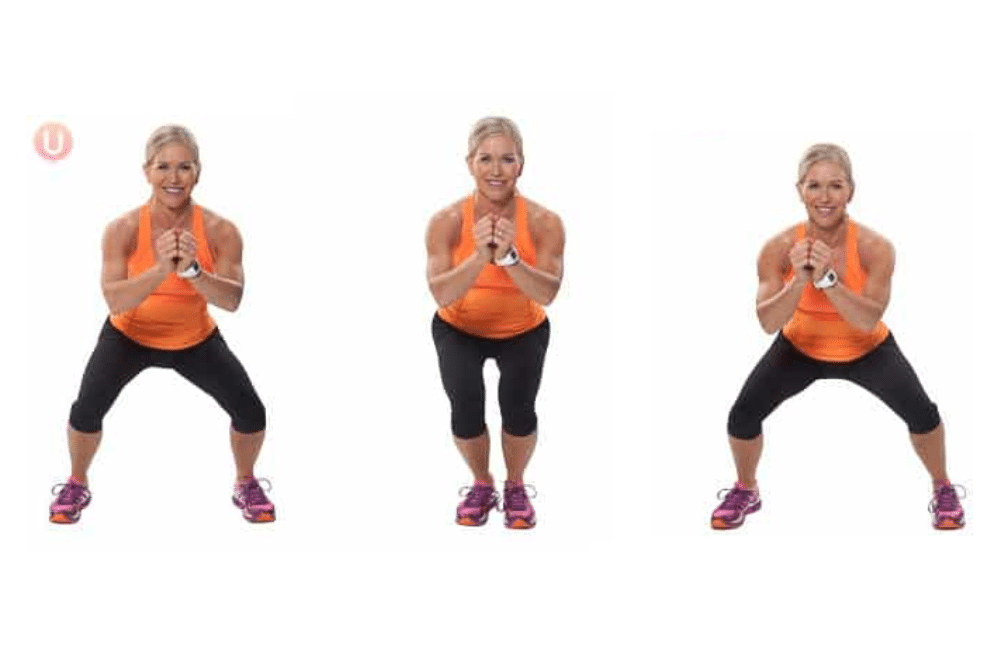
How to do side-to-side squats:
Start standing with feet hip distance apart and sit back into a squat position by bending the knees.
Keep your abs tight and back straight. Step wide to one side staying in your squat position, go back to your starting position, and then side squat wide in the other direction using all your lower body muscles then back to center. Continue squatting side to side staying low throughout.
Cardio exercise is a fantastic way to lose weight while improving your overall health. While strength training is important to boost your metabolism (and you will hear me on my soap box talk about how important it is for middle age woman), you also need cardio workouts for weight loss.
It drives me nuts when women tell me their fitness trainer told them they don’t need cardio. If you have a heart, then you need cardiovascular exercise!
The biggest issue is that most women think about running as the best form of cardio. There is nothing wrong with running but as we age, for many of us it is a daunting, joint pounding option that sounds horrible. And if it sounds horrible, you aren’t going to do it.
So whether you’re a fitness enthusiast looking to switch up your routine, or a beginner just starting, I’ve got you covered.
In this guide I’ll introduce you to the 9 best cardio workouts for weight loss, with no running included.
1. Walking [Burns 300-400 calories/hour]
Photo Credit: Shutterstock
Yes, walking! Perhaps the most straightforward, most available exercise around, walking is not only a great way to burn calories, but it’s also a low-impact workout that most people can do.
However, a leisurely evening stroll won’t make the cardio cut. To burn fat, you need a brisk, moderately-fast pace. According to the Mayo Clinic, regular brisk walking can help you:
Maintain a healthy weight
Prevent or manage various conditions, including heart disease, high blood pressure, and type 2 diabetes
Strengthen your bones and muscles
Improve your mood
Improve your balance and coordination
The faster, farther, and more frequently you walk, the greater the benefits. You can walk outdoors on the sidewalk, go for a hike, give rucking a try, hit the treadmill at the gym, or even use a walking pad under your desk during the workday!
Tip: If you’re using a treadmill, try adding an incline to torch more calories and tone your glutes and thighs.
2. Climbing Stairs [Burns 1000 calories/hour]
Photo Credit: Shutterstock
Are you looking for an efficient cardio workout that engages your lower body muscles and elevates your heart rate? Look no further than stair climbing.
This challenging exercise can be done at home, in a gym, or even on outdoor stadium steps, making it a versatile option for any fitness routine.
Here are a few tips to help you get started with climbing stairs for cardio exercise:
Proper Form and Techniques
When stair climbing, it’s essential to maintain proper form to maximize the benefits and prevent injuries. Keep your back straight, engage your core muscles, and step up one stair at a time.
Avoid using the railing for support and try to push off with your toes to engage your calf muscles. As you progress, you can increase your speed, step height or try skipping one or two stairs.
Progressive Overload
Just like with other exercises, it’s crucial to gradually increase the workload to keep challenging your body and avoid plateauing. Start with a few flights of stairs and gradually increase the duration and intensity of your workout.
You can also add weight by wearing a backpack or carrying dumbbells to make the climb more challenging.
3. Kettlebells [Burns 800-900 calories/hour]
Photo Credit: Shutterstock
A kettlebell is a cannonball-shaped weight that produces a powerful, effective workout. Kettlebell workouts combine strength training with cardio and can help you burn up to 20 calories per minute (the equivalent of running a 6-minute mile.)
Now that’s getting the most from your workout time!
According to the American Council on Exercise, kettlebells can provide a higher intensity workout than the usual strength training routine in a shorter amount of time. This is because kettlebell training simultaneously works your cardio endurance while building muscle strength, balance, and flexibility.
4. Jumping Rope [Burns 600 calories/hour]
Photo Credit: Shutterstock
Aside from being a fun pastime, jumping rope is an effective cardio workout that can help you lose weight. By engaging your whole body, it burns a significant amount of calories and improves coordination, balance, and agility.
One of the best cardio exercises for weight loss is jumping rope. It’s not only a calorie blaster but helps build bone density, strengthens your legs, makes your heart stronger, and improves coordination, balance, and agility.
Moreover, it is a low-cost activity that can be done almost anywhere.
Jumping rope is also a great form of plyometric workout, where both feet are off the ground. Plyometrics get your heart pumping and burn calories quickly and effectively.
Other forms of plyometrics include exercises like:
Jumping jacks
Split jumps
Box jumps (you can use any step or safe, elevated platform)
5. High-Intensity Interval Training (HIIT) [Burns 600 calories/hour]
Photo Credit: Shutterstock
If you’re short on time but still want to burn calories and get in shape, HIIT is the way to go. This popular cardio workout technique involves short bursts of high-intensity exercise followed by brief rest periods.
These workouts can be done in as little as 20 minutes and are known for their ability to burn calories not just during the workout, but even after, thanks to the “afterburn effect.” HIIT workouts also trains and conditions both your aerobic and anaerobic energy systems.
HIIT exercises can range from bodyweight movements, such as burpees and jump squats, to using equipment such as kettlebells and resistance bands. The training can also be done with treadmills, outdoor walking, swimming, cycling, and elliptical machines.
Most programs will have you push hard for a work session (between 20-30 seconds), with a short 10-20 second rest in between. The key is to push yourself to your maximum effort during the high-intensity work portion and then allow your body to recover during the rest periods.
With HIIT, a lack of time is no excuse: a 20-minute HIIT session is more effective at burning calories and fat overall than a 60-minute jog.
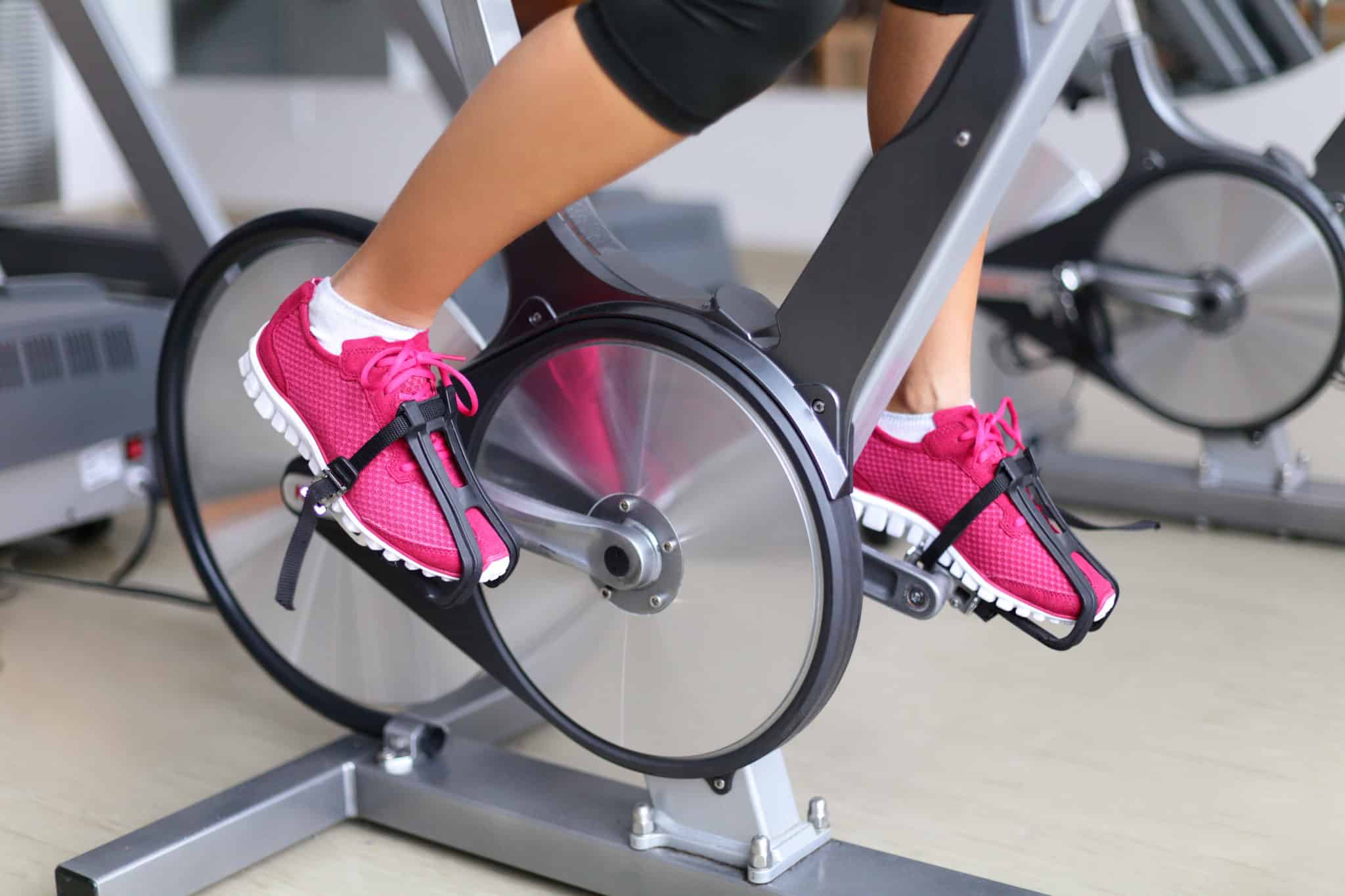
6. Cycling [Burns 500-600 calories/hour]
Photo Credit: Shutterstock
Cycling is a low-impact exercise that increases your heart health, strengthens your leg muscles, and burns some serious calories.
If you’re looking for an effective workout that can help you lose weight while being gentle on your joints, cycling might be the perfect fit for you. This low-impact cardio exercise can be done indoors or outdoors, and it’s suitable for different fitness levels.
When cycling, you target your lower body muscles, such as your glutes, quads, and hamstrings, and you also improve your cardiovascular health. According to Harvard Health Publishing, the average person burns between 250-300 calories per 30 minute session of cycling exercise.
*Calorie burning varies depending on factors such as body weight, intensity, and duration of the workout.
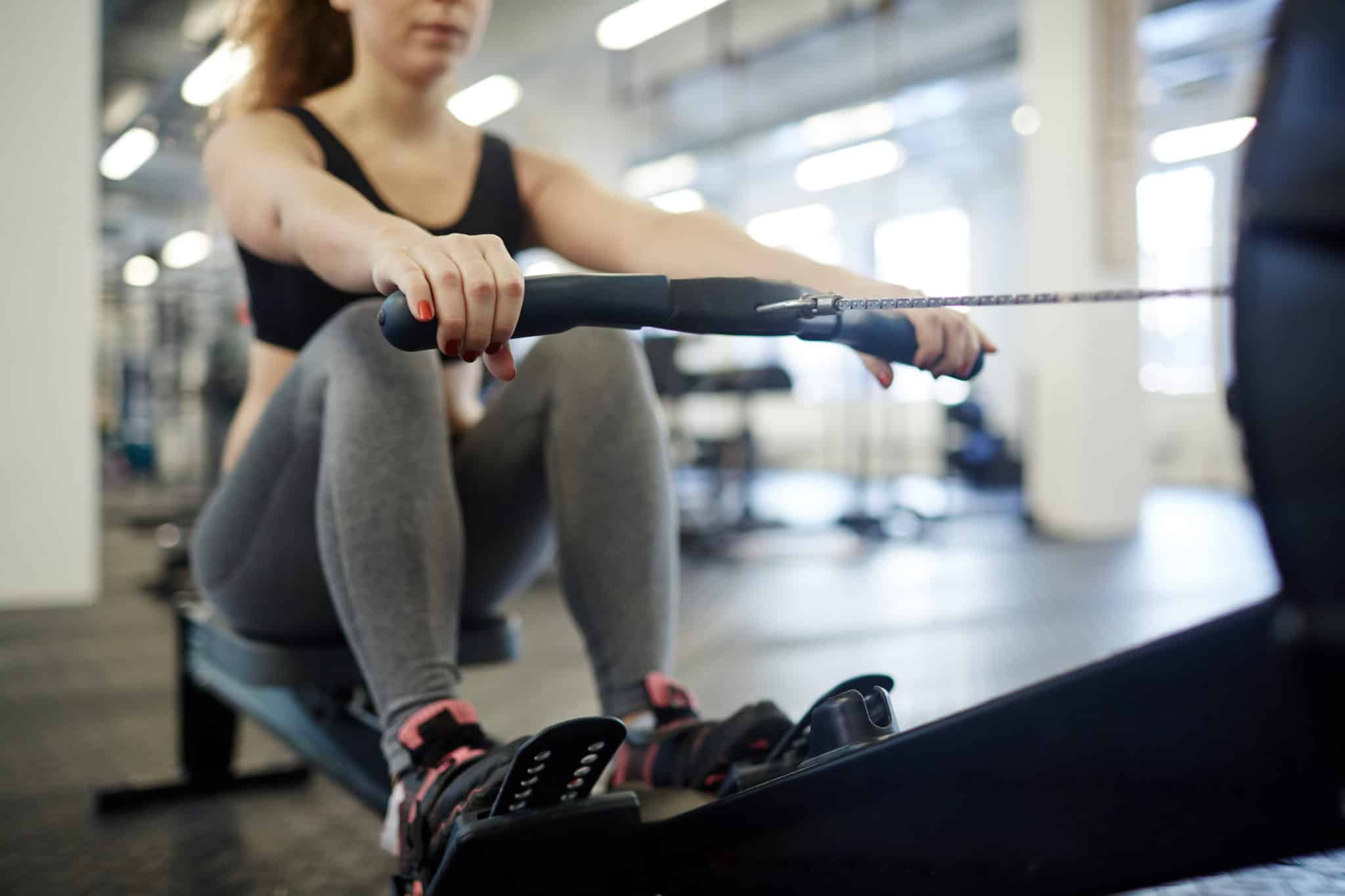
7. Rowing [Burns 500-600 calories/hour]
Photo Credit: Shutterstock
Indoor rowing machines, also called “ergs” or “ergometers,” have long been used by crew teams who want to maintain their training during the winter months. But over the years, they’ve also gained popularity with other people—anyone who wants a total-body workout that’s low-impact and gets your heart rate up.
Benefits of Rowing for Cardio Exercise
Low impact
Full body workouts
Meditative
Simple
High calorie burn
Most gyms have a rowing machine section, and there are even some group fitness rowing classes you can take.
According to Harvard Health Studies, rowing burns between 250-300 calories in a 30-minute session.
8. Dancing [Burns 460-1,000 calories/hour]
Photo Credit: Shutterstock
Are you tired of the usual workouts and looking for a fun and engaging way to shed those extra pounds? Look no further than dance workouts!
Dancing not only burns calories but also helps improve endurance, coordination, and flexibility. Some popular dance styles for weight loss include Zumba, hip-hop, and salsa.
You don’t need to be a professional dancer to benefit from dance workouts. Many classes cater to beginners and offer modifications to suit different fitness levels. You can also do these cardio sessions right in the comfort of your own home!
The amount of calories you’ll burn depends on the intensity of your workout, and the type of dance:
Zumba (460-920 calories/hour)
Hip Hop (500-1,000 calories/hour)
Salsa (400-800 calories/hour)
*Calorie burning varies depending on factors such as body weight, intensity, and duration of the workout.
In addition to being an effective workout, dance workouts are also a great way to have fun and socialize. Grab a friend or join a class to add some excitement to your fitness routine.
So, put on your dancing shoes and start burning those calories!
9. Swimming [Burns 250-900 calories/hour]
Photo Credit: Shutterstock
Swimming is an excellent low-impact cardio workout that provides a full-body workout without putting stress on your joints. With the resistance of the water, swimming works nearly every major muscle group in your body, which can lead to improved muscle tone and overall fitness levels.
Additionally, swimming helps to improve your cardiovascular endurance, making it a great form of aerobic exercise that can aid in weight loss.
There are several different swimming strokes that you can try, including:
Freestyle (400-700 calories/hour)
Breaststroke (400-600 calories/hour)
Backstroke (250-400 calories/hour)
Butterfly (600-900 calories/hour)
*Calories burned per hour are based on an average weight of 155 pounds (70 kg) and vary depending on several factors, including body weight, swimming intensity, and stroke.
Each stroke targets a different set of muscles, allowing you to vary your workout and keep things interesting. For beginners, starting with the freestyle stroke is often the easiest to learn and most effective for burning calories.
If laps aren’t you’re thing, I recommend trying my 30 minute pool workout with simple but effective exercises for any age.
Swimming is a fun and effective way to burn calories, improve endurance, and tone your muscles.
Whether you prefer swimming laps in a pool or splashing around in the ocean, make sure to incorporate this low-impact cardio workout into your fitness routine for maximum weight loss results.
As a natural part of aging, our balance can be hindered by joint degeneration and muscle loss. Weaker core muscles and changes in eyesight can cause older adults to lose their balance more often.
In fact, the CDC reports that at least 300,000 older people are hospitalized each year for hip fractures, and more than 95% of them are caused by falling.
Balance is such an important part of healthy aging! So, we’ve rounded up seven simple, low-impact exercises to help improve core strength and balance, followed by a few tips to help keep you steady on your feet.
1. Heel-Toe Raises
Photo Credit: Get Healthy U
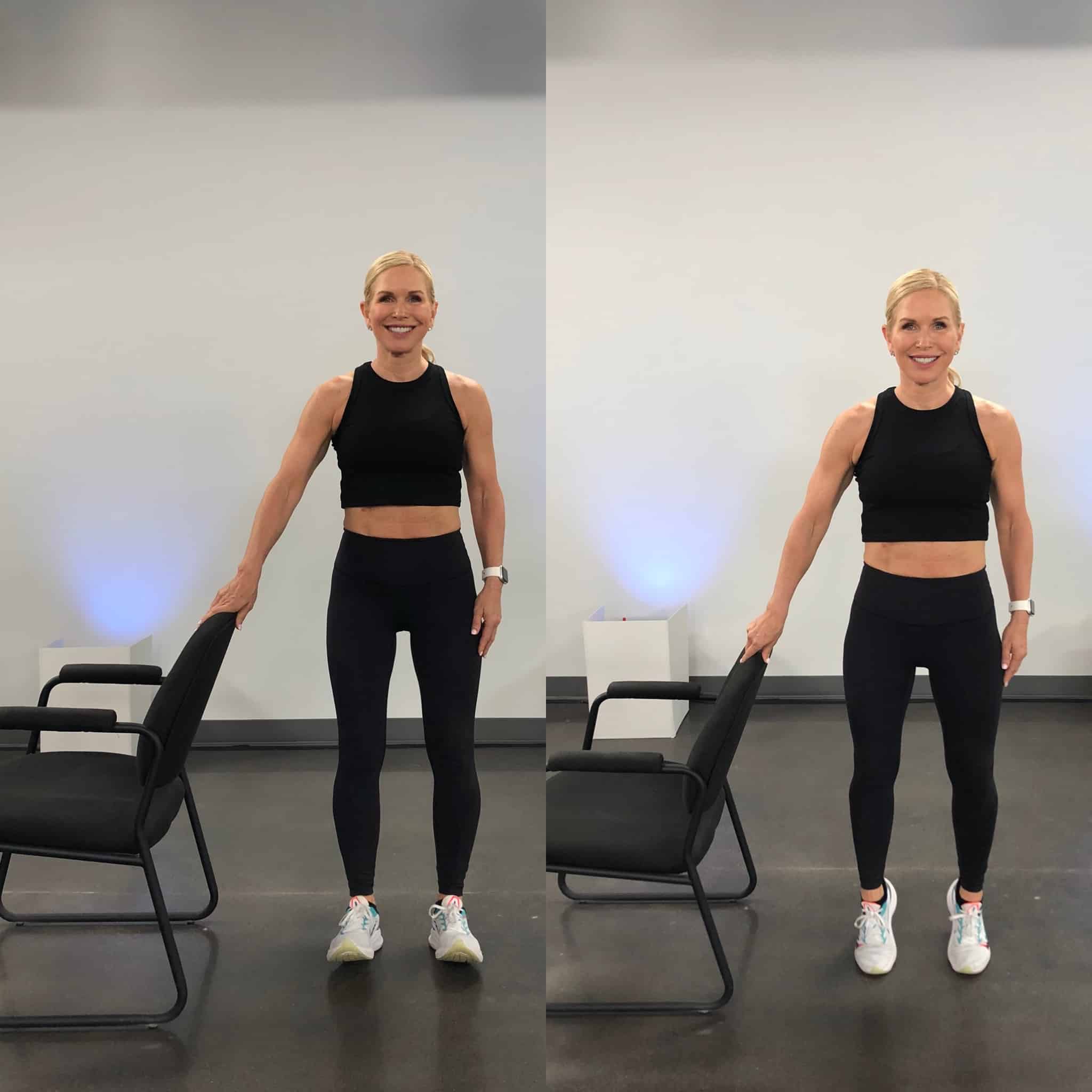
How to do heel-toe raises:
Stand with your feet hip-width apart.
Roll back onto your heels (hold onto a chair if needed).
Roll forward onto your toes (hold onto a chair if needed).
Keep repeating, moving back and forward for 30 seconds.
2. Side Leg Lifts
Photo Credit: Get Healthy U
How to do side leg lifts:
Stand with your feet hip-width apart.
Lift your right foot off the ground and your leg out to the side.
Hold for 10 seconds (hold onto a chair if needed).
Repeat on the other leg. Do each side 2-3 times.
3. Back Leg Extensions
Photo Credit: Get Healthy U
How to do back leg extensions:
Stand with your feet hip-width apart.
Raise your left foot off the ground and lift your left leg behind you.
Hold for 10 seconds (hold onto a chair if needed).
Repeat on the other leg. Do each side 2-3 times.
4. Balance Beam Stance
Photo Credit: Get Healthy U
How to do a balance beam stance:
Stand with your feet hip-width apart.
Step one foot right in front of the other like you are on a balance beam.
Hold for 10 seconds (hold onto a chair if needed).
Repeat with the other leg in front. Do each side 2-3 times.
5. Rock the Boat Exercise
Photo Credit: Get Healthy U
How to do a rock the boat exercise:
Stand with your feet hip-width apart.
Lift your right foot off the ground and your leg out to the side.
Step back to center and then lift your left foot off the ground and your leg out to the side. (Hold onto a chair if needed).
Move side to side, transferring weight from one foot to the other, for 30 seconds.
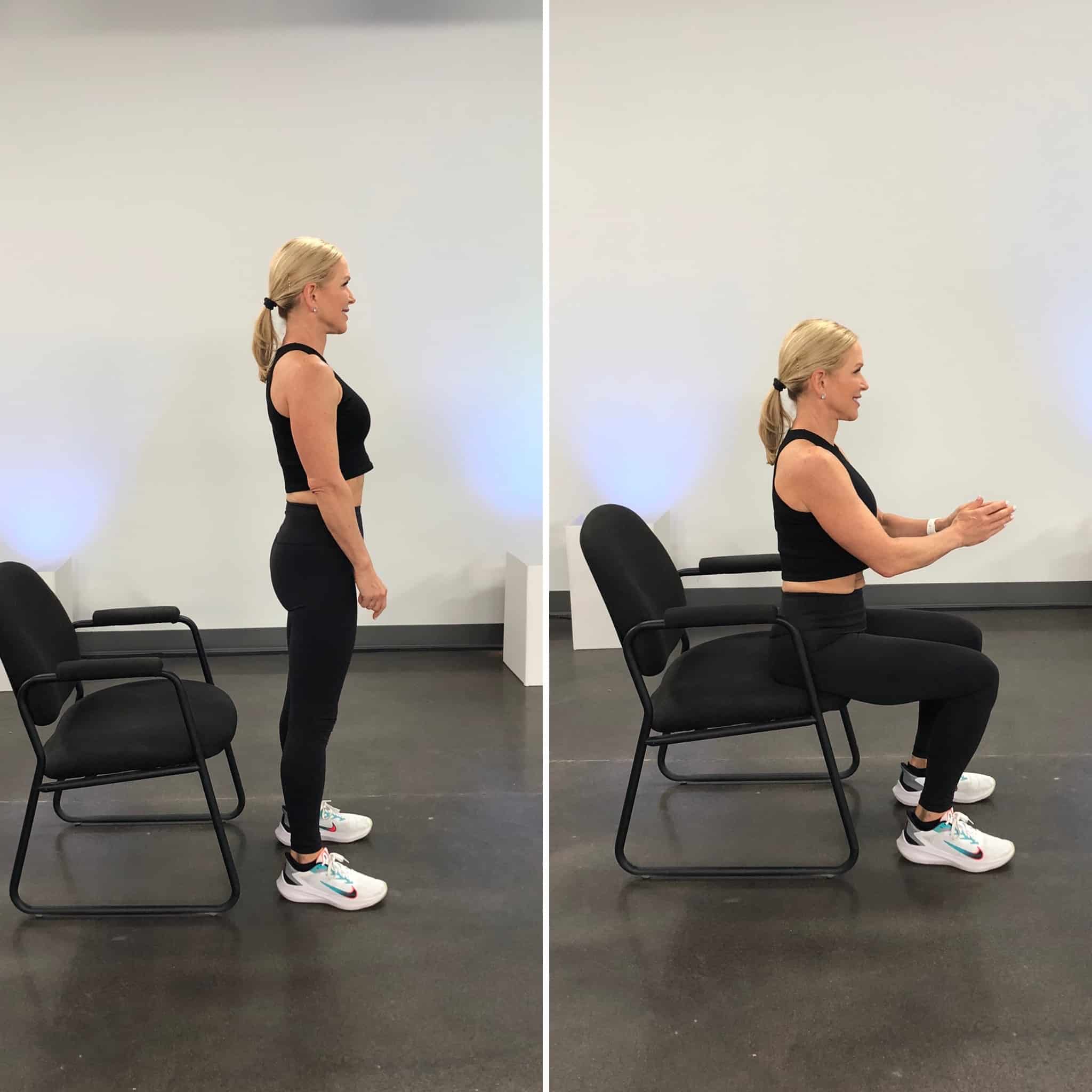
6. Chair Squats
Photo Credit: Get Healthy U
How to do chair squats:
Start sitting in a chair with your feet hip-width apart.
Slowly stand up, keeping your abs tight, and squeeze your glutes.
Sit back down into the chair with control
Repeat for 30 seconds.
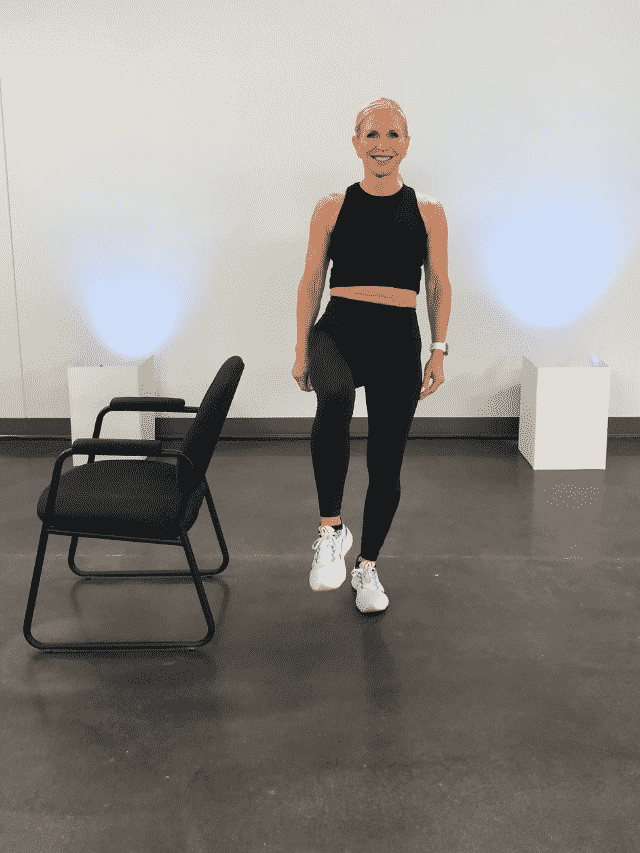
7. Single Foot Balance
Photo Credit: Get Healthy U
How to do a single foot balance:
Stand with your feet hip-width apart.
Raise your right foot off the ground (bend your knee and lift as high as feels ok).
Hold for 10 seconds (hold onto a chair if needed).
Repeat on the other leg. Do each side 2-3 times.
More Tips For Improving Your Balance
Photo Credit: Shutterstock
Along with adding the previous exercises to your routine, you can also practice these strategies to help improve balance:
Stand on one foot from time to time during the day. (Hold onto a counter, table, or chair if needed.)
Sit on an exercise ball at your desk instead of a chair.
Squat one inch over a chair and hold for a few seconds before sitting down.
Walk with a book on your head. (Old school but effective!)
Believe it or not, you can get the body you want – at any age!
Ready to lose lower belly fat? Unfortunately, endless sit-ups aren’t the answer.
The reason? You can’t spot-reduce belly fat. If you want to lose fat, you have to lose it all over.
Getting rid of stubborn belly fat and sculpting the muscles underneath requires a healthy diet and ramping up your workouts.
Here are nine helpful lifestyle and exercise tips from experts to help get rid of that annoying lower belly fat.
1. Get Active!
Photo Credit: Depositphotos
To lose weight all over, you have to shed your “extra layer” of visceral fat to see the muscles underneath. That’s where cardio comes in!
The CDC recommends 150 minutes of moderate-intensity exercise each week, including anything from jogging, jumping rope, cycling, or a spin class.
Walking is also a great option! There are so many benefits from regular walking, including:
It burns calories: A power walk can burn anywhere from 200 to 400 calories per hour or more, depending on the speed.
It can ease knee pain from osteoarthritis.
It can protect your heart: Research shows walking can lower your risk of cardiovascular events like a heart attack or stroke.
It can help prevent varicose veins.
It helps improve your immune system.
It can lower your blood pressure.
The bottom line? Whether you enjoy running, walking, or dancing, there is no “right” way to raise your heart rate, so pick what you like to do!
2. Try HIIT Workouts
Photo Credit: Shutterstock
If you are willing to try High-Intensity Interval Training (or HIIT), it’s a top choice for anyone looking to get rid of belly fat. HIIT helps you burn more fat and calories in less time!
HIIT exercises require maximum effort through quick, intense bursts of exercise followed by short recovery periods. HIIT workouts include some of the best exercises to train and condition your aerobic and anaerobic energy systems.
Consider HIIT your intense workouts, which you only need two to three times a week. Combine them with low-intensity exercise to maximize weight loss!
3. Incorporate Ab-Targeting Exercises
Photo Credit: Depositphotos
While you can’t spot-reduce fat in any area of your body, you can absolutely work to tone (or spot-sculpt) specific areas (especially your abs) by using strength training and toning exercises.
Core exercises and lower ab workouts will strengthen and tighten your abs and promote healthy aging. Strong core muscles are important for better balance and most daily activities.
It’s fairly straightforward: If you want to lose excess fat and get rid of that lower belly pooch fast, you need to burn more calories than you take in. This is what is referred to as a “calorie deficit.”
In addition to exercise, you also need to maintain a balanced diet, cut down on processed foods (such as frozen meals, deli meats, chips, cookies, etc.), and watch your liquid calorie intake (like alcohol, tea, and soda).
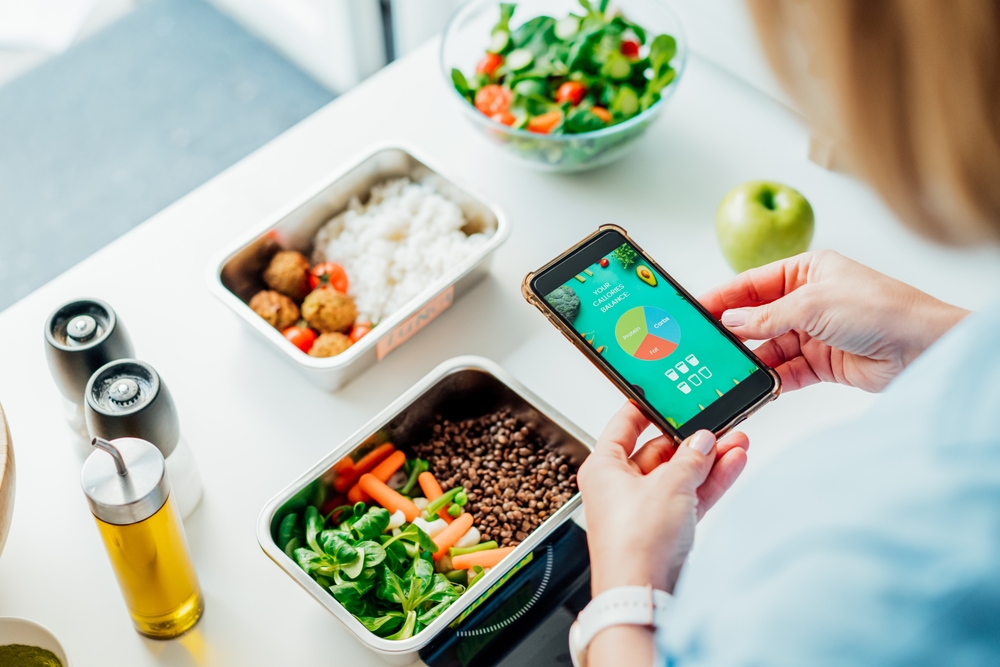
Journaling about your food intake will help you understand what you’re eating and the calories in each meal. If a journal isn’t your thing, try an app like MyFitnessPal.
5. Boost Your Protein and Fiber Intake
Photo Credit: Shutterstock
Fiber has a wide range of benefits, including helping you lose weight. Some types of fiber slow the absorption of nutrients, allowing you to feel full longer, which helps you consume fewer calories throughout the day.
Foods high in fiber include fruits (raspberries, bananas, avocados, and pears), veggies (peas, broccoli, and turnip greens), grains (whole wheat pasta and quinoa), and legumes (lentils and black beans).
Protein is made up of amino acids and helps feed and repair our muscles; however, it’s where you are getting your protein that matters most! Try good protein sources such as fish, poultry, eggs, low-fat dairy, leafy greens, broccoli, and asparagus.
6. Reduce Sugar and Refined Carbs
Photo Credit: Shutterstock
To maximize weight loss, especially in your lower belly, you should significantly limit or eliminate added sugars and refined carbohydrates (or “empty” calories).
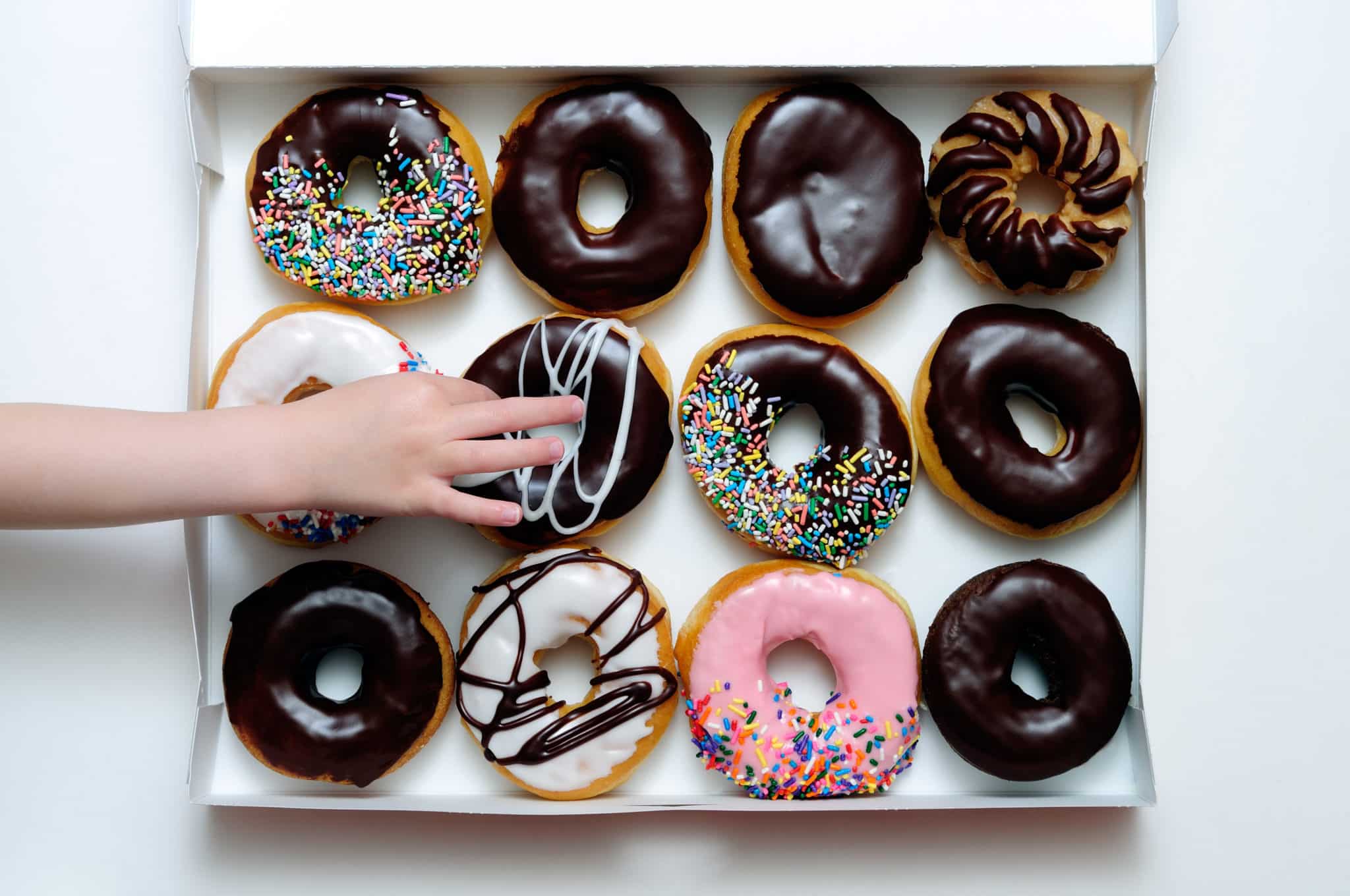
Foods high in refined carbs include white flour and bread, pastries, cookies, cakes, donuts, muffins, breakfast foods like waffles and pancakes, white rice, and pizza dough.
Added sugars like those in sugary drinks (such as soda and juice), processed meals, fast food, and candy increase your hunger and desire for more sugar, neither of which makes weight loss easier! Try sticking to the natural sugar found in fruits, veggies, and dairy products.
7. Stay Hydrated
Photo Credit: Shutterstock
Water has plenty of benefits, including maintaining a healthy weight, aiding digestion (thus reducing belly bloat), improving energy, and reducing hunger.
Moreover, in a living, moving body, skeletal muscle is 75 to 80 percent water. In order to put healthy muscle on your body, drinking water is necessary!
On average, you should be drinking at least 8-10 glasses of water a day. If you exercise regularly, add another glass or two to that.
8. Focus on Stress Management
Photo Credit: Shutterstock
Although it’s not necessarily the first step in reducing belly fat, chronic stress can certainly be counterproductive to weight loss. Research suggests a correlation between high cortisol levels (also known as the stress hormone) and increased abdominal fat.
Some ways to help manage stress include meditation, yoga, breathing exercises, self-care, therapy, and exercise.
9. Prioritize Sleep
Photo Credit: Shutterstock
You may not think sleep is connected to your weight loss journey, but research shows otherwise!
A study published in the journal Annals of Internal Medicine found that when dieters got a full night’s sleep, more than half of their weight loss was fat, as opposed to sleep-deprived dieters whose fat loss only accounted for one-fourth of their total weight loss.
Use my five expert tips to transform your energy to focus on a positive menopause mindset and enjoy this stage of life!
I’ve always been a firm believer in the power of positive thinking. I have long repeated the phrase, “where our mind goes, our energy flows.” And as the menopause transition started to rear it’s head in my life, I realized that I was going to have to embrace this next chapter with a can-do attitude.
How I managed menopause was going to be up to my mindset.
Growing up, our female relatives may not have discussed menopause with us, or if they did, it was often only in reference to the common menopause symptoms like unpleasant hot flashes, night sweats, and mood swings that come with it. Because of this, as most of us approach menopause, we’re typically greeted with either a lack of information altogether or a completely negative picture of how to deal with it.
Menopause is a significant transition in a woman’s life. Now on the other side of the transition, I want to share how a positive menopause mindset during this phase helped me maintain my sanity. Mindset is crucial for several reasons, impacting both mental and physical well-being.
Here’s why a positive attitude can make all the difference.
This Is Not Your Mother’s Menopause
Photo Credit: Shutterstock
In the past, menopause was often shrouded in secrecy, treated as something to be endured quietly. Today, however, we have the opportunity to redefine this stage of life.
Menopause is not a curse; it’s a natural transition that every woman goes through.
It’s time to let go of those outdated beliefs and educate ourselves on what is really happening to our bodies. Menopause is not an end but a new beginning—a chance to focus on our health and well-being like never before.
Many of us live for decades after menopause and how we look at this new part of our lives will define what comes next.
My Personal Journey with Menopause
Photo Credit: Shutterstock
Perimenopause just snuck up on me. I had a full six months where I felt tired and moody and I didn’t put two and two together till after the fact that it was my fluctuating hormones causing these physical symptoms.I was struggling in my workouts, had brain fog, and in general felt flat.
And then I realized it was the beginning of my journey through menopause.
I never was taught anything about menopause in my earlier years and never discussed it with my mom or friends so this was all new for me. To start feeling better, I decided to “reset my mindset” and dig into the books, research, podcasts, anything I could get my hands on.
I’ve put together the best tips that worked for me below so you can hopefully have a manageable and positive peri- and post menopausal transition:
1. Embrace the Change
Photo Credit: Shutterstock
Menopause is a natural part of life’s journey, marking the transition from one stage to another. By seeing menopause as a natural and expected milestone, you can approach it with acceptance and even anticipation.
Remember that this change signifies a new chapter filled with opportunities for growth, self-discovery, and renewed focus on personal health and well-being. This phase can be a time to reconnect with yourself, discover new interests, and set new goals.
2. Knowledge is Power
Photo Credit: Shutterstock
Get educated about what is happening to your body and what to expect. Understanding the biological and hormonal changes can demystify the process and reduce anxiety.
Read books, attend seminars, and talk to healthcare providers who specialize in menopause.
Knowing what to expect and learning about various coping strategies can demystify the process and equip you with the tools needed to navigate it confidently. The more informed you are, the more control you’ll feel over your own health journey.
3. Lifestyle Tweaks
Photo Credit: Shutterstock
Small, intentional changes in your lifestyle can have a profound impact on how you experience menopause.
Focus on these three basics:
Healthy Eating: Incorporate a balanced menopause diet rich in fruits, vegetables, whole grains, and lean proteins. Foods high in calcium and vitamin D are essential for bone health, which becomes more critical during menopause.
Regular Exercise: Establish a consistent workout routine that includes cardiovascular exercises, strength training, and flexibility exercises. Physical activity can alleviate many menopause symptoms, including weight gain, mood swings, and sleep disturbances.
Mindfulness Practices: Incorporate activities like a yoga practice, meditation, or deep-breathing exercises to reduce stress and promote mental clarity. These practices can enhance emotional well-being and help you stay grounded.
These tweaks not only boost your physical health but also enhance your emotional resilience, helping you feel more energized and in control.
4. Find Your People
Photo Credit: Depositphotos
Building a support network is essential during menopause. Surround yourself with friends, family, and peers who understand what you’re going through.
Sharing experiences, advice, and even a good laugh can be incredibly uplifting. Don’t be shy about reaching out—you’re not alone.
5. Accept the Challenge
Photo Credit: Shutterstock
Look at menopause-related challenges as opportunities to grow and become more resilient. Each hurdle you encounter is a chance to gain wisdom, resilience, and a deeper understanding of yourself.
Embrace the changes with an open heart, and focus on the personal growth and strength that come from navigating this transition. By maintaining a positive mindset and seeing challenges as opportunities, you’ll find yourself more equipped to handle the ups and downs with grace and confidence.
Taking Charge of Your Health
Photo Credit: Shutterstock
Changing your mindset is just the beginning. There are so many symptoms of menopause but here are some practical steps you can take to navigate this time of life with confidence:
Stay Active: Regular exercise can help manage symptoms like weight gain, sleep disturbances, and mood swings. Find activities you enjoy and make them a part of your routine.
Eat Balanced Meals: Focus on a balanced diet rich in fruits, vegetables, lean proteins, and whole grains. Proper nutrition can alleviate many menopause symptoms.
Prioritize Sleep: Quality sleep is essential. Establish a bedtime routine, create a comfortable sleep environment, and avoid caffeine and electronics before bed. These are my best tips for getting better sleep.
Manage Stress: Incorporate stress-reducing activities such as yoga, meditation, or deep breathing exercises into your daily life.
Stay Hydrated: Drink plenty of water to help manage hot flashes and maintain overall health. These are the best tips for drinking more water every day.
Embracing a New Chapter
Photo Credit: Shutterstock
Menopause is a significant life transition, but it doesn’t have to be negative. As a personal trainer, health coach and post menopausal woman, I’ve seen firsthand how powerful a positive mindset can be.
Embrace the change, educate yourself, and make small lifestyle tweaks to enhance your well-being. Surround yourself with supportive people and view challenges as opportunities for growth.
You’ve got this. Menopause is just another chapter in your incredible life story. Let’s make it a beautiful one.
In today’s modern world, it’s all too common to spend the majority of our day sitting. Whether it’s at a desk, in front of the TV, or even while eating, our bodies often remain in a sedentary state for far too long.
However, incorporating light exercise into our daily routine can be a game changer —and one simple solution is the increasingly popular walking pad.
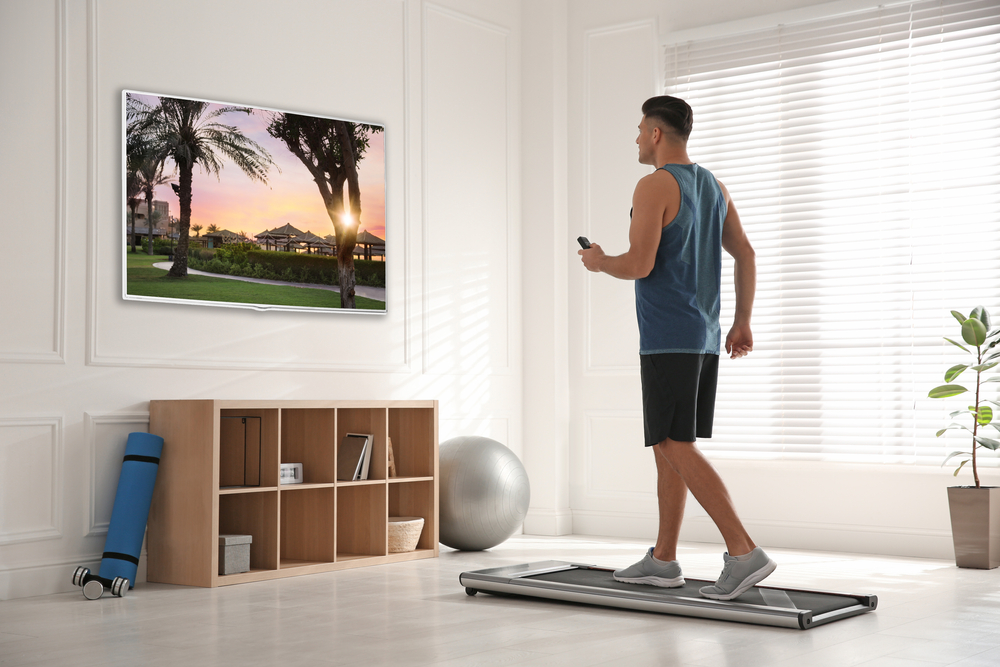
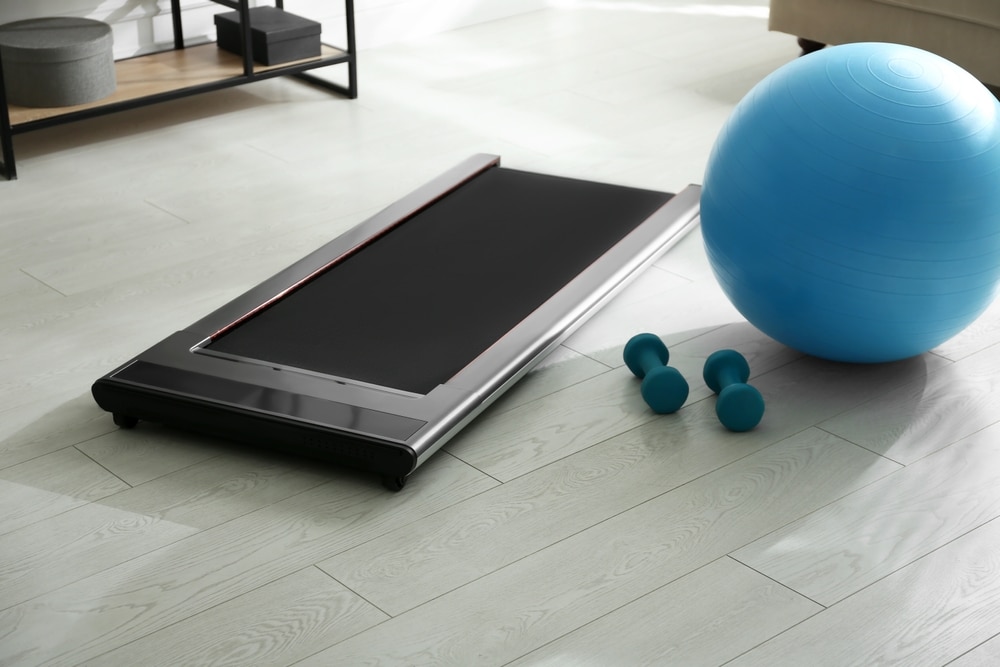
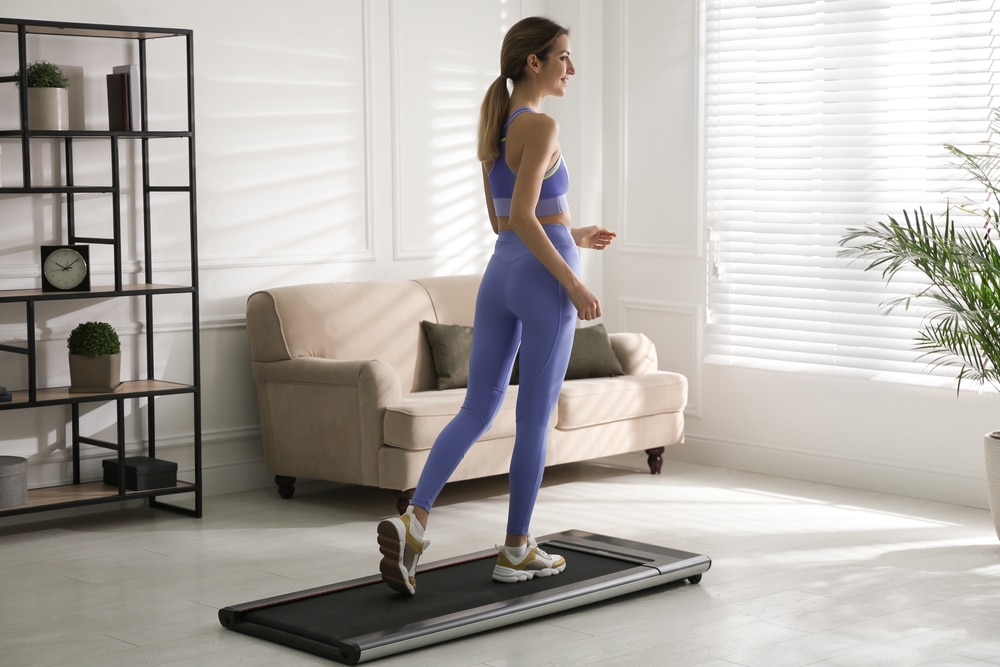
A walking pad is a versatile and compact piece of equipment (a mini treadmill, so to speak) that can keep you active whether you’re working, watching TV, or even cooking. With their affordable and lightweight design, walking pads are more approachable than traditional treadmills. The best part? All of those extra steps make the perfect addition to any weight loss plan!
Here, we’ll examine why it’s important to boost your daily steps, everything you need to know about walking pads, and how they can help you lose weight.
Why Daily Movement is So Crucial
Photo Credit: Shutterstock
We typically think of movement and calorie expenditure in terms of minutes of exercise. But, a lot of our daily activity ultimately comes from non-exercise activity thermogenesis (or NEAT).
So, what is NEAT? In short, NEAT includes all the activities we fit into our busy schedules that aren’t “exercise.” Think of things like walking to lunch, pacing on the phone, cleaning, cooking, climbing up and down stairs, watching your kids, folding laundry — the list goes on.
Basically, NEAT is comprised of all the daily tasks that require some kind of physical activity. (But you wouldn’t consider it “exercise,” per se.)
Why is NEAT So Important?
Dr. James Levine of the Mayo Clinic explains the importance of NEAT and the worthwhile opportunity for weight loss and other health gains.
Dr. Levine pioneered the treadmill desk, and his studies showed that when a healthy individual walks at a slow pace of around 1-2 mph during the workday, they can burn a significant amount of extra calories. This can make a huge impact in people’s weight loss efforts. It’s not sweaty exercise; it’s just consistent movement!
Levine makes the convincing argument that NEAT could burn up to 1,000 extra calories per day when added strategically to the workday.
As we begin to understand the importance of NEAT, it’s easy to see how working from home or sitting at a desk all day can be quite an obstacle. How can you incorporate more movement into your day when you’re glued to a desk?
That’s where walking pads come into play!
Walking Pads vs. Treadmills
Photo Credit: Shutterstock
Both walking pads and classic treadmills provide an opportunity for cardiovascular exercise. They are both exercise equipment tools with a user-friendly operation that can be used in a home gym or home office. However, the two have pretty stark differences.
Treadmills
Treadmills are commonly known for their powerful performance and have been a staple running machine in home gyms for years. They are typically heavy and immobile and take up quite a bit of space. Treadmills have many great features, like incline control and higher maximum speed capacities. They can be used for anything from a daily walk to an intense run.
Walking Pads
On the other hand, walking pads are a newer product on the market. With many workers trying to combat sitting at a desk all day and social media trends like cozy cardio, it makes sense that these walking pads are quickly gaining popular product reviews.
These compact treadmill options are smaller, have lower speed capacities, and are usually portable, making them a great option for limited space. They are a simpler, more affordable option that allows you to walk for a long time in your home office or living room. Some have the capacity for running, but not nearly in the same way as a traditional treadmill does.
Benefits of Walking Pads
Photo Credit: Shutterstock
Walking pads work well just about anywhere. Any space from a small apartment to a home will work!
Whether working from home or watching TV, the extra steps will benefit your health and general mobility.
Here are just a few of the benefits of walking pads:
Increase NEAT activity easily at home
Compact designs are great for small spaces
Easy to store when not in use
Easy way to stay active while working
Affordable pricing
Getting Started With Walking Pads
Photo Credit: Shutterstock
Walking pads are different than traditional treadmills. If you’re just starting to learn about walking pads, here are a few things you should know:
Speed Capacity: Walking pads are made for slower movement than treadmills. Most walking pads have various speeds and will top out at a certain point. Top speed can max out around 4 miles per hour. If you’re looking for higher speeds or an option for running, a traditional treadmill might be a better fit.
Portability: The walking pad’s beauty is that it works well in small spaces. Its compact design allows for easy storage under desks, beds, or against the wall, saving valuable space. Some models are even foldable.
Size: These machines are made to be compact. Small, foldable, and movable designs are popular!
Weight Capacity: The weight capacity for walking pads is much lower than a traditional treadmill. Common weight capacities are around 200-250 pounds. You’ll want to choose an option that works with your weight limit.
Walking Pad Affordability: The good news is, since they are smaller and simpler than traditional treadmills, they are more affordable, too! Many walking pads fall within the price range of $200 to $500.
Data Tracking: Fair warning: A fitness tracker on your wrist, like the Apple Watch, may not accurately record your steps if you’re working at a standing desk. Typing and resting your arms on the desk will throw off the tracking. Luckily, most walking pad models have features that report your speed, time, distance, and calories burned.
Can a Walking Pad Help You Lose Weight?
Photo Credit: Shutterstock
In short, yes! Walking pads are great for weight loss. Incorporating more steps into your day with a walking pad helps increase your calorie expenditure, which is key for losing weight.
But remember, your diet is also essential. If you walk all day but also eat unhealthy snacks and sugary drinks, weight loss will be much harder.
That said, walking pads can certainly be helpful in your weight loss journey. If you’re already incorporating a healthy diet and appropriate exercise levels, extra daily movement may help push you towards your goals.
The extra low-impact activity of walking can also relieve stiffness and soreness and help keep your joints lubricated and strong, which helps you stay healthy and avoid injury.
Strength training, core exercises, and yoga are all great additions to expedite your weight loss journey. Walking pads can help with weight loss when you incorporate them into a well-rounded strategy.
If you’re ready to get started, check out our top walking pad picks from a fitness expert!
Did you know standing exercises for a flat stomach can be just as effective (if not more effective!) than core work on the mat? It’s a big reason standing ab exercises are so popular, especially for those dealing with back and knee pain who struggle to get on and off the floor.
Our 12 standing ab exercises also mimic normal everyday activities, making them great functional strength training workouts. Functional strength training is all about incorporating movements that challenge your stability and mobility, like balancing on one leg or doing core exercises on an unstable surface.
Ready to get started? The following 12 standing ab exercises require no equipment and help work your core, improve your body’s ability to move efficiently, and reduce the risk of injury in everyday activities.
1. Cross-Body Bicycle Crunches
Credit: Get Healthy U
Performing cross-body bicycle crunches will engage your entire core, emphasizing oblique muscles for improved rotational strength.
How to Perform Cross-Body Bicycle Crunches:
Stand with feet hip-width apart, knees slightly bent, hands behind head.
Keep low abs pulled in tight and lift left knee up as right shoulder rotates towards knee.
Lower back to start. Repeat on the opposite side.
2. Cross-Body Leg Lifts
Credit: Get Healthy U
This standing ab exercise will strengthen your lower abs and hip flexors, enhancing stability and balance.
How to Perform Cross-Body Leg Lifts:
Stand with feet hip-width apart, knees slightly bent, hands behind head.
Keep low abs pulled in tight and lift left leg straight up as right-hand reaches towards toes. Keep your back straight and your head up.
Lower back to start. Repeat on the opposite side.
3. Standing Oblique Crunches
Credit: Get Healthy U
This standing oblique exercise focuses on the obliques, enhancing side core strength and definition.
How to Perform Standing Oblique Crunches:
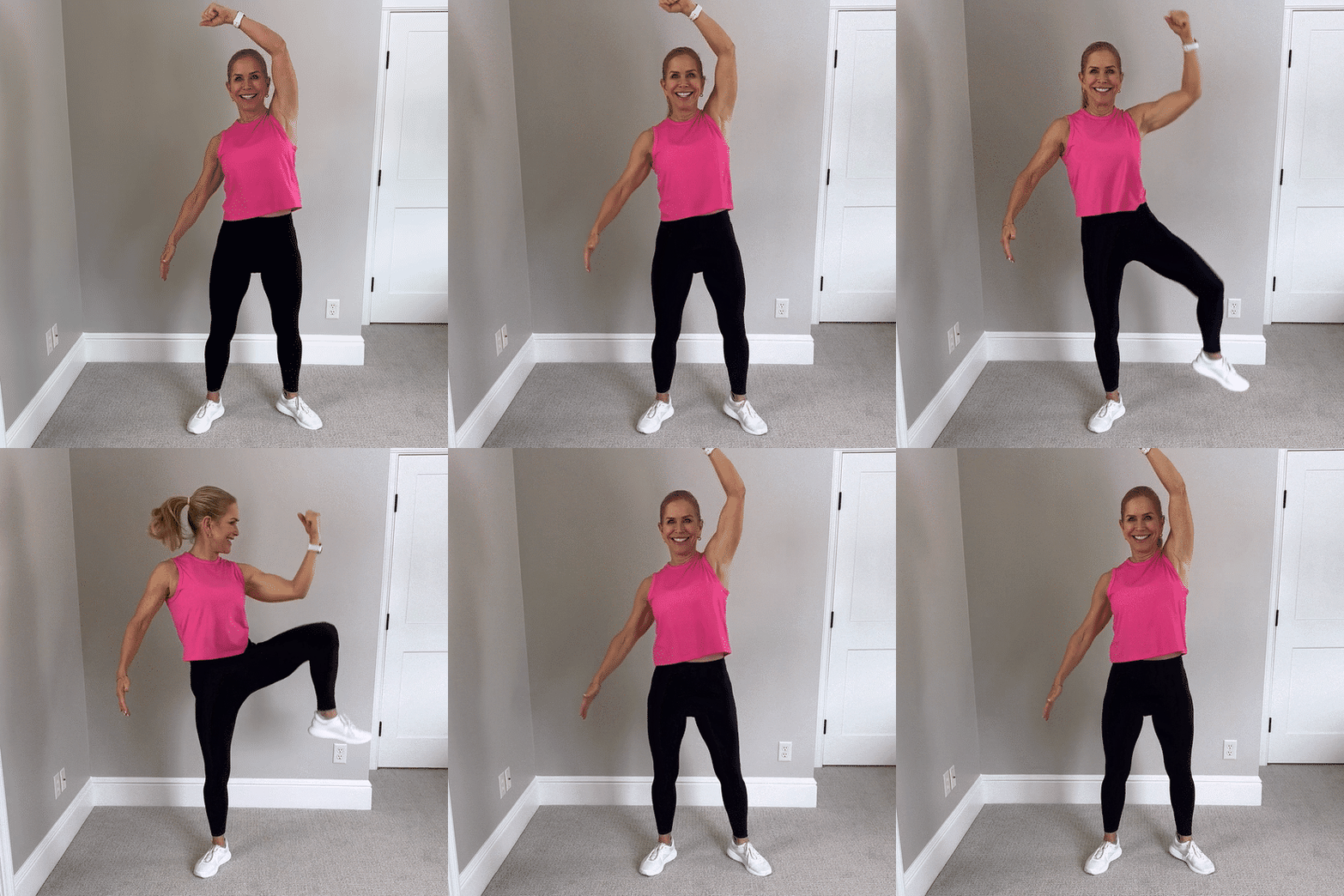
Stand with your feet shoulder-width apart. Lift right arm up overhead.
Bring the right knee up to the side to meet your right elbow, engaging through your obliques.
Return to standing. Repeat on the other side.
4. Fully Body Circles
Credit: Get Healthy U
Performing full-body circles activates your entire core while enhancing flexibility and balance.
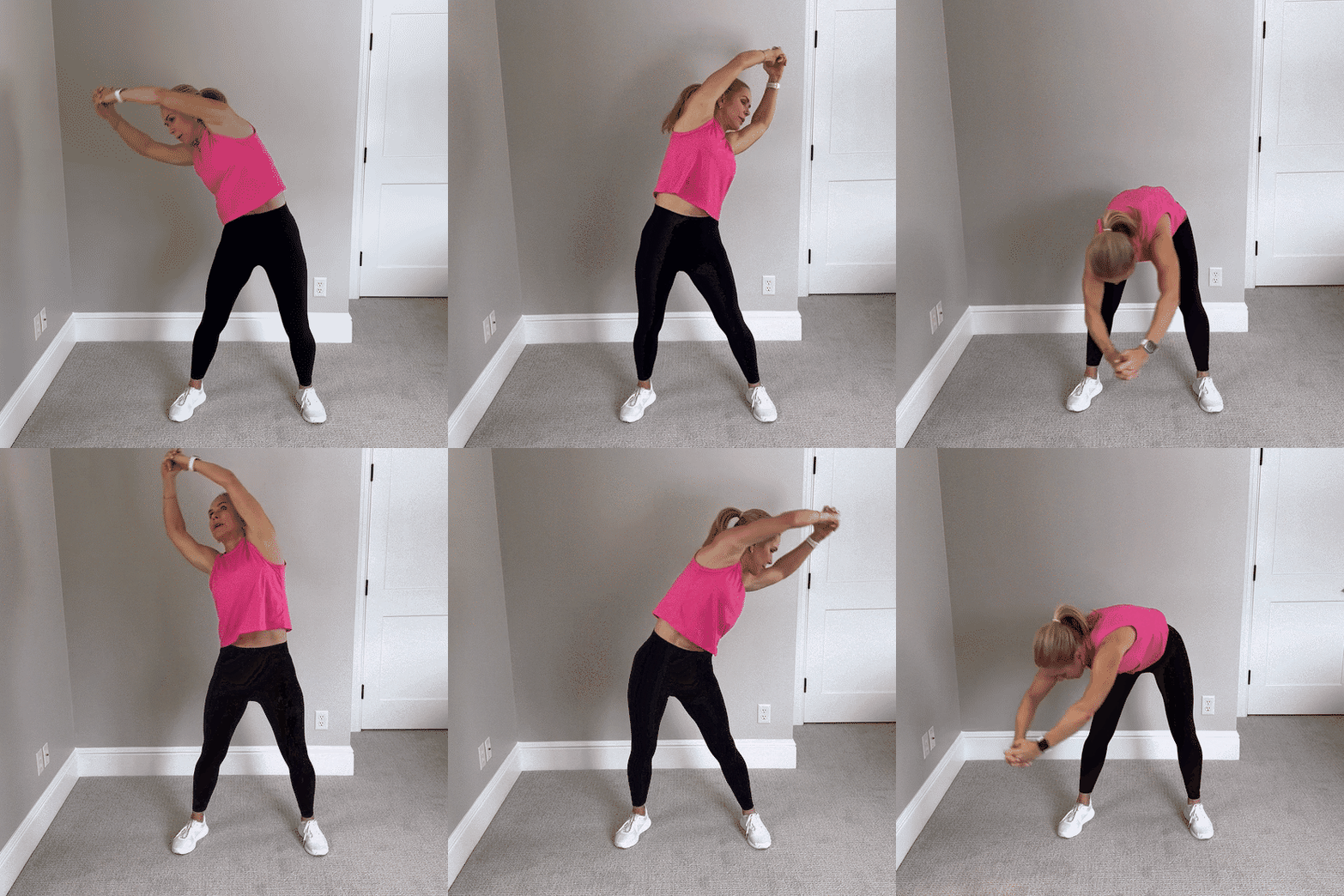
How to Perform Fully Body Circles:
Stand with your legs hip-width apart. Raise both arms up and clasp your hands overhead. Slightly soften your knees and contract your abs.
Bend forward at the hips and slowly draw a full circle with your body.
After several circles, one way, change directions.
5. Oblique Burners
Credit: Get Healthy U
This standing oblique exercise specifically targets your oblique muscles, improving side torso strength and toning.
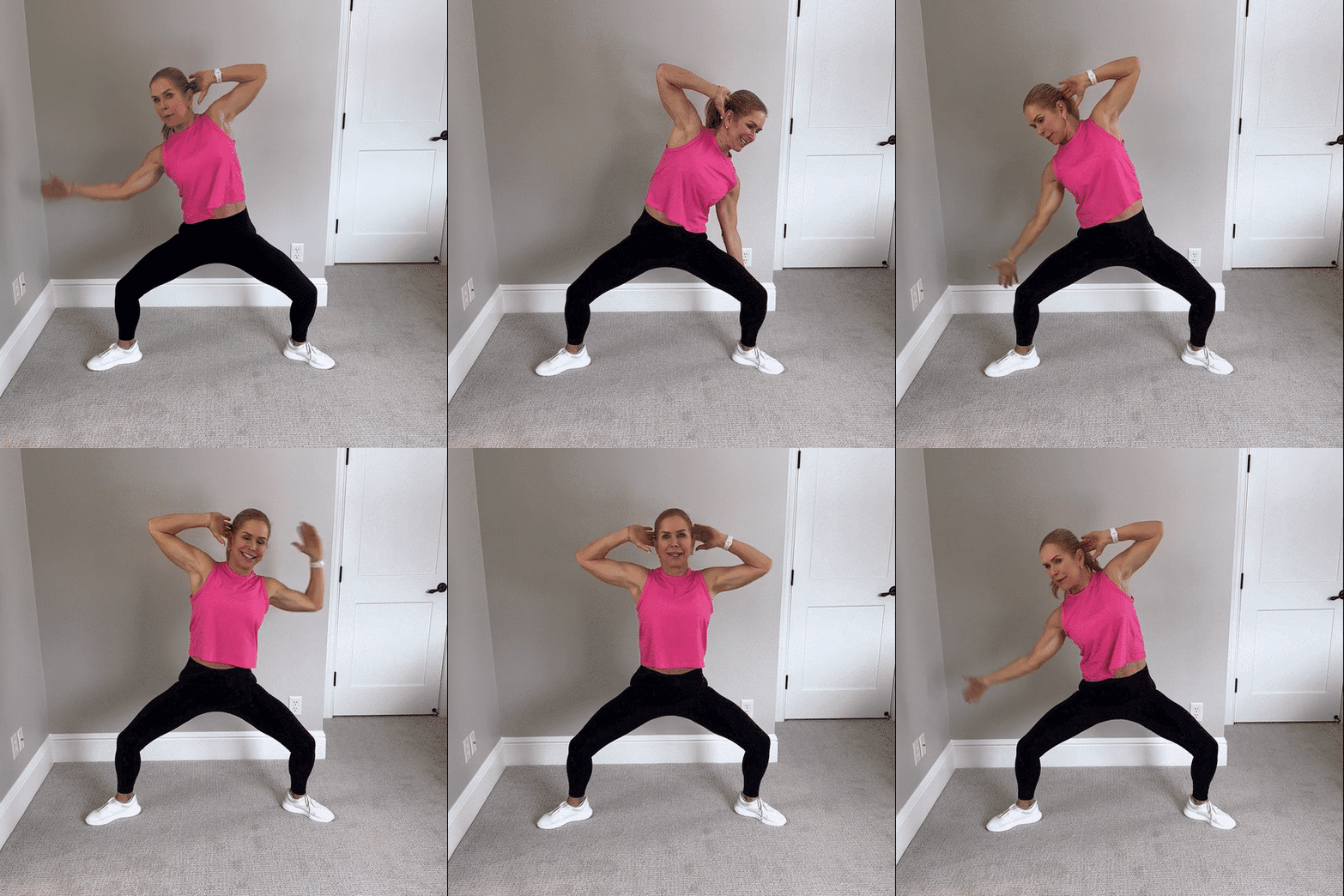
How to Perform Oblique Burners:
Stand with wide feet, heels in, and toes turned out. Sink into a plie with knees bent and hands lightly touching the back of your head.
Bend to the right, reaching your right hand to the middle of your right calf.
Return to the center. Repeat on the other side.
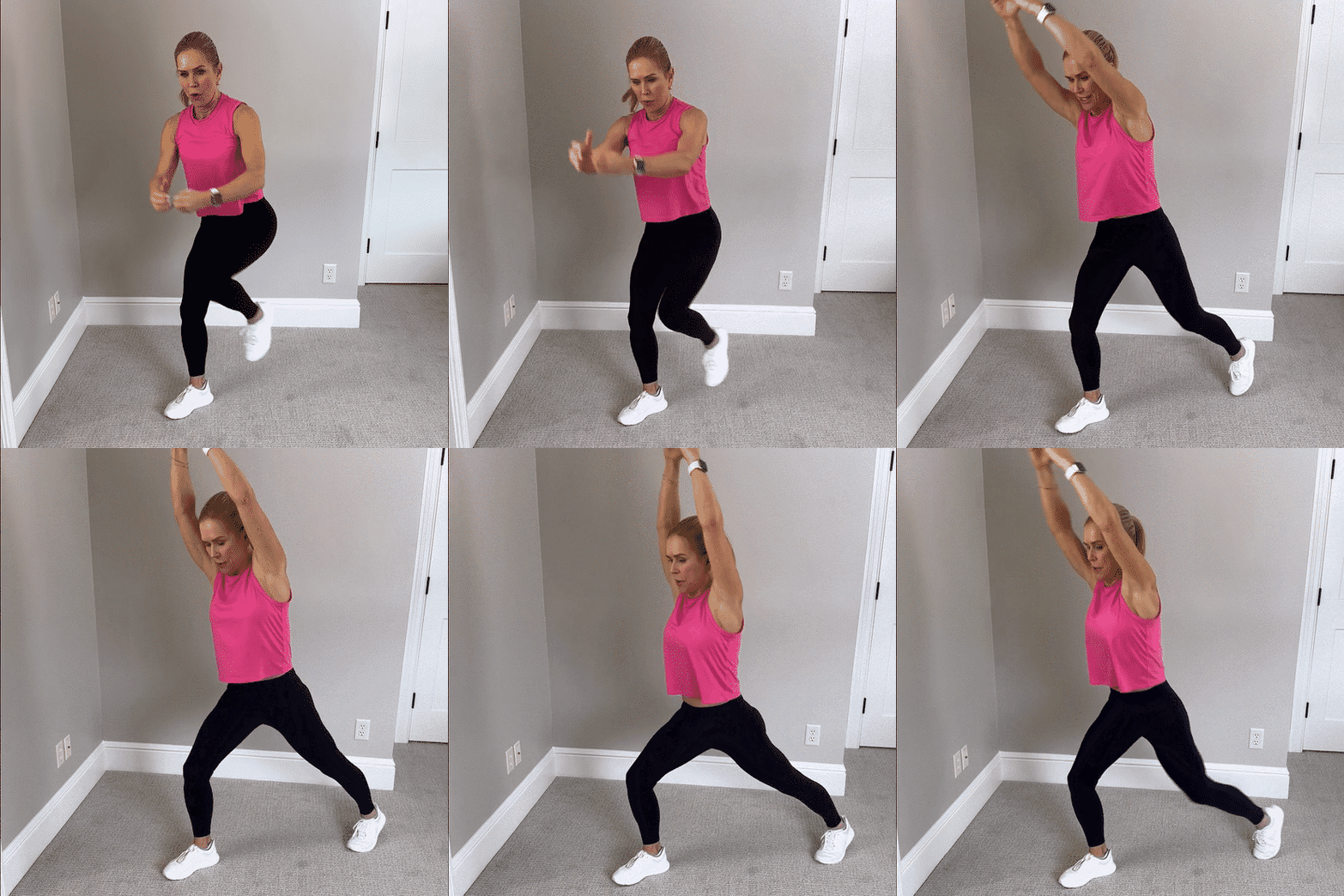
6. Cross Behind Lunge with a Knee Lift
Credit: Get Healthy U
This ab exercise strengthens your core and lower body while improving balance and coordination.
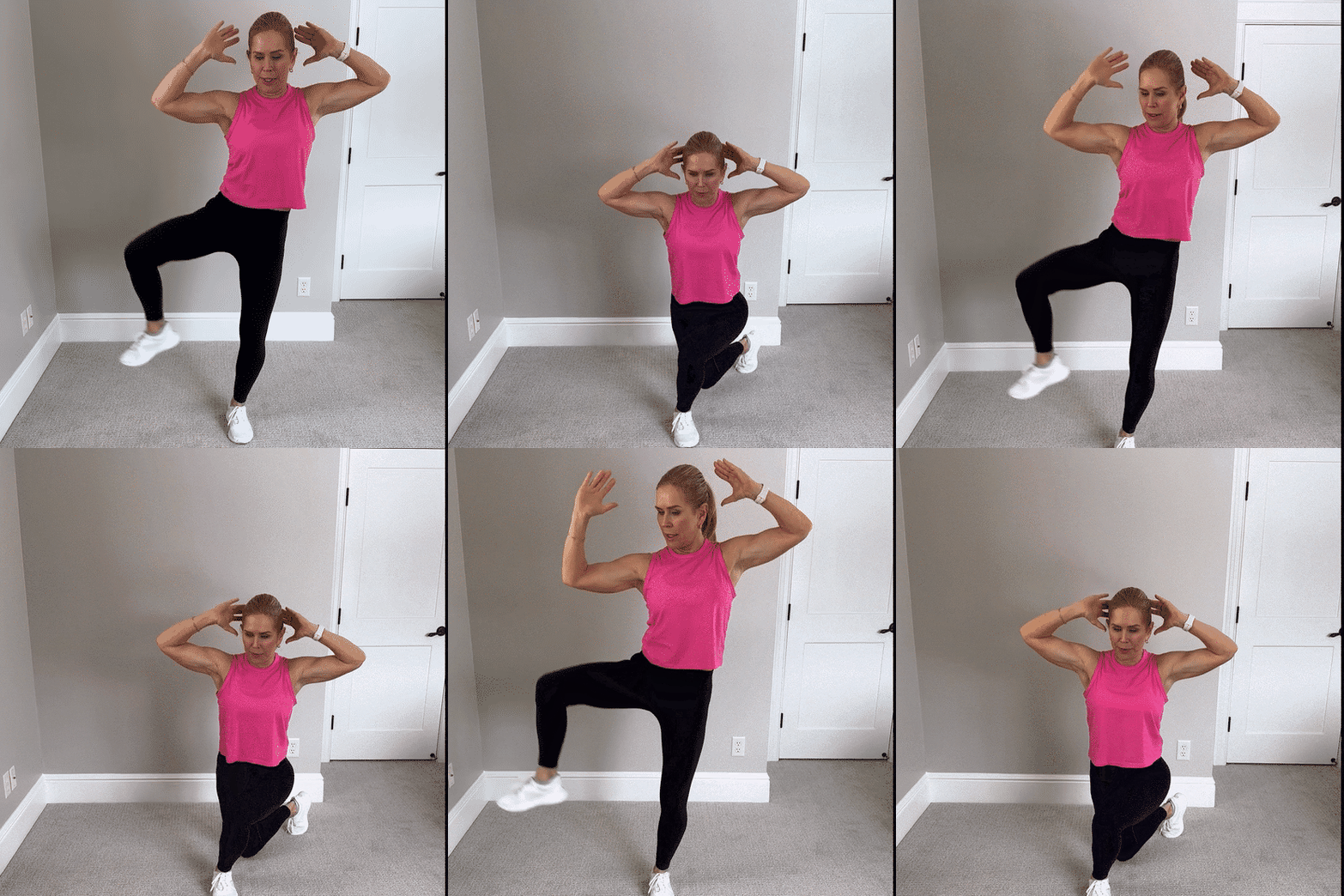
How to Perform Cross Behind Lunge with a Knee Lift:
Begin standing with your feet hip-distance apart and your hands lightly touching the back of your head.
Cross your right food behind your left leg, keeping your hips facing forward as you bend both knees and lower yourself toward the floor in a lunge. Keep your back straight and chest lifted.
Drive your right knee up to meet your right elbow in a side crunch. Repeat for desired number of reps and then repeat on the other side.
7. Cross Body Knee Thrusters
Credit: Get Healthy U
Performing cross-body knee thrusters engages your entire core, emphasizing the obliques and lower abs for a toned midsection.
How to Perform Cross-Body Knee Thrusters:
Stand with your feet hip-width apart and extend your arms up and over your right shoulder.
Drive your left knee up and across your body, and bring your arms down to meet your knee.
Return to start. Repeat on the other side.
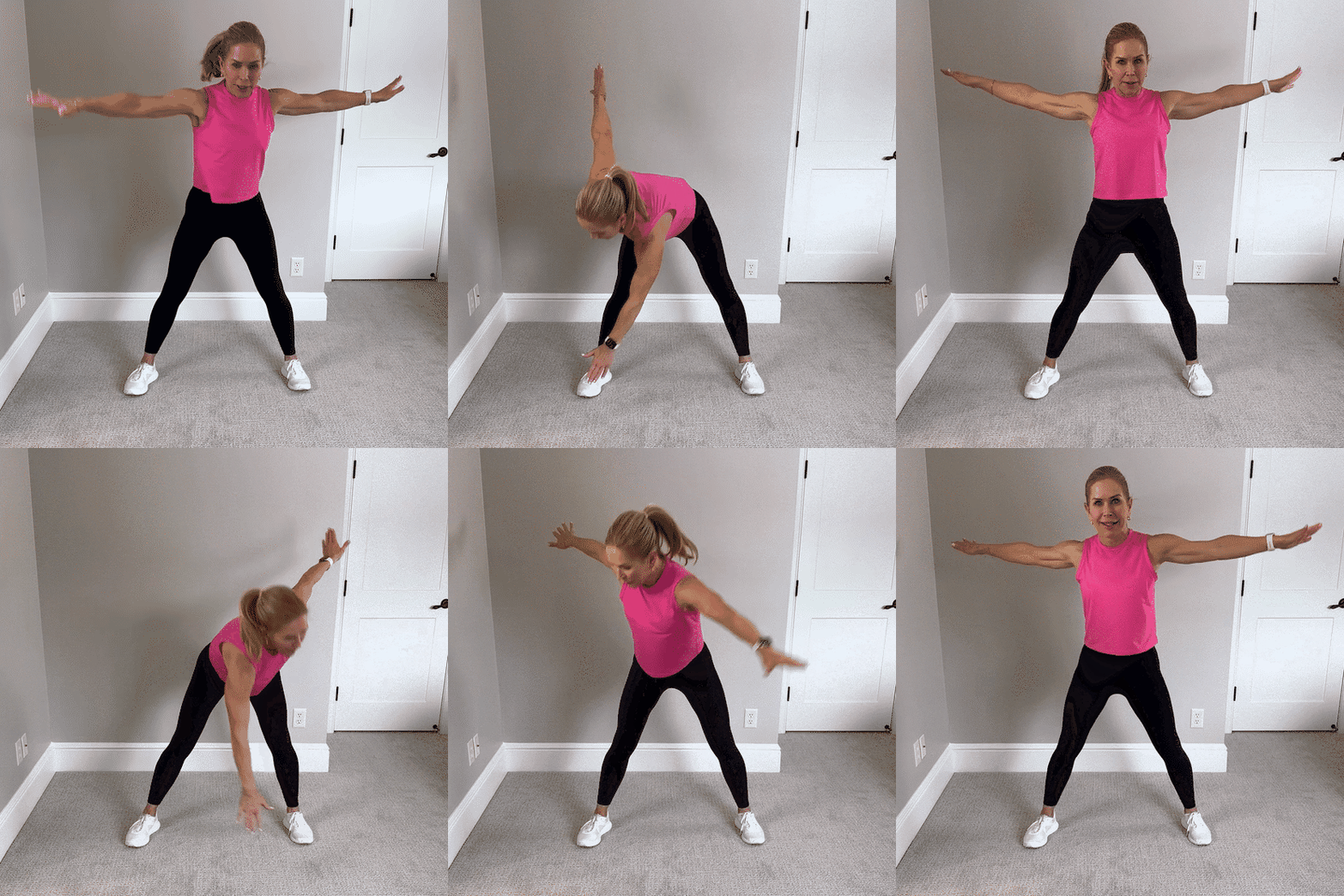
8. Crossover Toe Touches
Credit: Get Healthy U
Performing crossover toe touches engages your entire core, emphasizing flexibility and coordination.
How to Perform Crossover Toe Touches:
Stand with your feet wide and extend your arms into a T position.
Engage your core, rotate your torso to the left, and reach your right hand to your left foot. Bend your knees slightly if your hamstrings are tight.
Return back to standing and alternate to the other side.
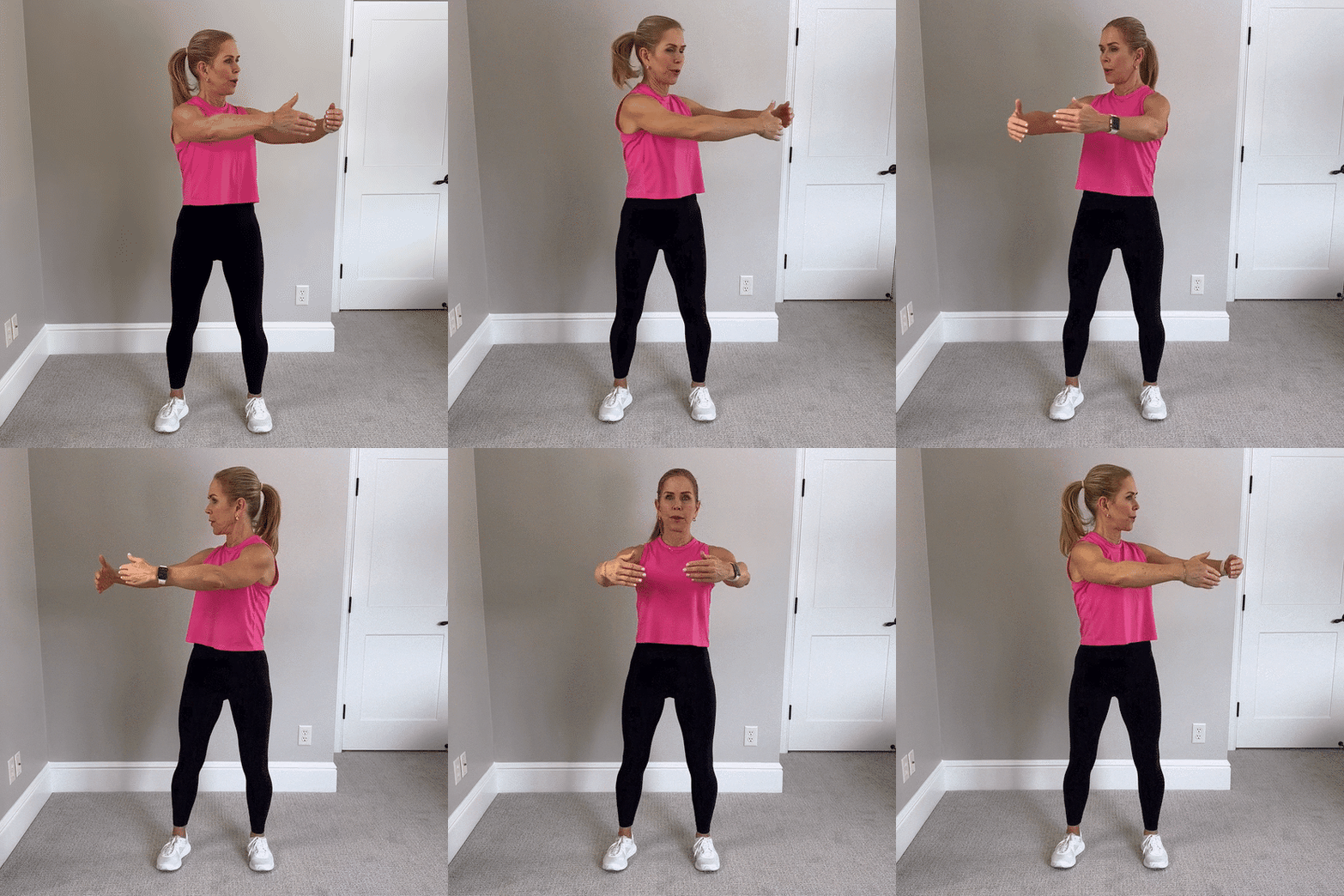
9. Side Twist Standing
Credit: Get Healthy U
This standing oblique exercise will strengthen your obliques and improve rotational flexibility and balance.
How to Perform a Side Twist Standing:
Stand with feet hip-width apart, slight bend at the knee, pelvis slightly tucked under, and abs pulled in toward the spine.
Hold your arms in a circle directly out in front of your chest, as if you are holding an imaginary beach ball. Take a deep breath in, and as you exhale, twist your imaginary ball to the left 3 times, moving far, farther, and farthest.
Do not move your hips. The rotation should come right at your ribcage.
Return to center, inhale, then twist the “ball” to the right far, farther, farthest, returning to the center to inhale. Repeat twisting three times in each direction.
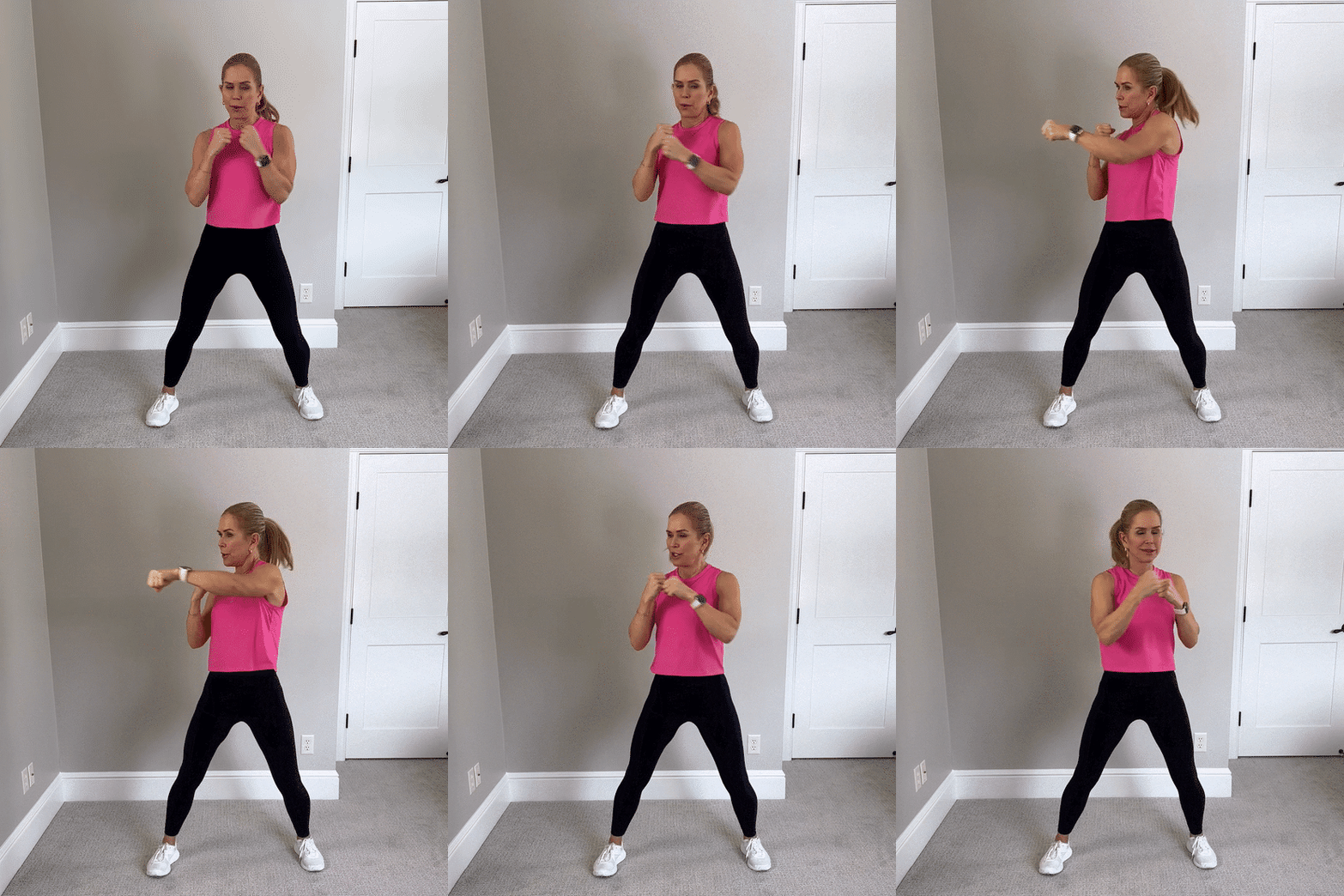
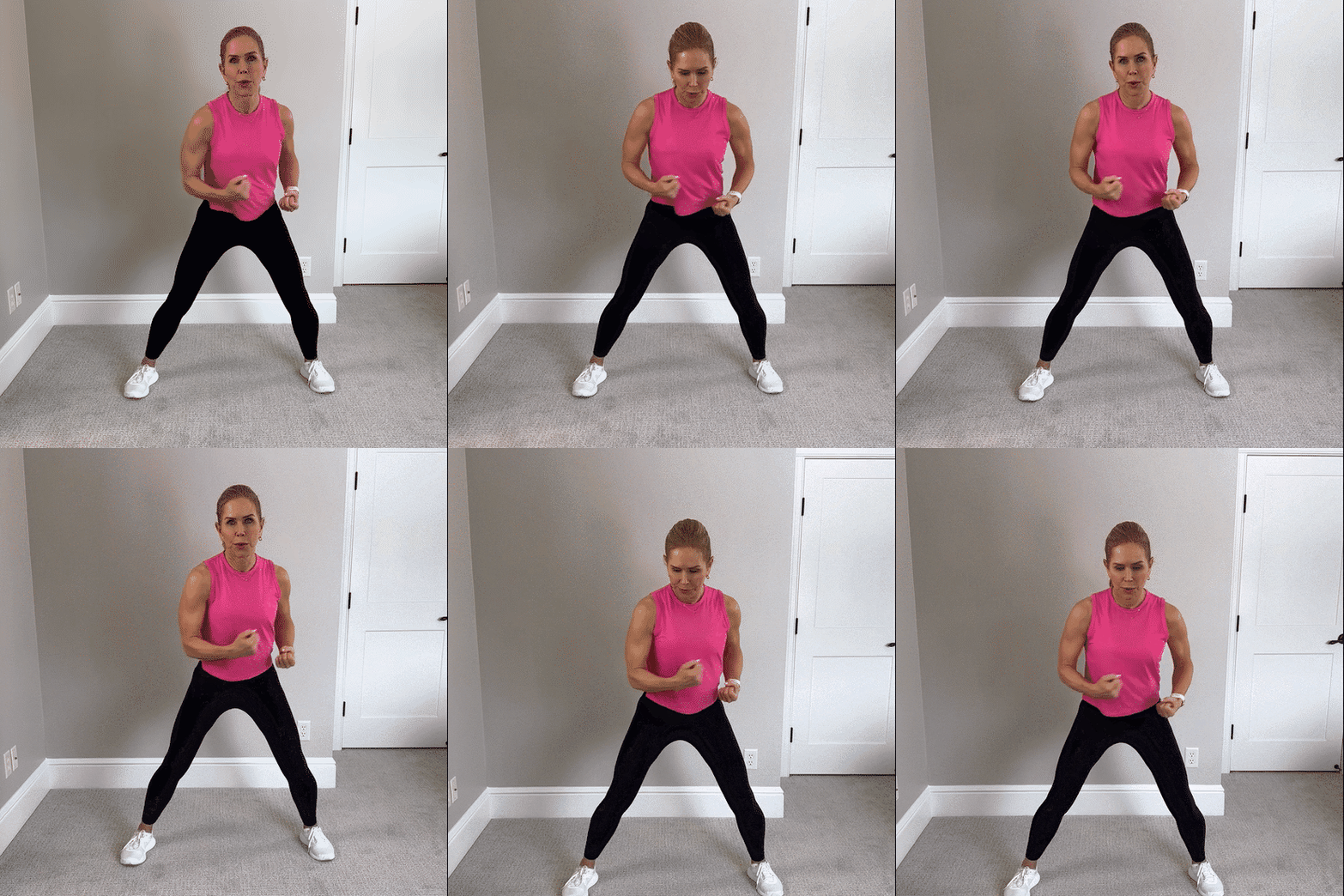
10. Fast Corner Punches
Credit: Get Healthy U
I love using fast corner punches to increases core engagement and cardiovascular endurance while targeting my obliques.
How to Perform Fast Corner Punches:
Begin in a standing position with feet hip-width apart and knees slightly bent.
Pull your arms close to your side, bending the elbows and making two tight fists facing toward you.
Punch your left arm across your body to the right corner and then do the same to the left. Keep your hips steady and rotate from the waist area, contracting your abs.
Repeat for the desired amount of repetitions.
11. Fast Uppercuts
Credit: Get Healthy U
You might think of fast uppercuts as a boxing exercise, but this standing ab movement actually enhances core strength and coordination, focusing on your upper abs and obliques.
How to Perform Fast Uppercuts:
Begin in a standing position with feet hip-width apart and knees slightly bent.
Pull your arms close to your side, bending the elbows and making two tight fists facing toward you.
Punch each fist in an upward motion stopping right about chin level, alternating right and left. Keep your hips steady and rotate from the waist area, contracting your abs.
Repeat for the desired amount ofuppercut repetitions.
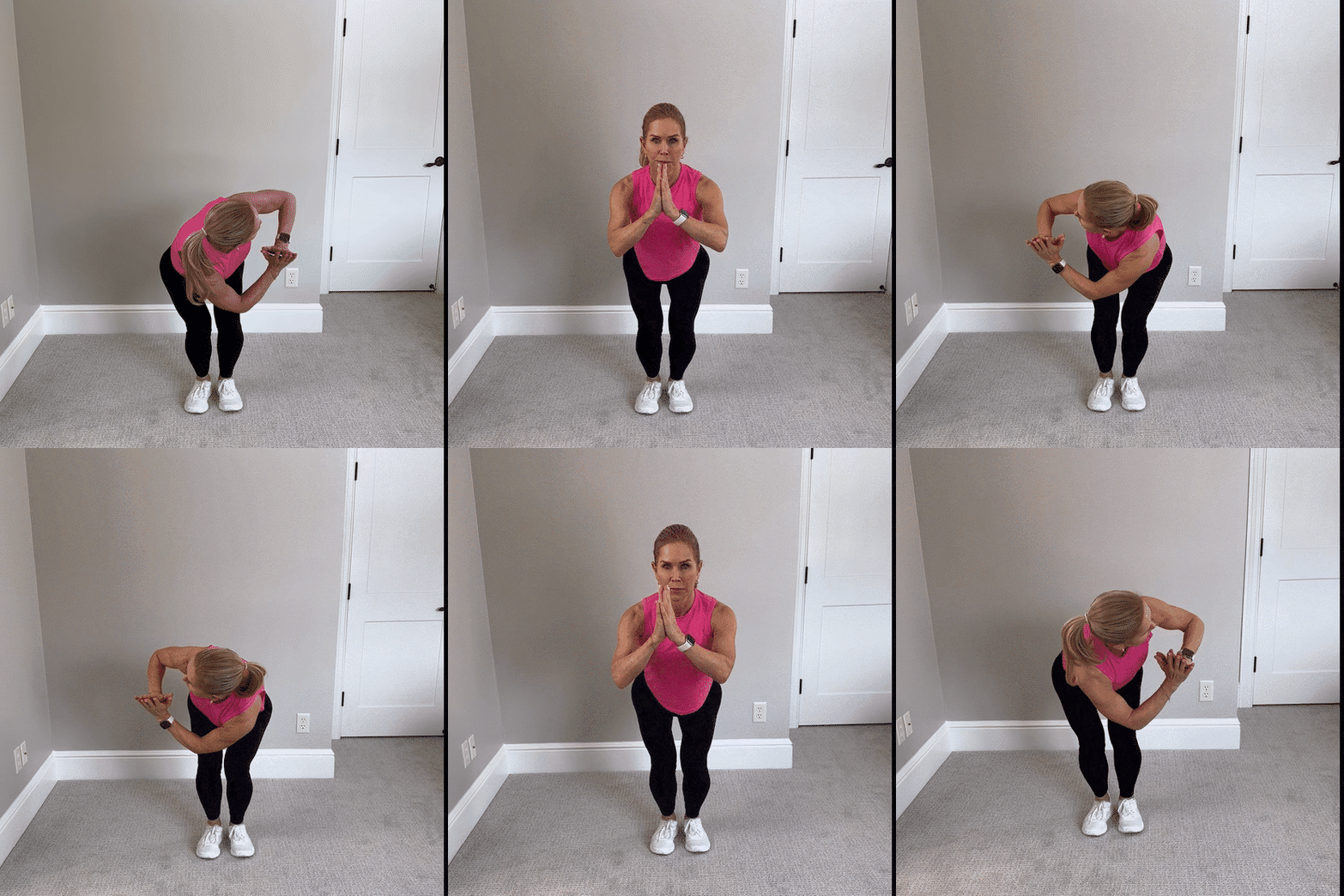
12. Chair Pose with a Twist
Credit: Get Healthy U
The chair pose with a twist exercise engages your entire core, improving balance, flexibility, and spinal strength.
How to Perform Chair Pose with a Twist:
Stand with your feet close together. Engaging your core and inner thighs, bend your knees and send your hips back into a chair pose.
Lift your chest and chin up, hands in a prayer position.
Rotate your upper body to the right, aiming to get your left elbow to your right knee. Think about rotating from the waist, and don’t rotate your hips.
Return back to the start and rotate to the other side.
Your blood sugar naturally fluctuates throughout the day in response to meals, activity, stress, etc. Maintaining healthy blood sugar levels is essential for your overall health—especially if you have diabetes, prediabetes, or insulin resistance.
Not all food is created equal when it comes to the impact it has on blood sugar. Foods high in sugar with little to no protein or fiber will have the most negative effect on blood sugar. On the other hand, foods that are high in protein and fiber will promote balanced blood sugars while also filling you up.
The good news is that there are plenty of foods that can help you keep your blood sugar levels in a healthy range while providing a bunch of other essential vitamins, minerals, and antioxidants!
Here are 14 healthy foods that help lower blood sugar while keeping you satisfied.
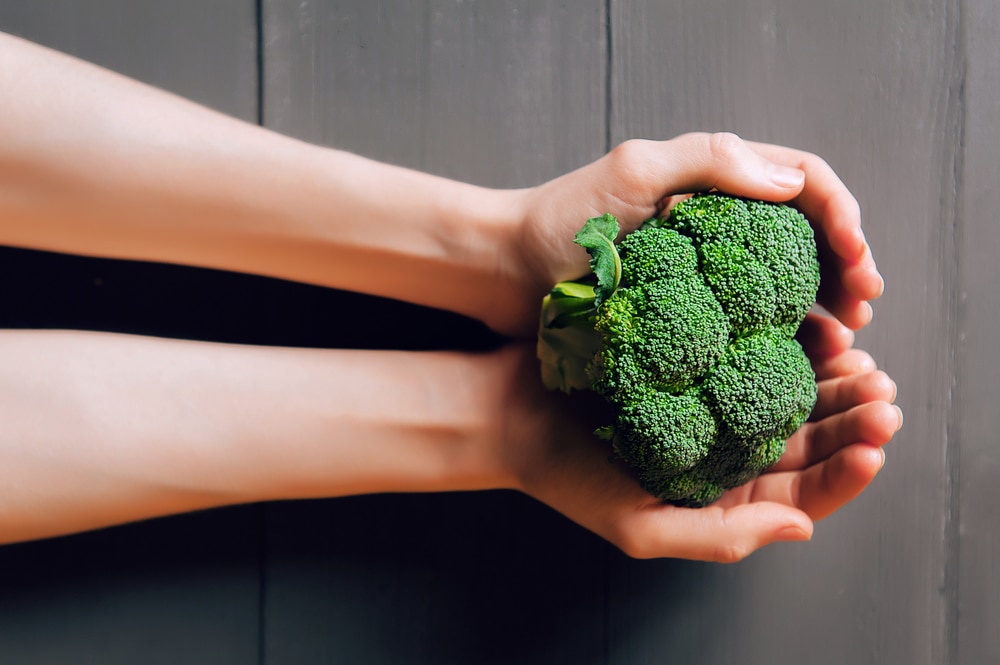
1. Broccoli
Photo Credit: Shutterstock
Non-starchy vegetables like broccoli help manage your blood sugar because they are generally low in calories and carbohydrates but packed with fiber. Fiber helps slow digestion and the absorption of nutrients (like sugar) into the bloodstream so you don’t have a post-meal spike in blood sugar.
One study found that pairing broccoli with a starchy food like white rice can improve post-meal blood sugar by as much as 40% compared to white rice alone.
In addition to fiber, broccoli contains a couple of unique plant compounds, like sulforophane and glucosinolates, which researchers believe may help lower your blood sugar by improving your sensitivity to insulin (a hormone that helps shuttle blood sugar into cells).
2. Olive Oil
Photo Credit: Shutterstock
Olive oil is a go-to for cooking because it is associated with so many health benefits. In addition to protein and fiber, fat is also an important factor in building a blood sugar-stabilizing plate that will keep you full.
Olive oil intake has been linked to both a lower risk of developing diabetes and significant improvements in the fasting blood sugars of people who already have diabetes mellitus.
3. Seafood
Photo Credit: Shutterstock
The Dietary Guidelines for Americans recommends that we consume at least 8 ounces of seafood per week (based on a 2,000-calorie diet). Seafood is a high-quality source of protein, which is essential for blood sugar management since it slows digestion, prevents post-meal blood sugar spikes, and improves satiety.
Fatty fish may be more beneficial for blood sugar regulation than lean fish. Some seafood also contains heart-healthy omega-3 fatty acids, which are essential for us to get in our diets and can reduce the risk of heart disease – a common complication of diabetes.
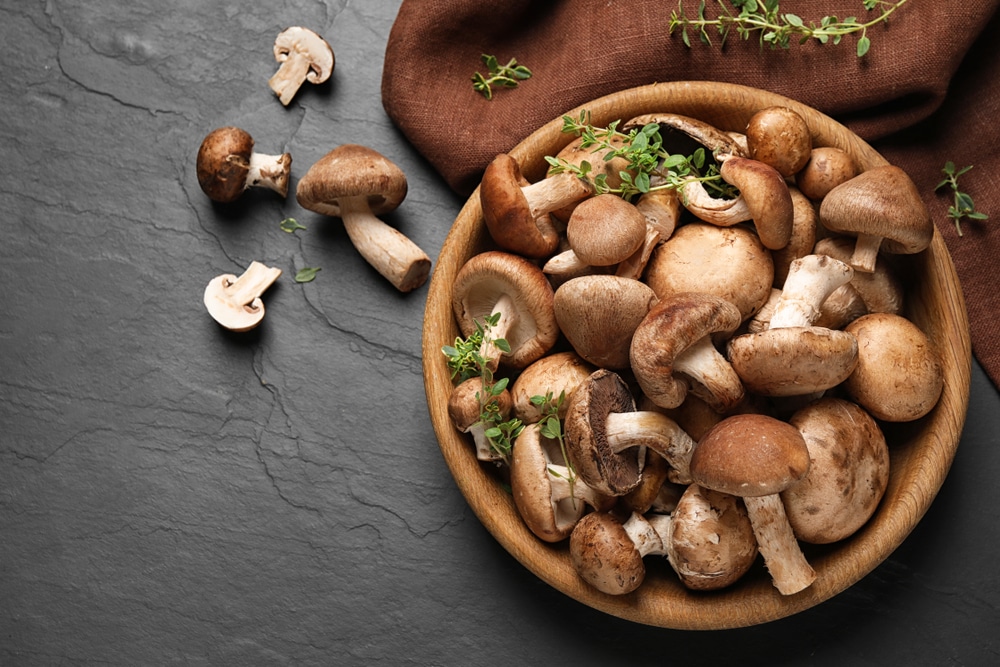
Mushrooms are low in calories and carbohydrates but they contain natural compounds that can help lower blood sugar levels by blocking some of the absorption of sugar from the digestive tract into the bloodstream.
They are one of few foods that is a significant source of vitamin D, and low levels of vitamin D have been linked to insulin resistance. If you’re not familiar with the term, insulin resistance occurs when cells no longer respond well to the hormone insulin, preventing them from absorbing the sugar from the food you eat for energy.
5. Beans and Lentils
Photo Credit: Shutterstock
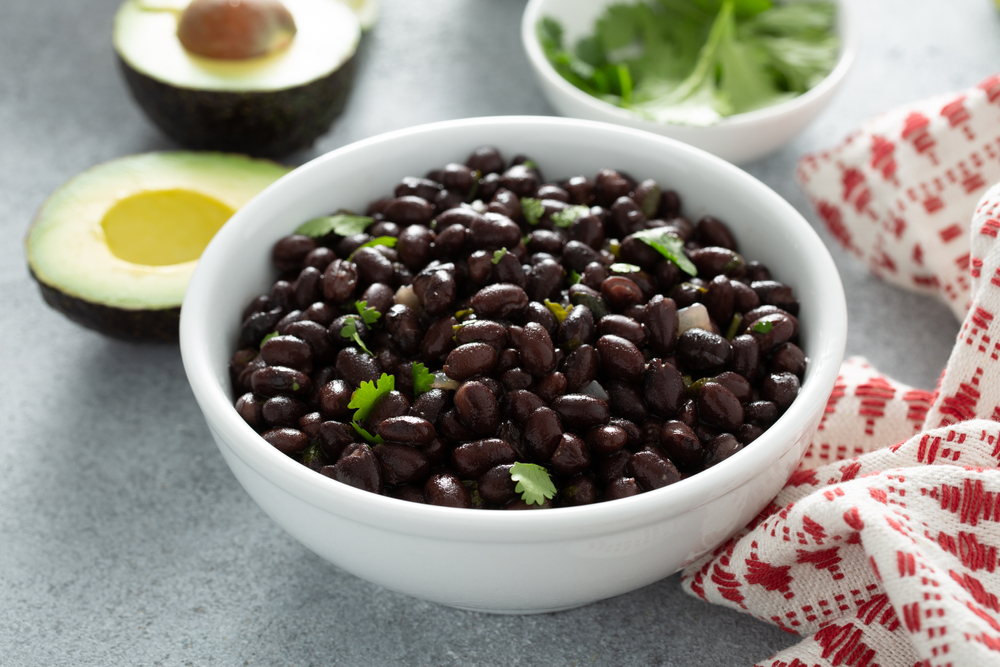
Beans and lentils are excellent sources of plant-based protein and are rich in fiber. Soluble fiber, which helps slow digestion and may improve post-meal blood sugar response, is found in beans and legumes.
In addition, many studies have shown that eating beans and lentils improves overall blood sugar levels and reduces your risk of developing diabetes.
6. Nuts and Nut Butter
Photo Credit: Shutterstock
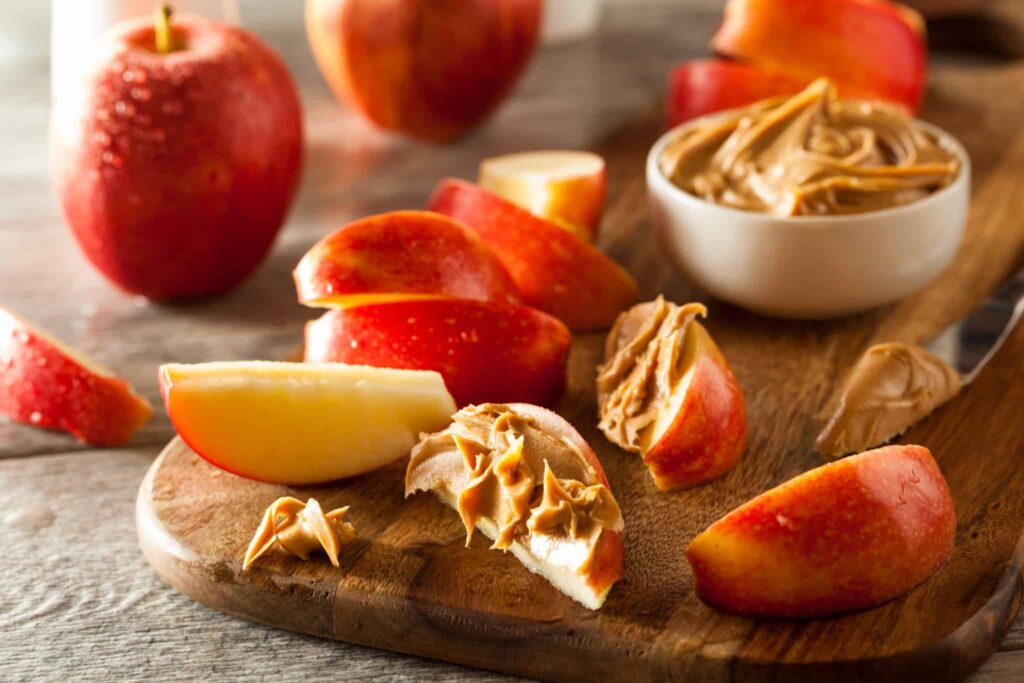
If you are looking for a satisfying snack that isn’t going to wreak havoc on your blood sugar, try a handful of nuts or toast with peanut butter. Not only are nuts delicious, but they are rich in protein, healthy fats, and essential nutrients like vitamin E, magnesium, and potassium.
Research has found that people who regularly eat nuts often have better blood sugars and lower risk of type 2 diabetes.
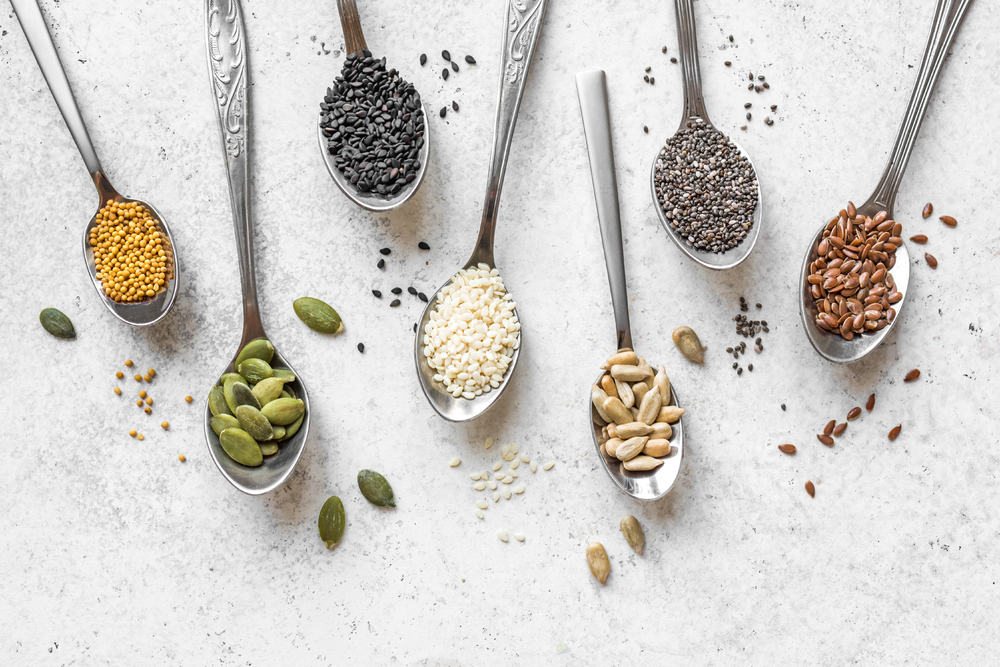
If you’re looking for a low-effort way to improve your blood sugars, adding a sprinkle of chia seeds or flaxseeds to your meal or snack may help. Just two tablespoons of ground flaxseeds daily may significantly reduce blood sugar levels and improve insulin sensitivity.
Both of these seeds are excellent sources of fiber, which we know benefits blood sugar levels and keeps you feeling full longer.
The diverse colony of bacteria that lives in your gut – the gut microbiome – has a significant impact on your overall health, including your diabetes risk. In addition to eating fiber, consuming probiotic-rich foods (like kimchi and sauerkraut) is one way to ensure that good bacteria have a chance to thrive.
Better gut health can enhance insulin sensitivity which helps manage blood sugar levels.
9. Avocado
Photo Credit: Shutterstock
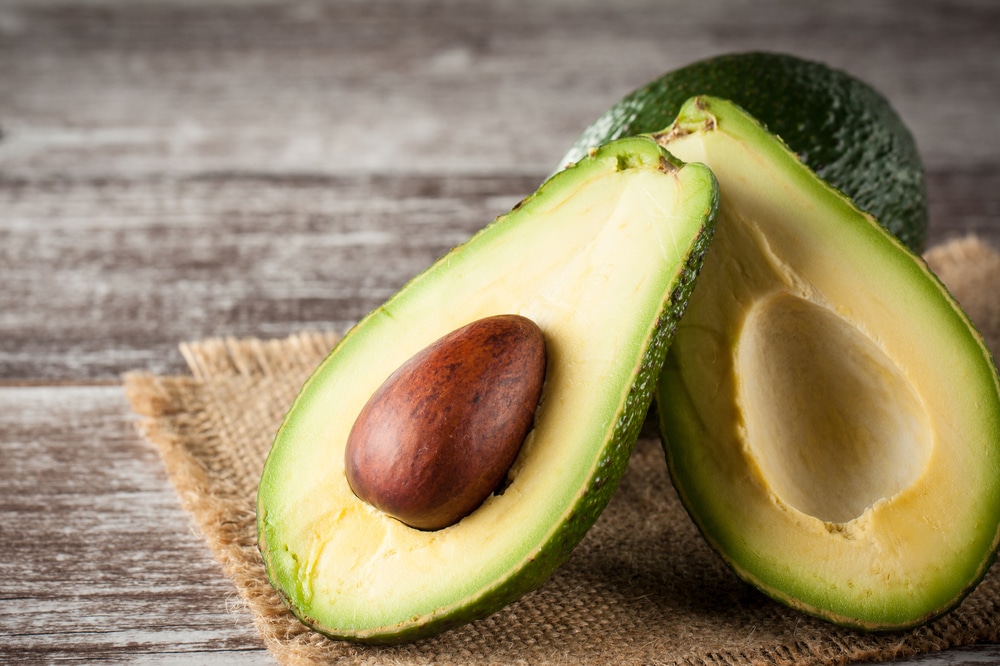
Incorporating fat and fiber-rich foods into a meal or snack can help prevent that post-meal blood sugar spike and avocados provide both. This popular fruit is low in sugar but rich in monounsaturated fats and surprisingly high in fiber.
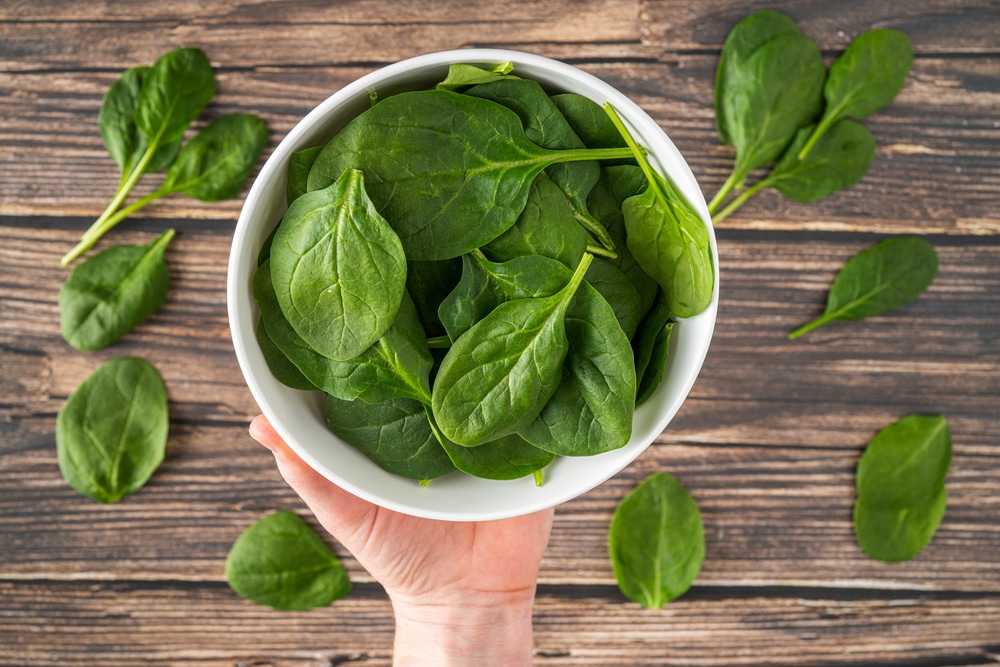
Leafy greens such as kale, spinach, Swiss chard, and cabbage are low in calories and carbohydrates but packed with disease-fighting antioxidants. That’s probably why you can find them on the Blue Zones list of foods that promote longevity!
Leafy green eaters have a lower risk of diabetes than those who don’t eat their greens, and researchers suspect the antioxidants may be playing a role in their ability to balance blood sugar.
Natural sugars, like those in fruit, will cause your blood sugar to rise. However, some fruits are naturally lower in sugar than others. Berries— especially raspberries—are packed with fiber which slows down the absorption of sugar, which keeps blood sugar levels in check. They are also one of the best anti-inflammatory foods out there.
Just one cup of raspberries has an impressive 8 grams of fiber and just 5 grams of natural sugar. That’s double the 4 grams of fiber in a cup of blueberries.
Unsweetened Greek yogurt is a good choice for people who are trying to manage their blood sugar levels. Greek yogurt is much higher in protein than regular yogurt. In fact, a 7-ounce container of plain, low-fat Greek yogurt provides a whopping 20 grams of protein. That’s twice as much protein as a serving of regular yogurt.
In addition to protein, Greek yogurt also contains probiotics. A healthy gut means better blood sugar levels!
13. Eggs
Photo Credit: Shutterstock
Eggs also make this list because they are another high-quality source of lean protein that is low in carbohydrates. We know that eating a higher protein, lower carbohydrate diet improves blood sugars. Eggs are a great way to bump up your protein intake.
In addition to protein, eggs also provide healthy fats, antioxidants, and other nutrients like potassium and choline.
You might be surprised to see oats on this list since they are high in carbohydrates. However, oats are also high in a specific kind of soluble fiber called beta-glucan.
Many studies have found that despite its carb content, diabetics who regularly consumed oats not only had better blood sugar management but lower cholesterol levels too. All thanks to the beta-glucan!
A sluggish metabolism can be frustrating, especially when you’re trying to maintain a healthy weight or boost your energy levels. While there are some factors you can’t control (such as age, gender, body size, and family history), there are everyday habits might be the culprits behind a slow metabolic rate!
Here, we’ll cover 7 lifestyle habits you may not realize are slowing your metabolism.
1. Consuming Too Much Sugar
Photo Credit: Shutterstock
Consuming a bunch of refined sugar activates fat storage in the body, which is hard on your metabolism.
Exercise is crucial if you’re eating a lot of sugar since it allows your muscles use it up instead of storing it as fat. Your metabolism is negatively affected if you’re mostly sedentary with a high-sugar diet.
Some of the biggest culprits are sugary beverages, including sodas, specialty coffees, fruit juices, and energy drinks. In fact, sugar-sweetened beverages (SSBs) are the largest contributor of sugar intake in the United States!
Sugary drinks and foods can also lead to a temporary spike in blood sugar followed by a crash, which makes you feel hungry or thirsty soon after. (Thus, making you eat and drink more.)
Try staying away from things like pastries, cookies, donuts, candy, cupcakes, granola bars, and sweetened yogurt. (Moderation is key!)
2. Slacking on the Protein
Photo Credit: Shutterstock
Protein is an indispensable factor for maintaining a vigorous metabolic rate! Research shows that high protein intake significantly boosts your metabolism and increases the number of calories you burn.
Protein contributes to the formation of muscle mass, which also aids calorie expenditure. Make a goal to eat protein at every meal from sources like meat, poultry, seafood, nuts, seeds, dairy, and eggs.
3. Waiting Too Long Between Meals
Photo Credit: Shutterstock
Eating habits play an important role in maintaining a healthy metabolism.
Waiting six to eight hours between meals can cause shakiness, low energy, and low blood sugar levels. Throwing off your blood sugar levels can negatively impact your metabolism.
Moreover, when you wait too long between meals, it can cause you to overat! The optimal waiting time between meals is three to five hours. Eating smaller meals more frequently throughout the day can help keep your metabolism running smoothly.
When you do eat, it’s important to eat balanced meals that include lean proteins, complex carbohydrates, and healthy fats. Avoid processed foods high in sugar and saturated fat.
4. Not Hydrating Enough
Photo Credit: Shutterstock
Drinking more water comes with plenty of benefits, including speeding up your metabolism. If you’re not properly hydrated, dehydration can slow your metabolism, increase unhealthy cravings, cause blood sugar spikes, and make you feel sluggish all around.
Adequate water intake also:
Helps suppress your appetite
Improves your workouts
Helps remove body waste
Saves you calories when you drink it instead of soda, juice, and sweetened tea or coffee
All of these factors contribute to a healthy body and metabolism and can help promote weight loss.
The recommended water intake for women is around 9 cups daily (8 oz each), and for men, 13 cups.
5. Not Working Your Muscles
Photo Credit: Shutterstock
As we age, our muscle mass and strength naturally begin to decrease—a real-life example of “use it or lose it.” Strength training (also known as resistance training) is a safe, effective method for combating muscle loss and preserving bone density.
Strength training exercises use dumbbells, resistance bands, kettlebells, or your body weight to build muscle mass. This increases the body’s ability to burn more calories and boost metabolism. Other benefits of strength training include improved mental and emotional well-being and a decreased risk of conditions like arthritis, diabetes, obesity, and back pain.
The American Heart Association recommends strength training at least twice per week to keep your body stronger, healthier, and less prone to injury.
Stress is an unavoidable part of life, but when it persists and becomes too intense, it can harm your metabolism.
Chronic stress causes the body to release extra cortisol, also known as the stress hormone, which actually tells your body to store fat instead of burn it. High cortisol has been associated with issues like weight gain, fatigue, and difficulty sleeping.
Yoga is an excellent way to reduce stress levels while providing physical benefits such as increased flexibility and strength. Yoga combines breathing exercises with postures that help relax the mind and body while reducing muscle tension. Regular yoga can also stimulate metabolism by soothing the nervous system and improving digestion.
Other stress-relieving techniques include:
Meditation: Meditating can aid in heightening self-awareness so you can spot any hints of pressure or uneasiness before they become too intense. Taking just 10 minutes out of each day for meditation can make a huge difference.
Deep breathing exercises: Deep breathing techniques involve taking slow, deep breaths from the diaphragm instead of shallow chest breaths, which help calm down both mind and body quickly.
Regular physical activity: Exercise has been proven time and again to be one of the best methods for reducing stress levels effectively while helping boost metabolism. It has a positive effect on the hormone balance within our bodies and releases endorphins (the feel-good hormones) into our bloodstream, making us feel happier while decreasing harmful cortisol levels.
7. Not Getting Enough Sleep
Photo Credit: Shutterstock
It’s no secret that getting a solid 8 hours of sleep sets you up for success during the day. You’re more alert, energized, and ready to make healthy choices.
A lack of sleep can make your metabolism more sluggish. What’s worse? Most of us overeat to compensate for the energy dip. A study published in the American Journal of Clinical Nutrition found that sleep-deprived people were more likely to choose high-carb snacks, especially late at night.
Getting too little sleep can throw two of your body’s hunger hormones out of whack—leptin and ghrelin—which can cause you to hold onto more fat and crave sugary, salty foods more frequently.
Aim for 7-9 hours of sleep per night. Charge electronic devices away from your bed and avoid screen and TV time right before you go to sleep. You can also try some sleepy time tea, magnesium glycinate, or melatonin to help with sleep.
If you are experiencing back pain, yoga is a great way to get some relief! Yoga naturally helps strengthen and lengthen your spine, stretch your muscles, and fix your back’s alignment.
According to a study in the Archives of Internal Medicine, chronic back pain sufferers who practiced yoga regularly were half as likely to need pain pills or over-the-counter treatments for their pain than those who did not practice yoga.
Here, we’ve rounded up the 11 best yoga stretches that help to alleviate back pain. Try to complete these two to three times a week for the most relief!
1. Child’s Pose
Photo Credit: Get Healthy U
The child’s pose lengthens and stretches the spine while relieving tension in the neck and shoulders. You can also try using a block under the forehead for more relief.
How to do child’s pose:
Begin with hands and knees on the mat, with your knees spread to the outer edges of the mat.
Sit your tailbone down and back between your heels and lower your belly between your thighs.
Stretch your arms long in front of you and relax your forehead on the mat. Breathe and hold as long as you’d like.
2. Cat/Cow Pose
Photo Credit: Shutterstock
How to do to cat/cow pose:
Begin on your hands and knees with hands directly under your shoulders and knees under your hips.
Start with your spine in a “neutral” or long position. On an exhale, slowly tuck your tailbone, lowering the crown of your head so your back gently rounds into a cat pose.
Return to a neutral spine. On an inhale, gently lift your chest and tailbone so your lower back curves downward. Look slightly upward with a relaxed neck. This is cow pose.
Repeat as many times as you’d like.
3. Downward Dog
Photo Credit: Shutterstock
Downward dog lengthens and strengthens at the same time. It’s also a big stretch for the hamstrings, which can be a cause of back pain. Take some time here to pedal the feet, twist the hips, and rock side to side.
How to do downward dog:
Begin in a kneeling position on your mat with hands directly under your shoulders, fingers spread wide.
Tuck your toes under and engage your abdominals as you push your body up off the mat so only your hands and feet are on the mat.
Press through your hands, gently moving your chest toward your thighs and your heels toward the floor.
4. Crescent Twist Pose
Photo Credit: Get Healthy U
A crescent twist helps open up the hips, which can significantly impact the back. It’s a great pose for sciatica and can also improve spinal range of motion.
How to do a crescent twist:
From a standing position, step your left foot to the back of the mat and lower the inside of the foot down.
Reach both arms straight overhead and bend the right knee to 90 degrees.
Relax your shoulder as you continue reaching up and lengthen the back leg.
Draw your hands to a prayer position in front of your chest.
Keep hands in prayer as you twist the left elbow over the right knee, pressing your elbow against the side of your leg and relaxing your neck as you gaze up.
Hold 30 seconds and switch sides.
5. Warrior 1 Pose
Photo Credit: Get Healthy U
Warrior 1 is an energizing pose that creates stability and improves balance. Having a better posture can significantly impact and alleviate back pain.
How to do Warrior 1 pose:
From a standing position, step your left foot to the back of your mat and lower the inside of your foot so that your back foot is at an angle.
Bend your right knee 90 degrees and straighten your back leg.
Reach arms overhead and keep the torso facing the front.
Relax your shoulders and breathe gently in and out. Hold 30 seconds and switch sides.
6. Triangle Pose
Photo Credit: Shutterstock
Triangle pose taps into the spinal nerves and strengthens the lower back.
How to do a triangle pose:
From a standing position, step your left foot to the back of your mat and lower the inside of your foot so that your back foot is at an angle. Both legs are long and straight.
Reach your right arm over your right leg and left arm over your left leg, keeping arms straight and back long.
Now begin to reach the right hand forward over the right foot, lengthening through the waist, and slowly tip over so your right hand rests gently on your shin.
Lengthen your left arm up, stacking your left shoulder over your right shoulder and left hip over the right hip. Gaze toward theleft hand.
Breathe and switch sides.
7. Revolved Triangle
Photo Credit: Get Healthy U
Revolved triangle is another pose that improves balance with the help of internal and external obliques. This pose activates the spine.
How to do a revolved triangle pose:
From a standing position, step your left foot to the back of your mat and lower the inside of your foot so that your back foot is at an angle. Both legs are long and straight.
Reach your right arm over your right leg and left arm over your left leg, keeping arms long and back tall.
Begin reaching your right hand forward while twisting your left arm down toward your right foot. Your right hand should end up reaching to the sky while your left hand rests gently on your right shin (or, if possible, ankle or floor).
Breathe as you stretch and lift through your torso.
Hold for 30 seconds and switch sides.
8. Locust Pose
Photo Credit: Shutterstock
Locust pose will strengthen and elongate all the muscles along the spine.
How to do a locust pose:
Lie face down on your belly and lift your chest and legs off the mat.
You can take arms by your side, reaching fingers behind you. This is complete activation of the entire back of the body.
9. One-Leg Forward Fold
Photo Credit: Shutterstock
Try not to force this; relax in the pose for optimal release in the spine.
How to do a one-leg forward fold:
Seated, extend the left leg out in front of you and bend the right knee, letting it fall open to the side like a half-butterfly.
Reach forward and fold softly over the legs.
Switch sides after three breaths.
10. Knees to Chest
Photo Credit: Shutterstock
This has the same effects as a child’s pose without impacting the knees. It rounds and releases. You can gently rock right to left for a gentle massage on the spine.
How to do knees to chest: Lie down on your back and hug your knees up into your chest.
11. Twist Pose
Photo Credit: Get Healthy U
Twists relieve pressure in the lower back and encourage a spinal range of motion.
How to do a twist:
Begin on your back with knees bent, feet flat on the floor, and arms stretched out to the sides.
Gently lower your knees to the left side of your body and place them on the floor. Gaze right and breathe.
Engage your abdominals and slowly pull your knees back to the start position.
Gently lower your knees to the right side of your body and place them on the floor. Gaze left and breathe.
Hold for 30 seconds, then switch to the other side.
Did you know that there are specific foods that contain the vitamins needed to improve your skin and hair?
What you eat is one of the biggest factors in your overall wellness, and it actually makes a huge difference in how you look! Nutrients that keep your skin supple and your hair full and shiny are found in some common, easy-to-find foods.
Let’s explore the best foods that can naturally help improve hair, skin, and nails as you age.
1. Pomegranates
Photo Credit: Shutterstock
This beautiful fruit is considered a hair and scalp superfood for its antioxidant properties and UVA-blocking agents that prevent premature aging of your skin and hair.
Pomegranates help strengthen your hair follicles—in fact, pomegranate extract is sometimes used as a natural remedy for hair loss. Pomegranates also contain ellagic acid, which serves as a natural moisture sealant and makes your skin feel softer throughout the day.
Add some fresh pomegranates to your cart or drink pomegranate juice, which has the same benefits.
2. Carrots
Photo Credit: Shutterstock
Rich in beta-carotene, carrots promote healthy hair and nail growth. How? All of that beta-carotene turns into the antioxidant vitamin A in the body, which is what your hair, skin, and nails need to stay healthy and vibrant.
Veggies like spinach and broccoli are also great sources of Vitamin A, too.
3. Avocados
Photo Credit: Shutterstock
Good news for all you avocado-toast loyalists: aside from containing healthy fats, avocados contain vitamin C, vitamin E, and antioxidants—the go-to triple threat for better skin.
They’re also packed with potassium, which can counteract the bloating effects of salt (which causes puffy eyes or skin) by pushing excess sodium out of the body.
Bell peppers of all colors are chock-full of nutrients, but red peppers, in particular, contain mega doses of vitamin C and carotenoids, which help increase skin circulation and fight the signs of premature aging.
Throw some red peppers in your morning omelet, slice them up and dip them in hummus, or add them to your next stir-fry.
5. Almonds or Almond Butter
Photo Credit: Shutterstock
Almonds are rich in biotin—your hair’s best friend—and ample amounts of vitamin E, which serves as a natural skin moisturizer and nail strengthener. Almonds are also a great source of calcium, which gives your nails extra nutritional support.
6. Salmon
Photo Credit: Shutterstock
Salmon and tuna are rich in protein, omega-3 fatty acids, and vitamin D, all essential nutrients for healthy hair. The special protein in your hair, keratin, is responsible for giving hair its strength and flexibility, so consuming a diet rich in protein will work wonders. Omega-3 fatty acids aid in promoting hair growth and add sheen and luster, too.
Popeye was onto something with all of that spinach—it’s one of the healthiest things you can eat but also particularly helpful for your skin and nails.
It contains vitamin C and beta-carotene, which help protect your skin from the aging effects of UV rays.
Add a handful of spinach to your morning smoothie, use it as a base for your salads, or sauté spinach with garlic and a bit of salt for a tasty veggie side to your dinner.
8. Eggs
Photo Credit: Shutterstock
Eggs are a terrific source of 4 important nutrients for hair growth: protein, biotin, zinc, and selenium.
Berries are packed with nutrients, including vitamin C and antioxidants. The body uses vitamin C to produce collagen, a protein that helps strengthen skin, nails, and hair.
A healthy diet and great exercise are the best ways to achieve a smaller waist. Slow, steady progress is the name of the game when it comes to investing in your health!
And here’s the deal: what you choose to eat will make more of a difference in how your belly looks than anything else. (In other words, it’s time to ditch the junk food!)
It’s imperative to eat healthy, well-balanced meals that nourish your body. And while that concept seems fairly simple, we all know it’s definitely not easy!
Along with staying active, here are six diet tips that might help you adjust to a new, healthier way of eating.(And get a smaller waist in the process!)
Plan Ahead For The Week
Photo Credit: Shutterstock
A big part of making poor eating choices is that you get hungry and simply eat what is easiest to grab. Of course, the easiest thing is often fast food. So take an hour on Saturday or Sunday and do some simple meal planning/prep.
For example:
Bake, grill, or boil a few chicken breasts.
Hard boil a dozen eggs.
Buy a few cartons of Greek yogurt.
Wash and chop your favorite anti-inflammatory fruits and veggies and get them into baggies for grabbing on the go.
If you like to cook, make a big pot of healthy chili or low-cal southwestern chicken soup and divide it into containers for the freezer.
Anything you can do to prepare in advance will reward you with results. Spending a few hours on the weekend to plan for the week ahead can transform mealtime from stressful and fattening to simple and healthy.
Protein, carbs, and healthy fats go together in meals for a reason. The combination keeps you balanced and satisfied.
Try to eat them together every time you eat. If you are grabbing an apple for a snack, it might surprise you to know that pairing it with a tablespoon of peanut butter is even better!
By balancing the nutrients, you might take in more calories initially, but you end up eating less in the long run, and your blood sugar will stay in balance, staving off cravings for the bad stuff.
This means you eat the good calories that get used up rather than stored in your belly. Storing less calories will help you avoid weight gain!
So, what does a well-balanced and simple meal look like? Here are some ideas for good choices:
Piece of toast made from whole grains with peanut butter and ½ a banana.
Protein shake with fruit or veggie mixed in.
Veggie sticks and hummus.
Full-fat Greek yogurt with berries.
Try our Muffin in a Minute (it’s not what you think!)
None of these are complicated, and each of them will keep you satisfied for several hours.
Turn Down Unexpected Treats
Photo Credit: Shutterstock
We are often guilted into eating things that others offer us!
It’s totally fine to splurge every so often and enjoy a treat, especially if you typically have a healthy, balanced diet. But living in constant imbalance won’t give you the best results.
Think about it: If you added up the free doughnuts at the office, slices of co-worker birthday cake, or oversized samples at the big-box store, you’d be surprised at how often you eat something that wasn’t part of your original diet plan. (And don’t forget all the sips and bites you take from your kid’s plate!)
Be intentional about what you eat and, if needed, keep track for a week and write it all down as you take it in.
Crash Diets Are Not Your Friend
Photo Credit: Shutterstock
Restrictive meals and diets can cause your metabolic rate to drop. Evidence shows how hard it is for adaptive thermogenesis to begin the more you reduce your calorie intake. In reality, a tightly restrictive diet can be counterproductive.
So, how do you identify a crash diet? Any protocol that requires you to cut out a whole food group (also known as a macronutrient) or exercise excessively is worth questioning. We at Get Healthy U always advocate balance as the most important thing.
Eat Bloat-Blasting Foods
Photo Credit: Shutterstock
No one feels like their waist is trim and slim if they’re bloated all the time! We recommend you add foods to your diet that help with bloating and avoid the ones that make it worse.
It’s helpful to steer clear of baked or processed foods. (Especially overly salty foods!)
Add lots of leafy greens, which are high in magnesium and micro-nutrients for digestion. Here’s our list of debloat foods for more ideas.
Make Peace With Slow, Steady Progress
Photo Credit: Shutterstock
Losing weight quickly is not what you should focus on. Working toward a safe rate of losing 1 to 2 lbs per week will be much more likely to result in a permanent loss.
To make peace with slow weight loss, focus on small wins instead. Instead of “I must lose x lbs to achieve this bodyweight,” reset it to, “This week, I’m going to walk 5 times and plan my meals every day.” It’s much more tangible and realistic.
Going too hard too quickly could result in burnout. You want your lifestyle adjustments to stick, along with your slimmer waist!
Perimenopause—the transition time leading up to menopause—is a gradual process. Your hormones begin to fluctuate to prepare your body for the end of menstruation, and it can begin anywhere from your early 30s to your late 40s.
As your estrogen levels rise and fall, symptoms of perimenopause will come and go—which explains why you might be dealing with unexpected symptoms one week and feel like your normal self the next.
So, is menopause approaching?
Let’s explore the 9 common perimenopause signs that your body may be signaling to you.
Note: If you are experiencing many of these symptoms, it’s best to contact your doctor, who can help you determine if perimenopause is the suspected cause.
1. Your Periods Are All Over the Place
Photo Credit: Shutterstock
Are your periods suddenly all over the place? Maybe they don’t last as long, there’s a change in your flow, or you go a month or two without having one. This could be a telltale sign that you’ve entered perimenopause.
2. Sudden Hot Flashes
Photo Credit: DepositPhotos
Hot flashes are a common symptom of perimenopause. It’s far from the worst side effect but can be unpleasant and disruptive.
A hot flash is a sudden sensation of heat that often causes sweating, heart palpitations, and anxiety. There lots of natural remedies for hot flashes you can try for help.
3. And Sudden Cold Flashes, Too
Photo Credit: Shutterstock
Cold flashes are another perimenopause sign. A cold flash is a sudden sensation of cold that can be accompanied by chills and goosebumps.
4. Frequent Night Sweats
Photo Credit: Shutterstock
Night sweats are one of the most common signs of perimenopause! A night sweat is when a person feels hot and sweaty during sleep.
Night sweats are typically more intense during perimenopause but can last throughout menopause as well.
5. Irritability and Mood Swings
Photo Credit: Shutterstock
In perimenopause, hormone levels fluctuate and can cause mood swings. Mood swings can include sadness, anxiety, irritability, and even anger.
Maintaining energy levels as you age doesn’t have to be a struggle. With a few strategic lifestyle adjustments, you can feel vibrant and energetic well into your 50s and beyond.
Here are 10 practical tips to help you stay energized throughout the day.
1. Prioritize Quality Sleep
Photo Credit: Shutterstock
Sleep is the foundation of sustained energy. Aim for 7-9 hours of uninterrupted sleep per night to allow your body to repair and recharge. Create a calming bedtime routine, avoid screens an hour before bed, and keep your bedroom cool and dark for optimal rest.
Quality sleep enhances focus, reduces fatigue, and regulates hormones that influence energy.
2. Fuel Your Body with Balanced Nutrition
Photo Credit: Shutterstock
Eating nutrient-rich meals keeps your energy stable. Focus on lean proteins, healthy fats, complex carbs, and plenty of vegetables. Incorporate magnesium-rich foods like spinach and nuts to support muscle function and energy production.
Dehydration is a common yet overlooked cause of fatigue. Drink water consistently throughout the day—aim for at least 8 cups. Herbal teas and water-rich fruits like cucumbers and watermelon also help.
Even mild dehydration can sap your energy, so keep a water bottle handy.
4. Incorporate Regular Exercise
Photo Credit: Shutterstock
Exercise boosts circulation, improves cardiovascular health, and releases feel-good endorphins. Opt for strength training, walking, or yoga, which are particularly beneficial after 50.
Short bursts of movement during the day—like stretching or brisk walking—can fight midday slumps.
5. Embrace Stress Management
Photo Credit: Shutterstock
Chronic stress drains energy and disrupts focus. Practice mindfulness, meditation, or deep breathing to calm your mind. Regularly set aside time for hobbies, socializing, or quiet relaxation to recharge mentally and emotionally.
A calmer mind contributes to sustained physical energy.
6. Limit Caffeine and Sugar
Photo Credit: Shutterstock
While caffeine and sugar may provide a temporary energy boost, they can lead to crashes later. Opt for alternatives like green tea, which contains less caffeine and provides antioxidants.
To satisfy sweet cravings, choose natural sugars from fruit paired with protein for steady energy.
7. Maintain a Healthy Gut
Photo Credit: Shutterstock
Your gut health directly impacts your energy. Probiotics from foods like yogurt or kefir and prebiotic-rich options like garlic and bananas can support digestion.
A balanced gut improves nutrient absorption, keeping your energy levels steady throughout the day.
8. Take Movement Breaks
Photo Credit: Depositphotos
Prolonged sitting can cause sluggishness. Stand, stretch, or take a quick walk every hour. Movement improves circulation and prevents the “midday fog” that often follows extended inactivity.
Even a few minutes of movement can make a big difference.
9. Get Regular Sunlight
Photo Credit: Shutterstock
Natural sunlight helps regulate your circadian rhythm and boosts vitamin D production, which is essential for energy. Spend 15-30 minutes outdoors daily, especially in the morning.
When sunlight is limited, consider a light therapy lamp to simulate its benefits.
10. Check Your Hormones
Photo Credit: Shutterstock
Hormonal imbalances can significantly affect energy levels as you age. Speak with your doctor about testing for thyroid function, adrenal health, or menopause-related changes.
Addressing these issues with proper medical guidance can help restore your vitality.
The holiday season is all about joy, connection, and yes—delicious food! But indulging too much can leave you feeling sluggish and uncomfortable.
These 9 simple yet effective tips will help you enjoy your favorite treats while maintaining balance, so you can celebrate guilt-free and stay on track with your health goals.
1. Choose Quality Over Quantity
Photo Credit: Shutterstock
Instead of sampling everything on the dessert table, pick your absolute favorites and savor them slowly. High-quality treats are more satisfying, and mindful eating allows you to enjoy the flavors fully.
This approach reduces mindless snacking and helps you feel satisfied without overdoing it.
2. Balance Your Plate
Photo Credit: Shutterstock
When creating your holiday plate, aim for a balance of proteins, healthy fats, and fiber alongside your indulgences.
For instance, pair a slice of pie with a handful of nuts or a side of roasted vegetables. This balance stabilizes blood sugar, curbs cravings, and keeps energy levels steady.
3. Stay Hydrated
Photo Credit: Shutterstock
It’s easy to mistake thirst for hunger, especially during busy holiday gatherings. Keep a water bottle handy and sip regularly to stay hydrated. Drinking water before meals can also help you feel fuller and prevent overeating.
Try these easy tips to make sure you are drinking enough water.
4. Eat Mindfully
Photo Credit: Shutterstock
Turn off the TV, put down your phone, and focus on your food. Eating slowly and chewing thoroughly not only enhances the experience but also gives your brain time to register fullness.
You’ll find you’re satisfied with smaller portions when you eat with intention.
5. Start With a Protein-Packed Breakfast
Photo Credit: Get Healthy U
Begin your day with a protein-rich meal, such as scrambled eggs with spinach or Greek yogurt with nuts. This sets the tone for balanced eating and helps curb sugar cravings later in the day.
A strong start can reduce the temptation to overindulge.
6. Use the “One Plate” Rule
Photo Credit: Shutterstock
Avoid grazing by sticking to a single, thoughtfully curated plate of food. Once you’ve enjoyed your meal, step away from the buffet table.
This strategy keeps portion sizes in check and prevents mindless nibbling.
7. Don’t Skip Meals
Photo Credit: Shutterstock
Skipping meals to “save room” for holiday feasts often backfires, leading to overindulgence. Instead, eat balanced meals throughout the day to keep hunger in check.
Arriving at a party feeling ravenous can make it harder to make mindful choices.
8. Focus on the Social Aspect
Photo Credit: Shutterstock
Shift your attention to connecting with loved ones rather than fixating on food. Engage in meaningful conversations, participate in activities, or help with hosting duties.
This mindset helps you enjoy the occasion without constantly reaching for snacks.
9. Incorporate Movement
Photo Credit: Shutterstock
Plan a festive walk, dance session, or quick workout before or after meals to boost your mood and metabolism. Physical activity not only burns calories but also supports digestion.
Even 15 minutes of movement can make a big difference.